
And yet the rise of machine learning makes it more difficult for us to carve out a special place for us. If you believe, with Searle, that there is something special about human “insight,” you can draw a clear line that separates the human from the automated. If you agree with Searle’s antagonists, you can’t. It is understandable why so many people cling fast to the former view. At a 2015 M.I.T. conference about the roots of artificial intelligence, Noam Chomsky was asked what he thought of machine learning. He pooh-poohed the whole enterprise as mere statistical prediction, a glorified weather forecast. Even if neural translation attained perfect functionality, it would reveal nothing profound about the underlying nature of language. It could never tell you if a pronoun took the dative or the accusative case. This kind of prediction makes for a good tool to accomplish our ends, but it doesn’t succeed by the standards of furthering our understanding of why things happen the way they do. A machine can already detect tumors in medical scans better than human radiologists, but the machine can’t tell you what’s causing the cancer.
Author: Edouard Chazal
Untamed
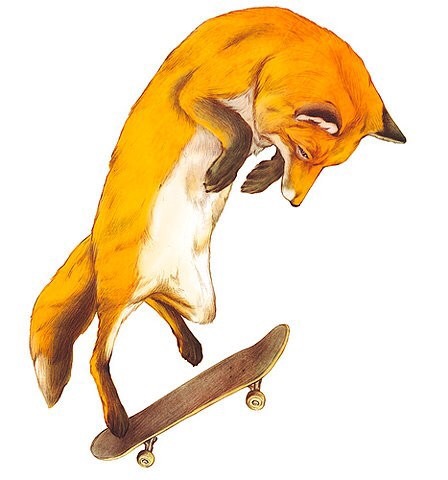
On making friends with animals—the story of my life :
There was a canopy of leaves over my head. Once I moved beyond it, the moon lit my path, so I turned off the flashlight. I’d expected Carol to be gone by that point, but for the next half mile, all the way home, she walked with me, sometimes by my side and sometimes a few steps ahead, leading the way. No cars approached or passed. The road was ours, and we marched right down the center of it, all the way to the front of the house and then through the garden gate to the kitchen door. Just me and my wild friend Carol.

Inside Quebec’s Great, Multi-Million-Dollar Maple-Syrup Heist
It was the Lufthansa heist of the syrup world. In the summer of 2012, on one of those July days when the first hint of autumn cools the northern forest, Michel Gauvreau began his precarious climb up the barrels in St.-Louis-de-Blandford, a town outside Laurierville, where part of the Reserve was stored in a rented warehouse. Once a year, FPAQ takes an inventory of the barrels. Gauvreau was near the top of the stack when one of the barrels teetered, then nearly gave way. “He almost fell,” Cyr said, pausing to let the picture form. A small man, astride a tower of syrup, realizing, suddenly, there’s nothing beneath his feet. Normally, weighing more than 600 pounds when filled, the barrels are sturdy, so something was clearly amiss. When Gauvreau knocked on the barrel, it tolled like a gong. When he unscrewed the cap, he discovered it empty. At first, it seemed like this might have been a glitch, a mistake, but soon more punk barrels were found—many more. Even barrels that seemed full had been emptied of syrup and filled with water—a sure sign of thieves who’d covered their tracks. My God, they could be in Thunder Bay by now! In most cases, when a boring, bureaucratic job turns interesting, there’s trouble.
Why You Can’t Help But Act Your Age
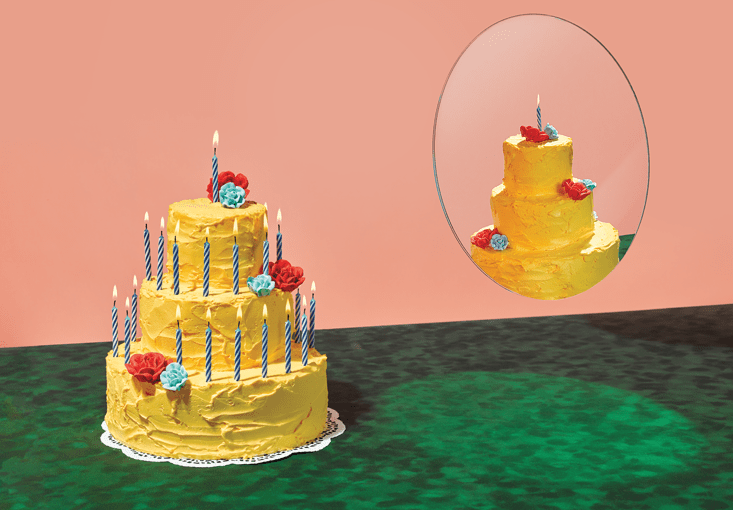
Most of us are slaves to our chronological age, behaving, as the saying goes, age-appropriately. For example, young people often take steps to recover from a minor injury, whereas someone in their 80s may accept the pain that comes with the injury and be less proactive in addressing the problem. “Many people, because of societal expectations, all too often say, ‘Well, what do you expect, as you get older you fall apart,’ ” says Langer. “So, they don’t do the things to make themselves better, and it becomes a self-fulfilling prophecy.”
It’s this perception of one’s age, or subjective age, that interests Antonio Terracciano, a psychologist and gerontologist at Florida State University College of Medicine. Horvath’s work shows that biological age is correlated with diseases. Can one say the same thing about subjective age?
Truth is a Lost Game in Turkey. Don’t Let the Same Thing Happen to You
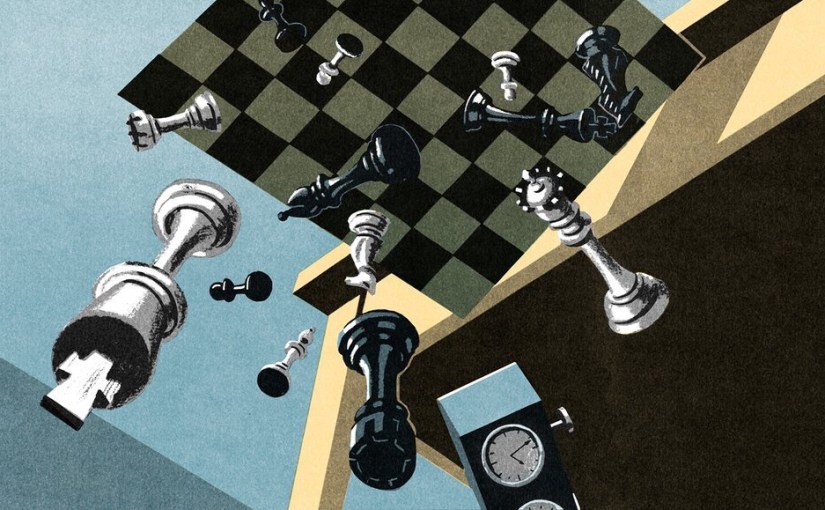
This refashioning of a post-truth, post-fact Turkey has not happened overnight. The process has involved the skilful and wilful manipulation of narratives. We gave up some time ago asking the astonished questions “How can they say or do that?” some time ago. Truth is a lost game in my country. In Europe and America, you still have time to rescue it – but you must learn from Turkey how easily it can be lost.
• • •
We found, as you are now finding, that the new truth-building process does not require facts or the underpinning of agreed values. We were confronted – as you are being confronted – by a toxic vocabulary: “elite”, “experts”, “real people” and “alienated intellectuals”. The elite, with experts as mouthpieces of that oppressive elite, were portrayed as people detached from society, willing to suppress the needs, choices and beliefs of “real people”.
Events moved quickly. Those who believed experts should be excluded from the truth-building process, and that the facts were too boring to be bothered with, became the most active participants in a reconstruction of their own truth. The magic word was “respect”, with the demand that the elite, since they were so out of touch, should respect real people’s truth.
 Abnormal Capitalist