My mom and grandparents always said to me: you can do whatever you want. Can’t wasn’t an option for my grandfather. If I told him I couldn’t do something, he’d tell me I was going to do it. He’d say: because you told me you couldn’t do it, I’m going to force you to do it. If you want it enough, it can be done. He helped to make me who I am today.
We’re watching an already isolating industry become even more dehumanized in real time. Programmers are getting laid off in favor of AI agents. Companies are replacing budgets earmarked for salaries and repurposing them for the purchase of AI tokens (the calculated cost of running a prompt) because “AI is always the answer!” My former company used to pride itself on saying that our support chat was a human being, until we quietly replaced that person with an AI chat bot. Just as manufacturing went through waves of change from which it never really recovered, as robots replaced line workers and jobs went to countries with lower wages and weaker labor laws, AI and outsourcing are coming for tech workers.
But while some people get replaced, the remaining workers are getting pushed to their breaking point and being subjected to ever more intrusive forms of surveillance.
It began with a quiet transaction in a park. Surrounded by the very nature that inspired its form, I acquired the pieces of Ma Yansong’s Floating Earth from a private seller. At that moment, it was just a dismantled puzzle of wood and stainless steel, slightly weathered and forgotten. As the artist himself wrote of the piece, the earth often fades from sight, and seems not to exist. Yet she persists.
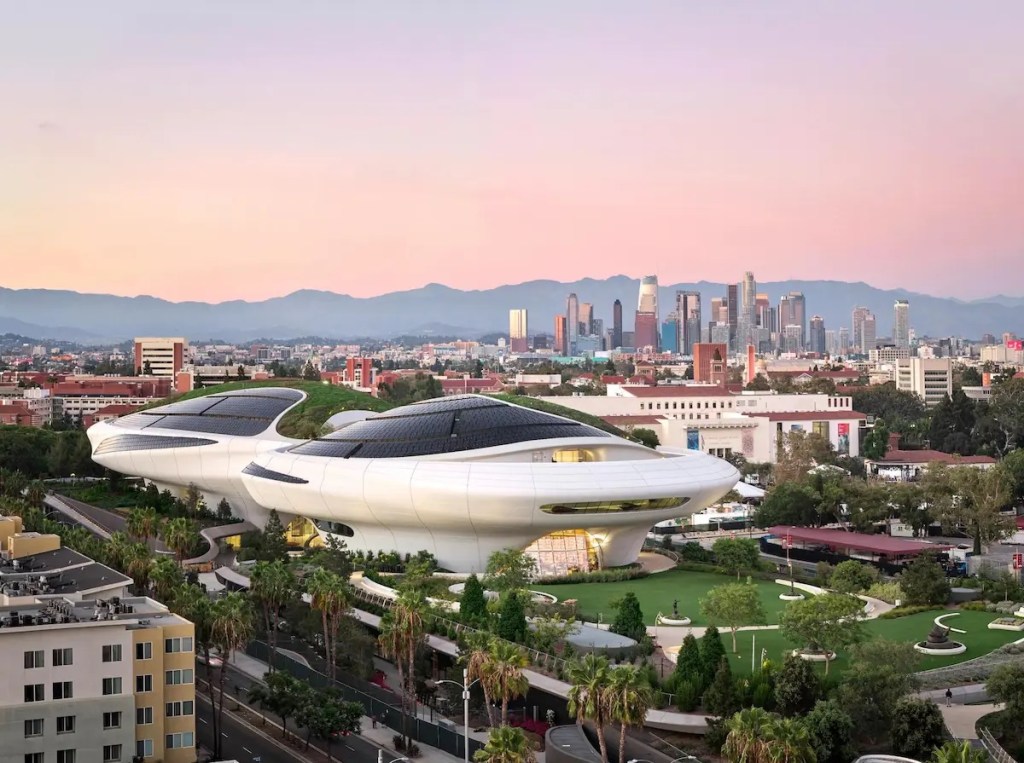
Taking it home that night, the restoration began. It was only then, sitting with the scattered pieces, that I discovered a striking fact: its creator, Ma Yansong, is the visionary architect behind the monumental Lucas Museum of Narrative Art in Los Angeles. Suddenly, this domestic object carried the DNA of a titanic cultural institution. There is a distinct, almost meditative intimacy in cleaning an object of design with such provenance. Wiping away the dust from the organic wooden tiers, polishing the reflective gleam back into the cold steel, I began carefully twisting the central rod back into its axis. With every turn of this single stem, a new stratum locked into place. I wasn’t just fixing a tray; I was erecting a topography. As Ma envisioned, each rising layer became a tower storey, an unscripted space full of kinetic potential.
“By wisdom a house is built, and through understanding it is established; through knowledge its rooms are filled with rare and beautiful treasures.” — Proverbs 24:3-4
Through the simple, mechanical act of assembly, the object reclaimed its purpose as a foundation for the home and the city—a rare and beautiful treasure in itself. But while the tray physically grounds our domestic space, its conceptual soul is constantly pulling upward. It refuses to be just a heavy, static base. This tension between being rooted and wanting to rise is beautifully captured by Ma Yansong himself. In the poem accompanying the piece, he shifts the perspective entirely away from the structures we arrogantly build upon the ground, revealing instead the earth’s own independent longing: There is nothing without the earth and yet the earth is not here for us – she can leave anytime. It is the blue sky that she loves.
This inherent desire for upward movement—this yearning for the blue sky—mirrors one of the most profound architectural and emotional feats in modern storytelling: Pixar’s Up.
Carl Fredricksen doesn’t just travel; he transforms his static, grounded home into a floating vessel. He achieves elevation to escape the weight of his grief, but the journey quickly becomes a profound search for beauty. This search is perfectly encapsulated by the literal pursuit of the film’s “sacred animal”: Kevin, the magnificent, iridescent, mythical snipe.
Kevin is an absurdity of nature, a creature of pure, vibrant chaos. She represents unadulterated beauty and the untamed wonders of a world that adults so often forget how to see. The pursuit of this sacred animal is not driven by utility or logic, but by pure wonder. It is the exact same sense of wonder required to look at a wooden dining tray and envision a floating metropolis longing for the sky.
To truly appreciate Floating Earth or to understand the balloon-lifted architecture of Up, we must reconnect with the concept of the playful. We have to awaken the child that lives within each of us—the inner Russell, who looks at an unscripted space not as a void, but as an adventure waiting to happen.
“And he said: ‘Truly I tell you, unless you change and become like little children, you will never enter the kingdom of heaven.'” — Matthew 18:3
There is a divine truth in playfulness. The rigid, adult mind builds square, gray boxes that weigh heavily on the ground, arrogant in the assumption that the earth is merely here for us. The childlike mind understands that creation should be joyful, kinetic, and elevated.
Now, fully restored and standing tall on its central axis, the Floating Earth sits in my home. It is a piece of true abnormal capital: an asset that yields no financial dividend, but pays out daily in aesthetics, philosophical reflection, and the quiet reminder that while we are rooted in the still, same earth, we must never stop looking up at the blue sky she loves.
Out in my garden in the Parisian suburb, tending to the in-ground plants and flowers, the reality of growth is always inescapable: it is quiet, it is slow, and it demands absolute consistency. Watering the earth over a weekend doesn’t yield a sudden, miraculous bloom by Monday. Growth operates on its own stubborn timeline, requiring a profound trust in the unseen. This intrinsic law of nature is something we intuitively understand when our hands are in the dirt, yet we routinely forget it when it comes to building our own lives, character, and capital.
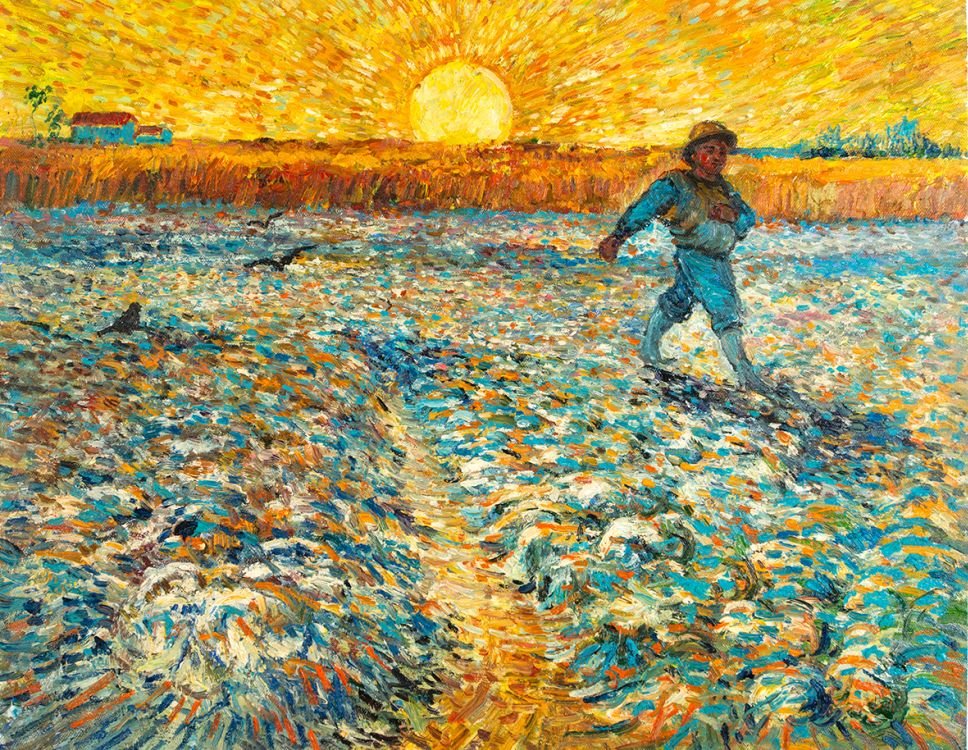
Vincent van Gogh captured the brutal, beautiful essence of this delayed gratification in his 1888 painting, The Sower. Against a sprawling, luminous, almost overwhelming sun, a solitary figure strides across a plowed field, casting seeds into the earth. The sower isn’t looking at a harvest; his eyes are on the mud. The painting doesn’t romanticize the reward, but rather elevates the routine itself. Sowing is an act of profound faith and deliberate, repetitive action. The sower is trading today’s energy for tomorrow’s potential, acting as an investor in a future he cannot yet see.
This agricultural reality mirrors an immutable spiritual and practical law. In his message The Power of Your Daily Routine, Pastor Craig Groeschel breaks down the architecture of our habits through the biblical principle of sowing and reaping, anchored in the Book of Galatians. By examining the spiritual physics of the harvest, we uncover the true engines behind any outsized success—and the agonizing mechanics of rebuilding a life.
First, you reap exactly what you sow. The input strictly dictates the output. The Apostle Paul writes in Galatians 6:7, “Do not be deceived: God cannot be mocked. A man reaps what he sows.” I know this not just as an abstract theory, but as a lived, painful reality. There were seasons of my life where my daily routines were wired for escape rather than endurance. I was consistently sowing the wrong things, trading my long-term baseline for short-term relief. I learned the hard way that you cannot plant seeds of self-destruction and expect to harvest peace, clarity, or prosperity. The earth, much like God’s divine order, returns exactly the nature of what it is given.
Second, you reap more than you sow. This is the principle of asymmetric, abnormal returns. A single seed does not yield a single seed; it produces a stalk bearing dozens. Jesus spoke of this exponential multiplier in Mark 4:8, describing seed that fell on good soil: “It came up, grew and produced a crop, some multiplying thirty, some sixty, some a hundred times.” In finance, we call this compound interest. In life, it’s the exponential power of atomic habits.
I have felt the crushing, suffocating weight of negative compounding firsthand. A single destructive habit doesn’t stay isolated; it multiplies, demanding more and more of your life until you are entirely bankrupt. But the beautiful, redeeming flip side is equally true. When you finally change the seed, the positive compounding begins. The daily reading of a few pages, the quiet refusal to give in to an old impulse, or the simple act of showing up compounds into a harvest that vastly outweighs the grueling daily cost of the transition.
Finally, you reap after you sow. This is the holding period, and it is the most dangerous phase of any turnaround. There is a necessary, intensely frustrating gap between the effort and the outcome. When you are desperately trying to break a dark cycle and wire a new way of living, the delay between your effort and your result is agonizing. You walk out under the blazing sun, make the hard, right choices day after day, and your field still looks entirely barren. The mental and physical toll of the waiting period screams at you to give up and return to what is easy.
It is here that Galatians 6:9 provides the ultimate mandate for the sower: “Let us not become weary in doing good, for at the proper time we will reap a harvest if we do not give up.” Our culture demands immediate dividends, but real change, true wealth, and deep, lasting recovery are formed entirely in the waiting.
Building abnormal capital—whether financial, intellectual, or spiritual—requires us to fall in love with the routine of the sower. We have to learn to find deep, abiding meaning in the mundane, difficult act of casting the right seed, trusting that if we master our daily habits and refuse to grow weary, the harvest is already guaranteed.
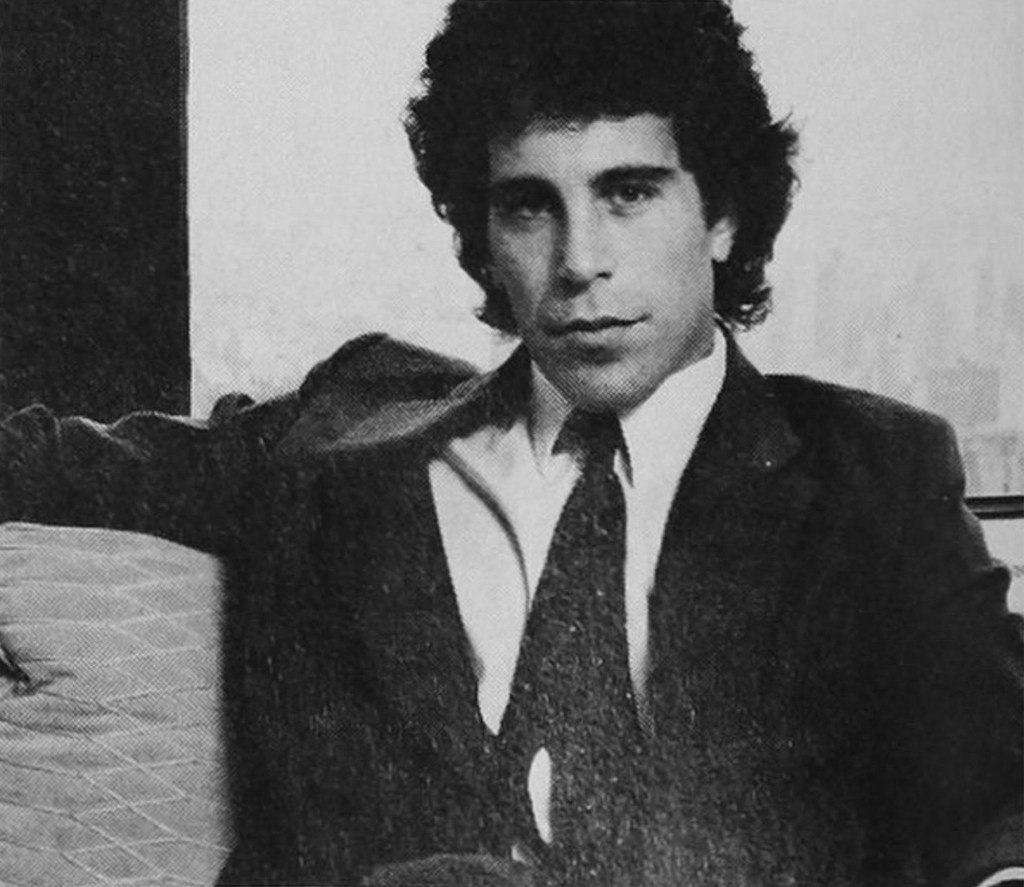
Without an impressive degree or two, Epstein said, “I knew nobody would give me a chance.”
This resonated with Tennenbaum. He had benefited from his own share of second chances over the years. And so he agreed to give Epstein one as well.
It was perhaps the first example of Epstein getting caught cheating — and then avoiding punishment thanks to his uncanny ability to take advantage of those in positions of power. This would become a lifelong pattern, one that largely explains Epstein’s remarkable success at amassing wealth and, eventually, orchestrating a vast sex-trafficking operation.