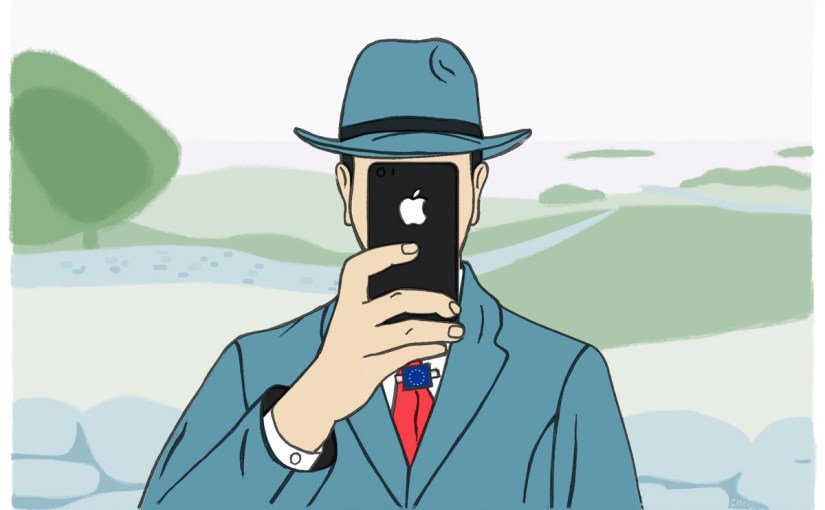
The Inside Story of Apple’s $14 Billion Tax Bill

The Maxforce concluded that Ireland allowed Apple to create stateless entities that effectively let it decide how much — or how little — tax it pays. The investigators say the company channeled profits from dozens of countries through two Ireland-based units. In a system at least tacitly endorsed by Irish authorities, earnings were split, with the vast majority attributed to a “head office” with no employees and no specific home base — and therefore liable to no tax on any profits from sales outside Ireland. The U.S., meanwhile, didn’t tax the units because they’re incorporated in Ireland.

Interesting detail about the secrecy surrounding the process of collecting such documents :

Three weeks after the Senate hearing, Lienemeyer’s team asked Ireland for details of Apple’s tax situation. The Irish tax authorities soon dispatched a representative carrying a briefcase filled with a bundle of bound pages. The Irish could have simply sent the material via e-mail, but they were cautious about sharing taxpayer’s information with the EU and have a ground rule to avoid leaks: never send such documents electronically.
→ Bloomberg

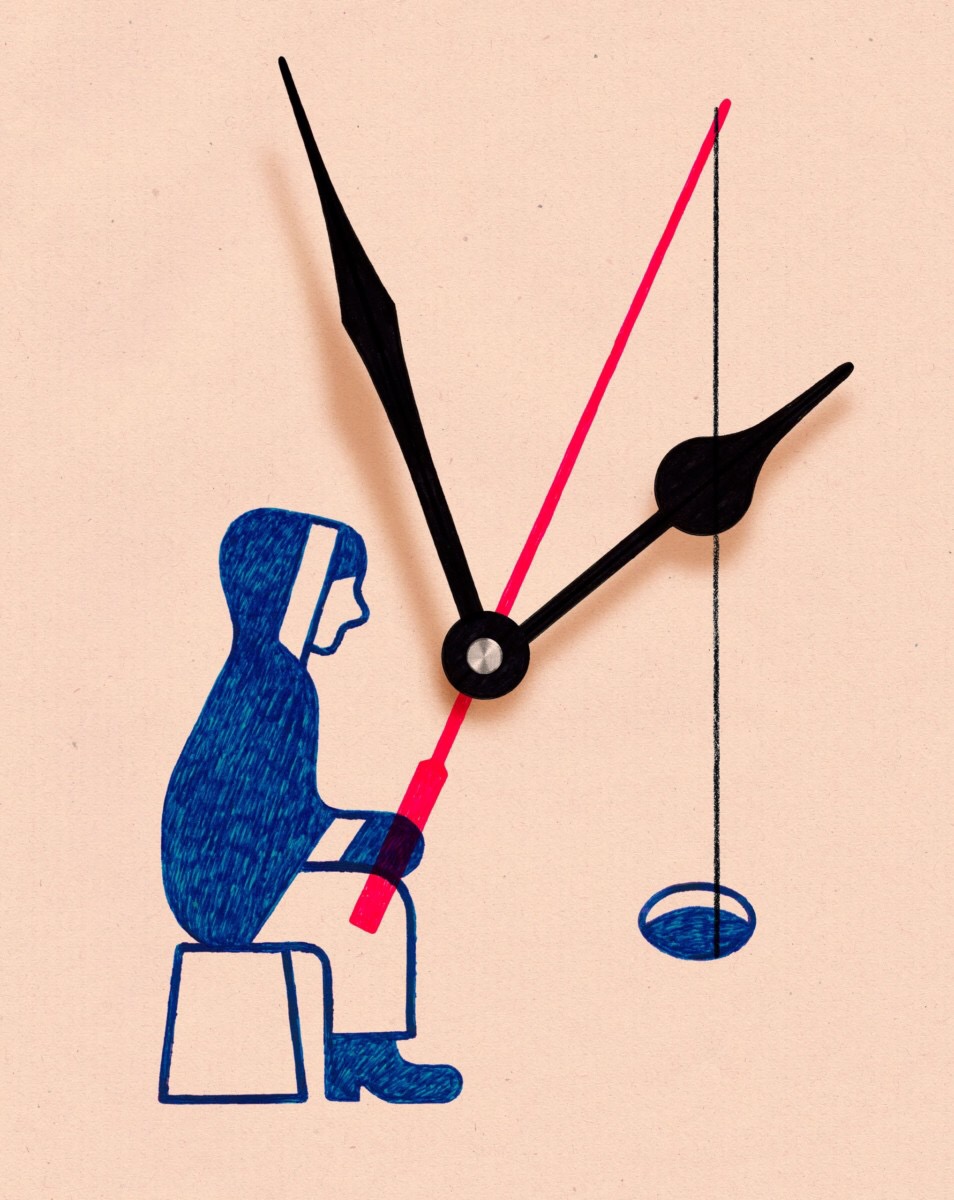
The Secret Life of Time


For more than two thousand years, the world’s great minds have argued about the essence of time. Is it finite or infinite? Does it flow like a river or is it granular, proceeding in small bits, like sand trickling through an hourglass? And what is the present? Is now an indivisible instant, a line of vapor between the past and the future? Or is it an instant that can be measured—and, if so, how long is it? And what lies between the instants? “The instant, this strange nature, is something inserted between motion and rest, and it is in no time at all,” Plato remarked in the fourth century B.C.E. “But into it and from it what is moved changes to being at rest, and what is at rest to being moved.”

→ The New Yorker

How to Hide $400 Million

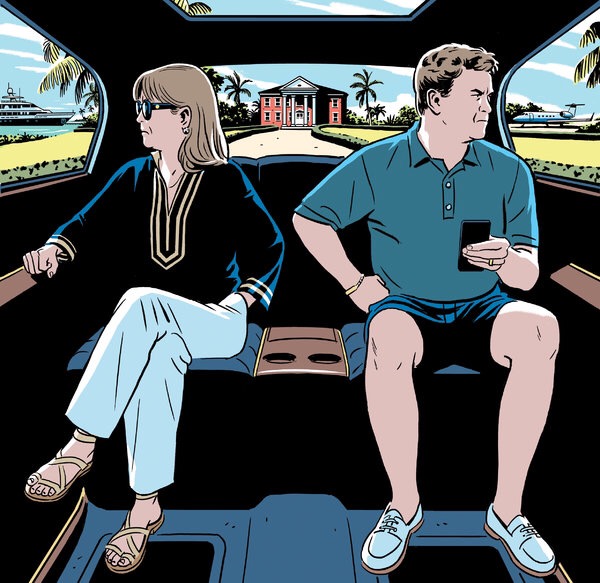
Illustration by R. Kikuo Johnson

This didn’t just threaten Oesterlund’s fortune. It also had the potential to carve open a portal into the world of offshore finance, a place that the global elite has spent hundreds of millions of dollars to build and defend. In the offshore archipelago, their interests are hidden behind shell companies and trusts, their anonymity guaranteed under the law, from Delaware to the Bahamas to the South Pacific. James S. Henry, a former chief economist at McKinsey, calls the offshore financial world the “economic equivalent of an astrophysical black hole,” holding at least $21 trillion of the world’s financial wealth, more than the gross domestic product of the United States.

→ The New York Times Magazine

The Great A.I. Awakening

Illustration by Pablo Delcan

And yet the rise of machine learning makes it more difficult for us to carve out a special place for us. If you believe, with Searle, that there is something special about human “insight,” you can draw a clear line that separates the human from the automated. If you agree with Searle’s antagonists, you can’t. It is understandable why so many people cling fast to the former view. At a 2015 M.I.T. conference about the roots of artificial intelligence, Noam Chomsky was asked what he thought of machine learning. He pooh-poohed the whole enterprise as mere statistical prediction, a glorified weather forecast. Even if neural translation attained perfect functionality, it would reveal nothing profound about the underlying nature of language. It could never tell you if a pronoun took the dative or the accusative case. This kind of prediction makes for a good tool to accomplish our ends, but it doesn’t succeed by the standards of furthering our understanding of why things happen the way they do. A machine can already detect tumors in medical scans better than human radiologists, but the machine can’t tell you what’s causing the cancer.

→ The New York Times

Untamed


On making friends with animals—the story of my life :

There was a canopy of leaves over my head. Once I moved beyond it, the moon lit my path, so I turned off the flashlight. I’d expected Carol to be gone by that point, but for the next half mile, all the way home, she walked with me, sometimes by my side and sometimes a few steps ahead, leading the way. No cars approached or passed. The road was ours, and we marched right down the center of it, all the way to the front of the house and then through the garden gate to the kitchen door. Just me and my wild friend Carol.

→ The New Yorker