Melania Trump, the Silent Partner

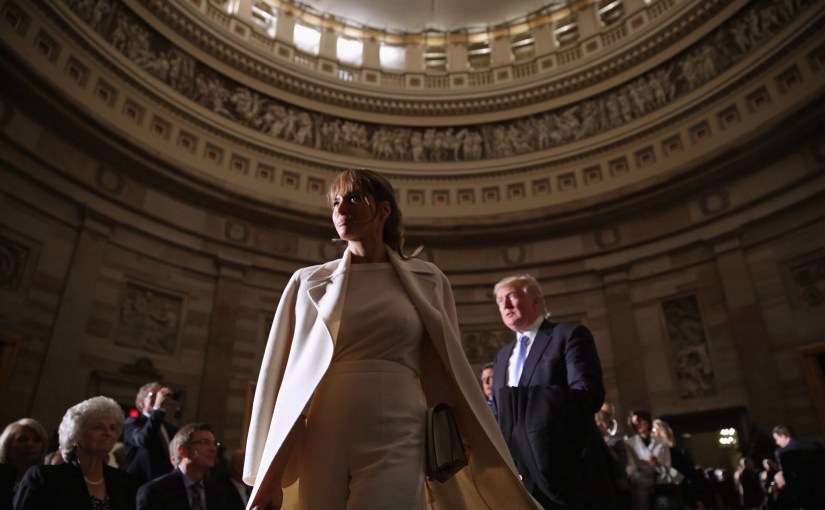
Observers of the business and ongoing theater of a Trump candidacy are bound to be struck by the passive role played by the candidate’s wife, one seeming to predate gender equality, in an embrace of values from an era when a potential first lady might be less likely to have served as her husband’s former law firm mentor (as Michelle Obama once was) than his carpet ornament.

→ The New York Times

One of the World’s Most Powerful Central Bankers Is Worried About Climate Change

Mark Carney, the governor of the Bank of England, on a future Black Swan :

“We don’t need an army of actuaries to tell us that the catastrophic impacts of climate change will be felt beyond the traditional horizons of most actors — imposing a cost on future generations that the current generation has no direct incentive to fix,” he said. “In other words, once climate change becomes a defining issue for financial stability, it may already be too late.”

→ The New York Times

Business Insider Isn’t Destroying Journalism It’s Saving It — From Itself

Following the previous post on the future of journalism, the big news in media today is the sale of Business Insider to Axel Springer. 

If I have anything to say about BI is that I try to avoid it, especially because of their tabloid headlines that I find more on the line with adverts you can find on sensationalistic websites rather than relevant titles on trustworthy publications. Unfortunately this is a trend on the web to gain more traffic, even for the most trusted sources — I’m looking at you Bloomberg. 

So maybe I unconsciously link BI’s headlines to adverts ?

There’s also the way they sometimes present the content, by “slicing” major news/reports into bullet points or stupid slideshows. I understand why they do so, but that’s not my kind of journalism. If I don’t want to take much time with news I open FastFT, NYT Now, The Economist Espresso or WSJ What’s News where articles, while short, are well written and contain much of what I need to know about the subjects. 

If a long, investigative newspaper article meanders without purpose, Business Insider will mercilessly slice and dice the article and cut to what is most essential. If you don’t give your audience what they want, someone else will[.]

No, Business Insider isn’t my kind of town. If I’m looking for some male-alpha business writings I go straight to ZeroHedge.com.

For my part, I let the original title of the article, though I may shorten it. Where I differ from them — quiet a bit actually, as I’m not a reporter myself — is that I tend to avoid quoting the most sensationalist piece of an article. I prefer to convey a bit of mystery that may encourage you to read the whole article elsewhere. 

→ Economonitor

The Financial Times And The Future Of Journalism

John Cassidy interviews John Ridding, the F.T.’s chief executive :

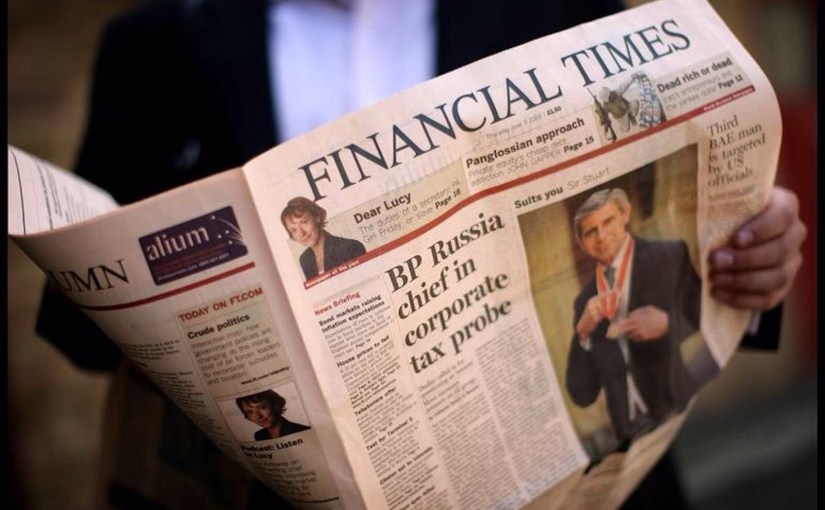
With my time almost up, I asked Ridding if he believed that the existential threat to serious journalism had now passed. “Well, I never believed in the existential threat to journalism,” he said. “I believed in some major challenges to the business model that supported journalism. But we were very confident—it was almost an instinctive belief within the F.T.—that quality journalism has a value, and that there is a business model … if you have the confidence to charge for it. Remember, when we did start charging online, we were regarded as sort of freakish, particularly in the U.S., particularly on the West Coast of the U.S. But we fundamentally believed that if it’s quality journalism, people will pay for it. That’s been vindicated.”

→ The New Yorker

Unclouded Vision

Prediction, like medicine in the early 20th century, is still mostly based on eminence rather than evidence. The most famous forecasters in the world are newspaper columnists and television pundits. Superforecasters make for bad media stars. Caution, nuance and healthy scepticism are less telegenic than big hair, a dazzling smile and simplistic, confident pronouncements. But even if the hoped-for revolution never arrives, the techniques and habits of mind set out in this book are a gift to anyone who has to think about what the future might bring. In other words, to everyone.

→ The Economist