Roubini Says The Art Market Is Rigged

Yet another rigged market, according to Nouriel Roubini, the man who predicted the housing crisis. As recent regulation and scandals make it harder to hide money from the eyes of institutions (and whistleblowers), capitals quietly move from tax-havens safes to renowned auction houses, valuing the entire market of public sales to $16.4bln in 2014 (approx. $70bln including private sales), more than four times the highs of a decade ago. The same can be told for the watch after-market too, though the numbers are much lower and highly concentrated between Rolex and Patek.

In another article, Mr. Roubini emphasis that Art is an asset class as a whole that needs to be regulated like other capital markets are.

But without further ado, John Gapper and Peter Aspden :

Regulation is needed in the art market because it is vulnerable to money laundering, tax evasion, trading on inside information and price manipulation, says one of the world’s most respected economists.

→ Financial Times

HSBC’s Stephen Green on Banking, Trust and Ethics

The guy burned down the house and he is now telling the financial world how to extinct his arson, which is somehow funny from such a morally-bankrupt mind. But hey, the man is not convicted — yet.

Anyhow, here is Stephen Green, ex-chairman of HSBC, on trust, morality and markets :

If we are to restore trust and confidence in the markets, we must therefore address what is at its root a moral question. Trust and confidence cannot be restored overnight, and they cannot be restored by fiat: the process of renewal has to begin with a recognition of the moral dimension of what has happened. It is as if we have grown increasingly to accept the idea that the value of what we do is fully delineated by the market, by regulatory compliance and the law of contract. If the market will bear it, if the law allows it, if there is a contract, then no other test of rightness need apply. Yet we would not (or should not, at least) live our private lives this way. So why should it be acceptable in business…?

→ Financial Times

Interview : Gabriel García Márquez

Gabriel García Márquez on the solitude of writers and dictators :

The writer’s very attempt to portray reality often leads him to a distorted view of it. In trying to transpose reality he can end up losing contact with it, in an ivory tower, as they say. Journalism is a very good guard against that. That’s why I have always tried to keep on doing journalism, because it keeps me in contact with the real world, particularly political journalism and politics. The solitude that threatened me after One Hundred Years of Solitude wasn’t the solitude of the writer; it was the solitude of fame, which resembles the solitude of power much more. My friends defended me from that one, my friends who are always there.

→ The Paris Review

Games People Play

Monthly Investment Outlook from Bill Gross :

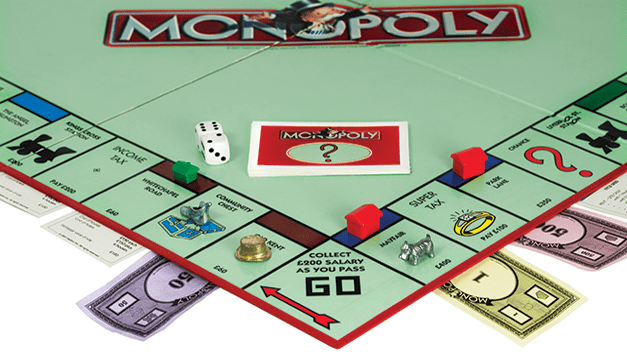
Good players know that it is critical to move quickly around the board, make acquisitions and then develop the properties by creating hotels. Three hotels on each property are desirable and of course as every Monopoly pro knows, it’s not Boardwalk or Park Place that are the key holdings but the Oranges and the Reds. Same thing in reality’s markets, I would suggest. Which companies and which investments to overweight and how much leverage to use usually point to the eventual winners. But an ample amount of cash is important as well as you land on other owners’ properties. You need liquidity to pay rent or service debt – otherwise you sell assets at a discounted price and are swiftly out of the game. That reminds me of Lehman Brothers and its aftermath. Early in Monopoly, property is king but later in the game, cash becomes king and those without cash and the ability to get it go bankrupt.

→ Janus Capital

Solving an Unsolvable Math Problem

In “The Psychology of Invention in the Mathematical Field,” published in 1945, Jacques Hadamard quotes a mathematician who says, “It often seems to me, especially when I am alone, that I find myself in another world. Ideas of numbers seem to live. Suddenly, questions of any kind rise before my eyes with their answers.” In the back yard, Zhang had a similar experience. “I see numbers, equations, and something even—it’s hard to say what it is,” Zhang said. “Something very special. Maybe numbers, maybe equations—a mystery, maybe a vision. I knew that, even though there were many details to fill in, we should have a proof. Then I went back to the house.”

→ The New Yorker