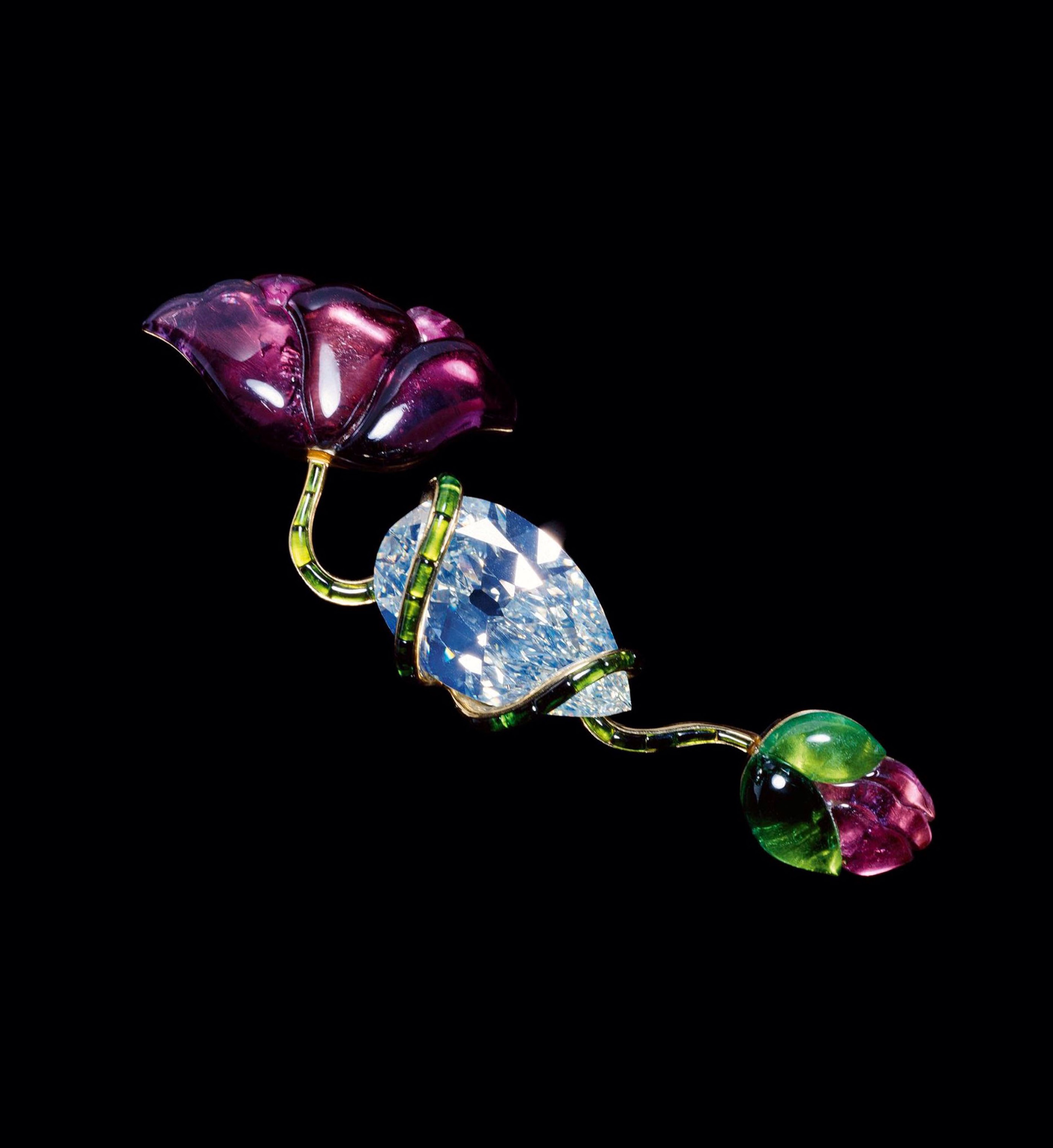
Unlike the big, heavily branded jewellery firms—Cartier, Graff, Harry Winston—JAR has just one small shop, a blank-fronted place in a dull plaza in Paris, and doesn’t spend a sou putting adverts in glossy magazines. Or indeed anywhere. Because secrecy is JAR’s secret weapon. You won’t find the shop’s address in any directories; as a rule, would-be customers have to be vetted and introduced, like Freemasons, by a friend. Rosenthal himself maintains a Garbo-like silence in the face of the press, giving only a handful of interviews in his 37-year career and—at least partly for reasons of security—never, ever allowing himself to be photographed.
Category: Art Market
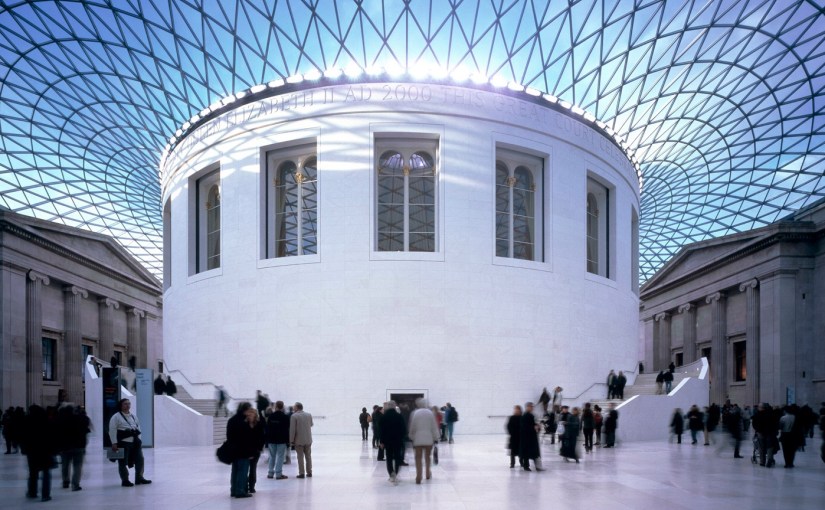
Why Museums Are The New Churches
If churches and cathedrals once stood at the top of the architectural hierarchy, today the museum is the building form that every serious architect dreams of designing. The financial Medicis of the 21st Century are not throwing much money at religious institutions – but a new museum, especially one offering naming rights, can attract the sort of budget that would once have been reserved for a cathedral.
And on our relationship to art :
The art museum has supplanted the church as the pinnacle of architectural ambition, but a more curious ecclesiastical shift may be taking place inside the museum’s walls. These days we frequently use religious language when talking about art. We make ‘pilgrimages’ to museums or to landmarks of public art in far-off locales. We experience ‘transcendence’ before major paintings or large-scale installations. Especially important works – Mona Lisa at the Louvre, most famously – are often displayed in their own niches rather than in historical presentations, all the better for genuflection. What is the busiest day of the week for most contemporary art museums? That would be Sunday: the day we used to reserve for another house of worship.
A Fearful Frenzy : The Art Market Now
But the most intriguing motive for the rampage of collecting involves a term unfamiliar to me: “store of value,” having nothing to do with a type of retail outlet. It is about liquidity that is vested rather than invested, and it speaks to dread. Besides being something that people buy when they already own everything else, art shares with gold and diamonds the desideratum (lacked by real estate) of being portable. Charlesworth observes that “alongside global prosperity has come a lot more political instability, and it’s in the interests of the social elite to keep their options open as to where they relocate.”
Your van Gogh is thus the equivalent of a packed suitcase kept under the bed against the morning of a telltale noise from the street outside.
And JJ Charlesworth to add :
And hey, if you want to get some of your wealth out of crumbling roubles and into some other form of asset, why not try art? Not just a few thousand pounds-worth, but millions of pounds worth, all concentrated into a handy bit of wood and canvas with some colors on it. And the best guarantee of its value is its rarity and the security of its reputation.
But where Charlesworth misses the point is precisely when markets crash :
As long as the world economy keeps growing, the art market bubble isn’t set to burst anytime soon. So if you’re a Gurlitt, or preferably the lucky inheritor of a restituted work of early 20th Century modern art, it’s time to sell.
There’s certainly a higher volatility in areas where art pieces are the most coveted, Russia, Middle East and BRICS. And this could hurt prices in the long run.
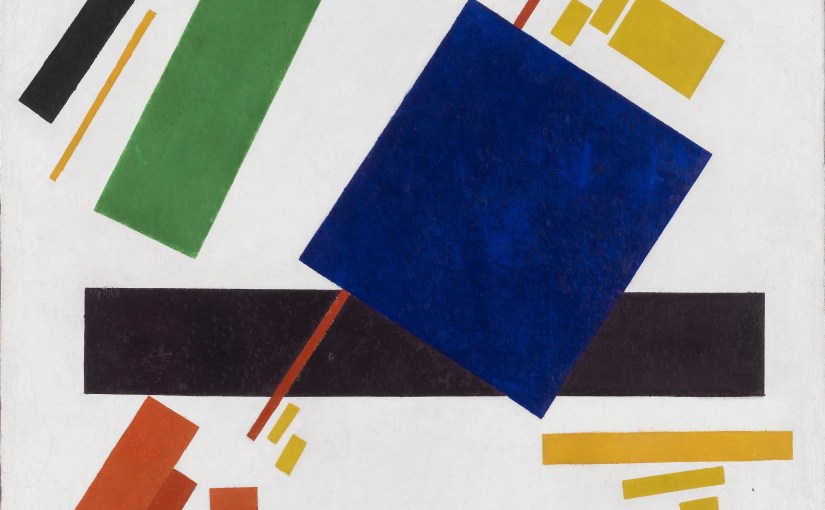
Credit : to the defunct Kazimir Malevich, Supermatist Composition, 1916
Mr. Bleu

Delighted to hear Bill Gross’ point of view regarding art collecting. He and his wife seem more impressed by stamps, which they’re renowned collectors.
I’ve never been much of an art aficionado myself, having settled for framing some All American Rockwells neatly clipped from old Saturday Evening Post covers. There was a time though when a well-publicized Rockwell came to auction and Sue and I expressed some interest. Ever since, we’ve been on the art house’s mailing lists and I must admit, it’s fun to browse through the Picassos, Rothkos, and whatever else currently frenzies modern collectors. I’m no expert though, and if I begin to pretend that I am, Sue puts me in my place because she’s the artist in the family. She likes to paint replicas of some of the famous pieces, using an overhead projector to copy the outlines and then just sort of fill in the spaces. “Why spend $20 million?” she’d say – “I can paint that one for $75”, and I must admit that one fabulous Picasso with signature “Sue”, heads the fireplace mantle in our bedroom
Roubini Says The Art Market Is Rigged
Yet another rigged market, according to Nouriel Roubini, the man who predicted the housing crisis. As recent regulation and scandals make it harder to hide money from the eyes of institutions (and whistleblowers), capitals quietly move from tax-havens safes to renowned auction houses, valuing the entire market of public sales to $16.4bln in 2014 (approx. $70bln including private sales), more than four times the highs of a decade ago. The same can be told for the watch after-market too, though the numbers are much lower and highly concentrated between Rolex and Patek.
In another article, Mr. Roubini emphasis that Art is an asset class as a whole that needs to be regulated like other capital markets are.
But without further ado, John Gapper and Peter Aspden :
Regulation is needed in the art market because it is vulnerable to money laundering, tax evasion, trading on inside information and price manipulation, says one of the world’s most respected economists.
 Abnormal Capitalist