The quantitative investment world plays down the prospect of machines supplanting human fund managers, pointing out that the prospect of full artificial intelligence is still distant, and arguing that human ingenuity still plays a vital role. But the confident swagger of the money management nerds is unmistakable. Already there are quasi-AI trading strategies working their magic in financial markets, and the future belongs to them, they predict.
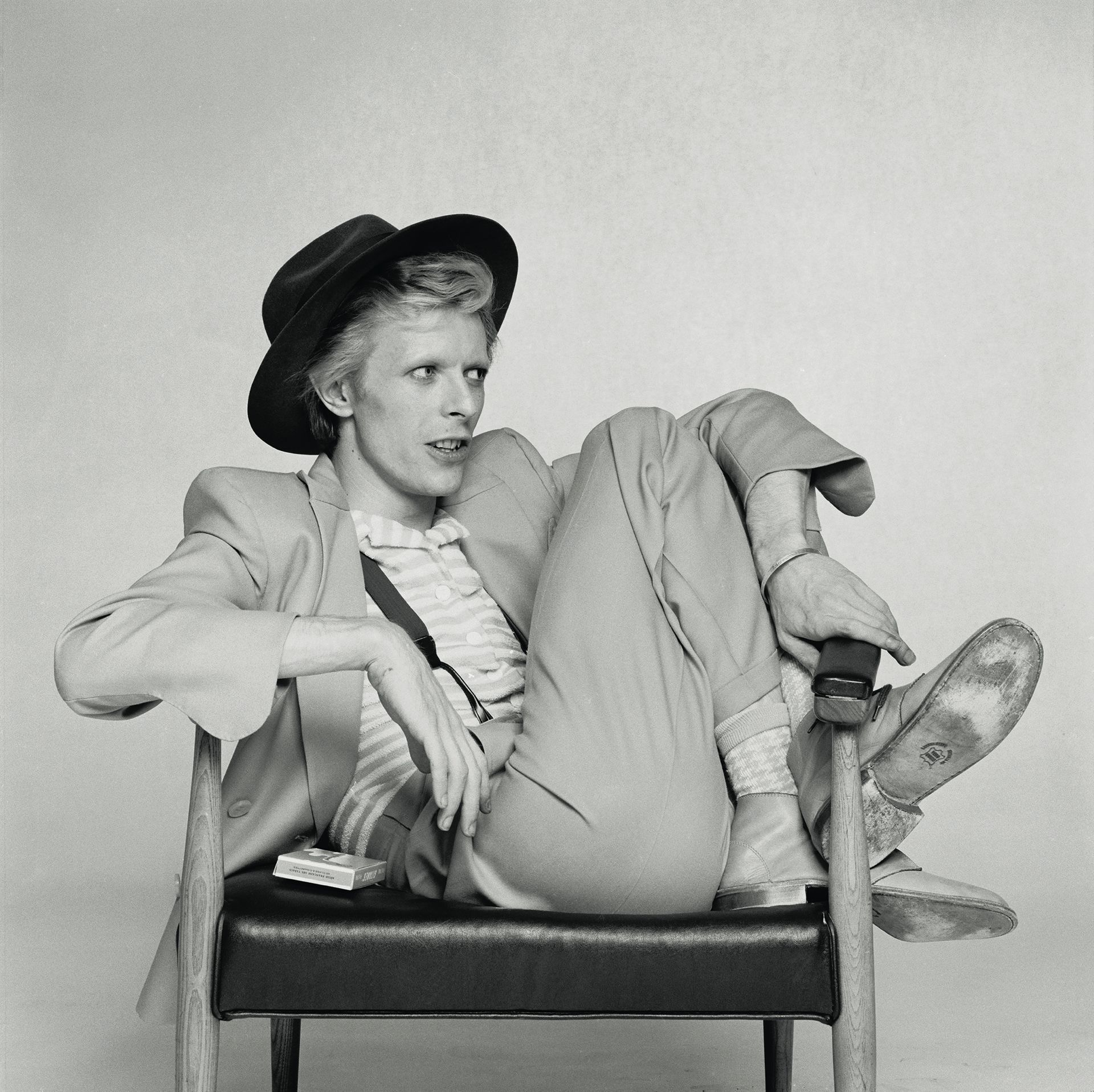
Credit : Terry O’Neil
Sure, this might be the last thing to come up when remembering Bowie, but hey—that’s genius :
The man behind “The Man Who Sold the World” was the first recording artist to go to Wall Street to tap the future earnings of his music, paving the way for a thriving market for esoteric securities backed by everything from racehorse stud rights to commercial washing machines.
David Bowie, who died from cancer at age 69 on Sunday, sold $55 million of bonds in 1997 that were tied to future royalties from hits including “Ziggy Stardust,” “Space Oddity” and “Changes.” Following his example were singers James Brown and Rod Stewart and the heavy-metal band Iron Maiden. Securities backed by royalties allow artists to raise money without selling the rights to their work or waiting years for payments to trickle in.
“Bowie’s bonds were as groundbreaking as his music,” said Rob Ford, a London-based money manager at TwentyFour Asset Management, which oversees 5.3 billion pounds ($7.7 billion). “Not only were they followed by a number of other artists, but they set the template for deals backed by a whole range of assets.”
And to conclude :
Bowie “changed the way people think about art and commerce,” Pullman said.
That was one hell of a trade. Boy, what a wild ride.
The Sunday after Lehman fell, pacing my empty trading floor, I realized once and for all that my models and reports could no longer tell me what to do. The one unmistakable fact was that my risks would increase if oil continued its decline. I decided that when I came in on Monday, I’d place a big bet that WTI would do just that.
And on a Saturday morning bike ride up the Hudson, it occurred to me that Mexico might be willing to restructure its deal—selling us back the option it owned, and buying a new one—in a way that would lock in billions of profits for the country, while giving me a much needed windfall too. I dropped my bike in a bush and texted our salesperson about the idea.
There were many other decisions and guesses, some made alone, others with help from my team, and still others made by my boss. All were guesswork, none could I have anticipated in stress testing, and all involved abandoning my original strategy along with the illusion of control it gave me.
A story on Raj Rajaratnam’s inside job and an unsuspected collateral damage:
In my many conversations with Das, I had failed to explain to her what insider trading was, how she ended up a millionaire on paper, and what her employer did in her name. Her sole source of aggrievement was the sum of Rs 8.5 lakh she believed Kumar owed her. Now, I heard her voice on the crackling line fill with hope. “Will he give me the two years’ pay he promised?” she asked. “If he does, that will be very good.” But, after a pause, she added, “If he does not, my life will continue.”
Switzerland to revive the 100 percent reserve banking argument :
The fall of Communism completely discredited the idea of a planned economy; even in the Soviet Union for about two decades before its collapse, few believed state planning could work. Somehow, the idea that governments are less evil and better at making financial decisions than private banks has survived that disaster. It’s mainly the banks’ fault: They have been flagrantly irresponsible. A state monopoly on money could test the theory, and Switzerland, where the central bank is disinclined to do crazy things and democratic institutions are more powerful than in most other places, could be an ideal proving ground.

 Abnormal Capitalist