Games People Play

Monthly Investment Outlook from Bill Gross :

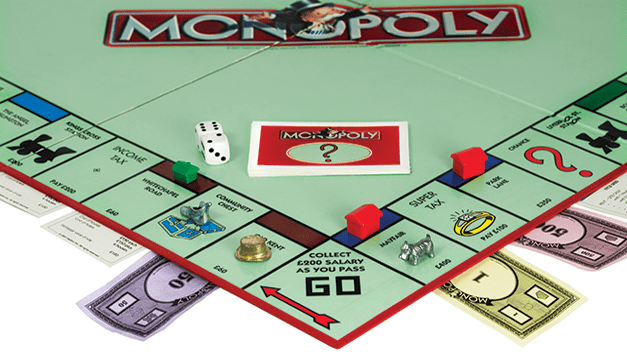
Good players know that it is critical to move quickly around the board, make acquisitions and then develop the properties by creating hotels. Three hotels on each property are desirable and of course as every Monopoly pro knows, it’s not Boardwalk or Park Place that are the key holdings but the Oranges and the Reds. Same thing in reality’s markets, I would suggest. Which companies and which investments to overweight and how much leverage to use usually point to the eventual winners. But an ample amount of cash is important as well as you land on other owners’ properties. You need liquidity to pay rent or service debt – otherwise you sell assets at a discounted price and are swiftly out of the game. That reminds me of Lehman Brothers and its aftermath. Early in Monopoly, property is king but later in the game, cash becomes king and those without cash and the ability to get it go bankrupt.
→ Janus Capital

Creative Destruction in Russia and America: The Case of Energy

An alternative explanation for the oil glut is that technical change was initiated by profit-motivated private companies for whom a price decrease was not part of their intention. They may have had no intention to hurt producers and help consumers. Other producers followed the innovators and adopted the new technology. The resulting competitive process is an example of Creative Destruction that produced net gains for the world economy, while simultaneously harming incumbent producers. Adam Smith’s famous description of the motives of a businessman is applicable: “.. he intends only his own gain, and he is in this, as in many other cases, led by an invisible hand to promote an end which was no part of his intention”.

→ Economonitor

Why Are Commodity Prices Falling ?

In fact, there are four channels through which the real interest rate affects real commodity prices (aside from whatever effect it has via the level of economic activity).

First, high interest rates reduce the price of storable commodities by increasing the incentive for extraction today rather than tomorrow, thereby boosting the pace at which oil is pumped, gold is mined, or forests are logged.

Second, high rates also decrease firms’ desire to carry inventories (think of oil held in tanks).
Third, portfolio managers respond to a rise in interest rates by shifting out of commodity contracts (which are now an “asset class”) and into treasury bills.

Finally, high interest rates strengthen the domestic currency, thereby reducing the price of internationally traded commodities in domestic terms (even if the price has not fallen in foreign-currency terms).

→ Project Syndicate

The Art Of Investing In Art

Only recently has art investing been viewed through the lens of modern portfolio theory and considered as a potential alternative investment in a portfolio of assets. Though research continues to shed more light on what has been historically an opaque market, studies show that art can offer long-term return potential that is uncorrelated with other asset classes.

→ J.P. Morgan

A Man in the Mirror

Bill Gross on our relationship to success, the heydays of investing and Michael Jackson :

Since the early 1970s when the dollar was released from gold and credit began its incredible, liquefying, total return journey to the present day, an investor that took marginal risk, levered it wisely and was conveniently sheltered from periodic bouts of deleveraging or asset withdrawals could, and in some cases, was rewarded with the crown of “greatness.” Perhaps, however, it was the epoch that made the man as opposed to the man that made the epoch.

→ PIMCO