What If Banks Didn’t Create Money?

Switzerland to revive the 100 percent reserve banking argument :

The fall of Communism completely discredited the idea of a planned economy; even in the Soviet Union for about two decades before its collapse, few believed state planning could work. Somehow, the idea that governments are less evil and better at making financial decisions than private banks has survived that disaster. It’s mainly the banks’ fault: They have been flagrantly irresponsible. A state monopoly on money could test the theory, and Switzerland, where the central bank is disinclined to do crazy things and democratic institutions are more powerful than in most other places, could be an ideal proving ground.

→ Bloomberg

Warren Buffett: Oracle or Orang-utan?

Buffett has taken the criticism from these fellow giants of finance in his stride, responding with trademark wit and humour. He even compared himself to an orang-utan flipping coins. Joking aside, this is a testable hypothesis: Is Buffett’s performance better than chance? To test it, we will stand on the shoulders of another giant: Jacob Bernoulli.

• • •

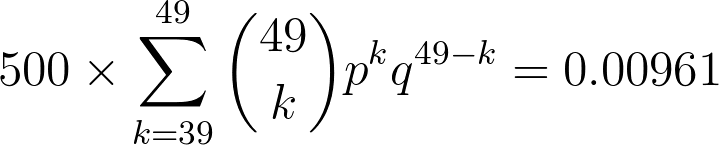
Again it is a very small number, but we can use our formula to calculate its value:

The expected value is much smaller than 1, so we can conclude that Buffett is a better investor than the luckiest orang-utan. If stock returns really do follow a random process – as Eugene Fama asserted – then Warren Buffett is more than just lucky. Compared with his competitors in the S&P 500, he’s brilliant.

→ StatsLife

Math’s Beautiful Monsters


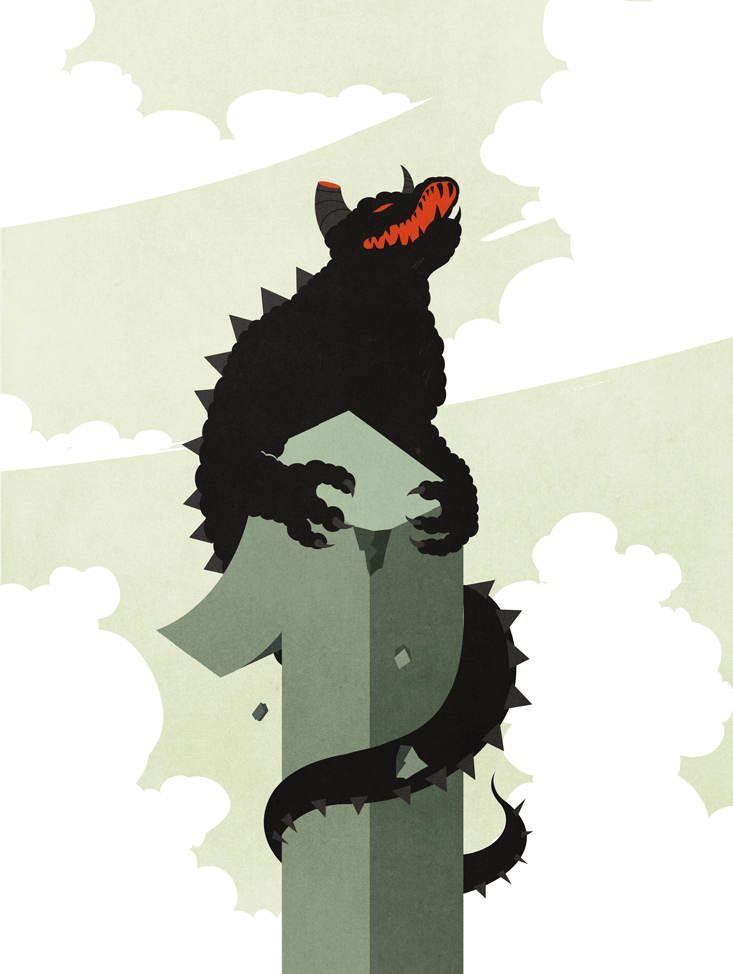
From fluid dynamics to finance, creatures like the Weierstrass function have challenged our ideas about the relationship between mathematics and the natural world. Mathematicians around the time of Weierstrass used to believe that the most useful mathematics was inspired by nature, and that Weierstrass’ work did not fit into that definition. But stochastic calculus and Mandelbrot’s fractals have proven them wrong. It turns out that in the real world—the messy, complex real world—monsters are everywhere. “Nature has played a joke on the mathematicians,” as Mandelbrot put it. Even Weierstrass himself fell victim to the trick. He created his function to argue that mathematics should not be based only on physical observations. His followers believed that Newton had been constrained by real-life intuition and that, once free of these limitations, there were vast, elegant new theories to be discovered. They thought that mathematics would no longer need nature. Yet Weierstrass’ monster has revealed the opposite to be true. The relationship between nature and mathematics runs deeper than anyone ever imagined.

Illustration : Alessandro Gottardo

→ Nautilus

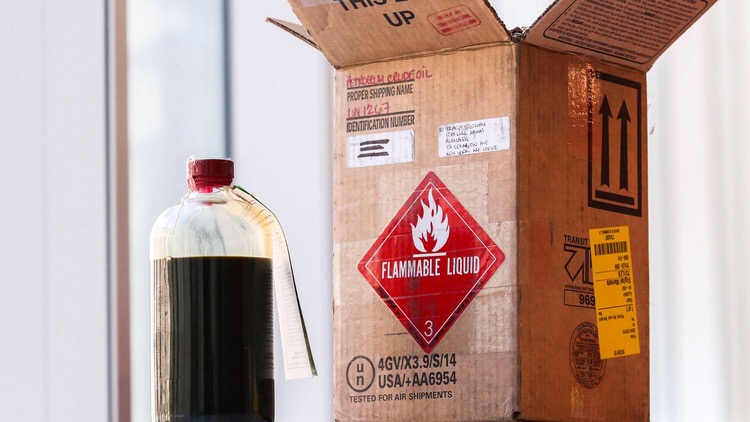
That Time I Tried to Buy an Actual Barrel of Crude Oil


On how to buy, store and trade an actual pint of oil. Hilarious :

If gold is the equivalent of a pet rock, then I can confidently say that oil is the equivalent of playing host to a herd of feral cats; it demands constant vigilance and maintenance. If gathered in sufficient quantities, it will probably try to kill you, or at least severely harm your health.

• • •

The ideal oil storage trade works something like this: Buy the crude and immediately agree to deliver it at a later date, thereby locking in the difference between the spot and futures prices for what is, in theory, a riskless profit. In 2008, when the forward price of oil vastly eclipsed the spot price, this kind of arbitrage could net a hefty return.

A true oil storage trade therefore required an early buyer. The usual suspects—think Glencore and Trafigura—wouldn’t dream of touching my puny amount oil, of course. So I looked further afield, all the way to my ex-colleagues, who I thought surely must still harbor those long-ago dreams of owning Black Gold.

→ Bloomberg

Did High-Frequency Trading Answer The Call ?

But it brings back bad memories of the stock market crash of 1987 when some Nasdaq dealers simply wouldn’t pick up their phones. They knew the investors on the other end were looking to sell their stocks and as market makers, these dealers would be obliged to buy—and they didn’t want to buy! In the aftermath of that incident, enraged investors demanded that the SEC prevent it from happening again. The Commission responded by forcing changes on Nasdaq, including mandating that market makers respond to messages on the fully electronic Small Order Execution System.

Today, the fully-automated Nasdaq market, with its market makers often using HFT techniques, is the very model of an efficient market that has dramatically lowered costs for investors.

Contrast that with the findings of the joint government staff report on the US Treasury “flash rally” which found high frequency traders “as a group continued to provide the majority of order book depth and a tight spread between bid and ask prices throughout the day, even during the event window.” In short, HFT answered the call.

→ Traders Magazine