David Zwirner’s Art Empire


Follow-up on Bouvier’s portrait, here’s David Zwirner’s :

By one-thirty, there was no sign of the American collector. Braka and Ortuzar huddled, and Ortuzar said, “I’m on it.” At one-fifty-two, the American appeared and resumed scrutinizing the painting. “Look at him sweating,” Zwirner whispered. After a while, he gave the collector a now-or-never gesture. The man borrowed a chair, sat down, and stared at the Richter for a while, chin in hand. Braka stood ten feet behind him. Soon the American got into what appeared to be a heated discussion with Schouwink. Ortuzar approached Braka, and Braka, with a pained smile, nodded and walked away. Zwirner joined the collector and Schouwink. He spoke emphatically to each of them, slapping the knuckles of one hand against the palm of the other. Everything is negotiable. At two-fourteen, the collector shook Zwirner’s hand and bent to kiss Schouwink’s. The Richter was his, and Zwirner had earned three hundred thousand dollars, enough to cover more than half the cost of the gallery’s booth in Basel.


→ The New Yorker

The Art-World Insider Who Went Too Far


The relationship between art dealer and collector is particular and charged. The dealer is mentor and salesman. He informs his client’s desires while subjecting himself to them at the same time. The collector has money, but he is also vulnerable. Relationships start, prosper, and fail for any number of reasons. It is not always obvious where power lies. Over time, each one can convince himself that he has created the other.

→ The New Yorker

El Chapo Speaks

Sean Penn :

I take no pride in keeping secrets that may be perceived as protecting criminals, nor do I have any gloating arrogance at posing for selfies with unknowing security men. But I’m in my rhythm. Everything I say to everyone must be true. As true as it is compartmentalized. The trust that El Chapo had extended to us was not to be fucked with. This will be the first interview El Chapo had ever granted outside an interrogation room, leaving me no precedent by which to measure the hazards. I’d seen plenty of video and graphic photography of those beheaded, exploded, dismembered or bullet-riddled innocents, activists, courageous journalists and cartel enemies alike. I was highly aware of committed DEA and other law-enforcement officers and soldiers, both Mexican and American, who had lost their lives executing the policies of the War on Drugs. The families decimated, and institutions corrupted.

• • •

Still, today, there are little boys in Sinaloa who draw play-money pesos, whose fathers and grandfathers before them harvested the only product they’d ever known to morph those play pesos into real dollars. They wonder at our outrage as we, our children, friends, neighbors, bosses, banks, brothers and sisters finance the whole damn thing. Without a paradigm shift, understanding the economics and illness of addiction, parents in Mexico and the U.S. will increasingly risk replacing that standard parting question to their teens off for a social evening – from “Where are you going tonight?” to “Where are you dying tonight?”

El Chapo? It won’t be long, I’m sure, before the Sinaloa cartel’s next shipment into the United States is the man himself.

→ Rolling Stone

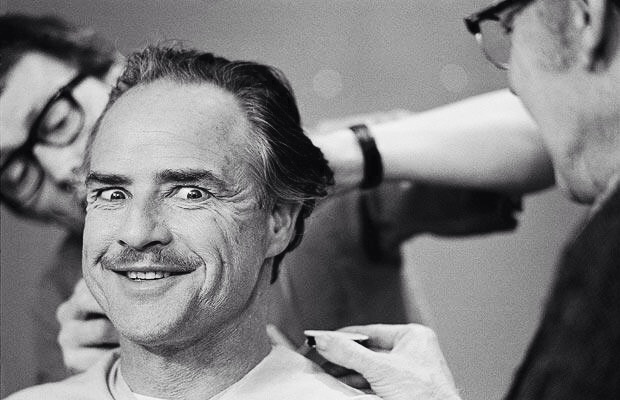
Marlon On Marlon… The Brando Tapes

Stevan Riley, the director of Listen To Me Marlon :

When Marlon was talking about acting, he’d say that your brain is your enemy. The first thing you must do is shut off your brain and just focus on feeling. It was about accessing emotions from the past for the character, which according to the method would involve you delving into your own past as well. Then, once you’d accessed the character emotionally, you’d bring your brain back in and figure out all the character’s mannerisms. The small details about what they eat, whether they’ve got fluff on their jumper they pick off on a regular basis – just tiny details you could stack, stack, stack so that they were there in your subconscious mind and you could then ditch them when the director said “Action!”

→ The Guardian

What It Takes to Pursue an NFL Dream

It sort of looks like a drama, but this heavily produced documentary is for real :

“Going from setting an NFL record and thinking that the sky’s the limit, and then slowly watching the walls close in on you…was the first time in my life when I feel like I let myself down,” Bell says in this sobering portrait documentary by the filmmaker Lance Oppenheim. Still, he is determined to find his way back to the NFL—football is the only kind of life he knows. “I wouldn’t even know how to go out and apply for a job today,” he says. “My resume was easy, you come to the game on Saturday, Friday, or Sunday, and you watch me play. And that’s my resume, it’s been my resume my whole life.”

→ The Atlantic