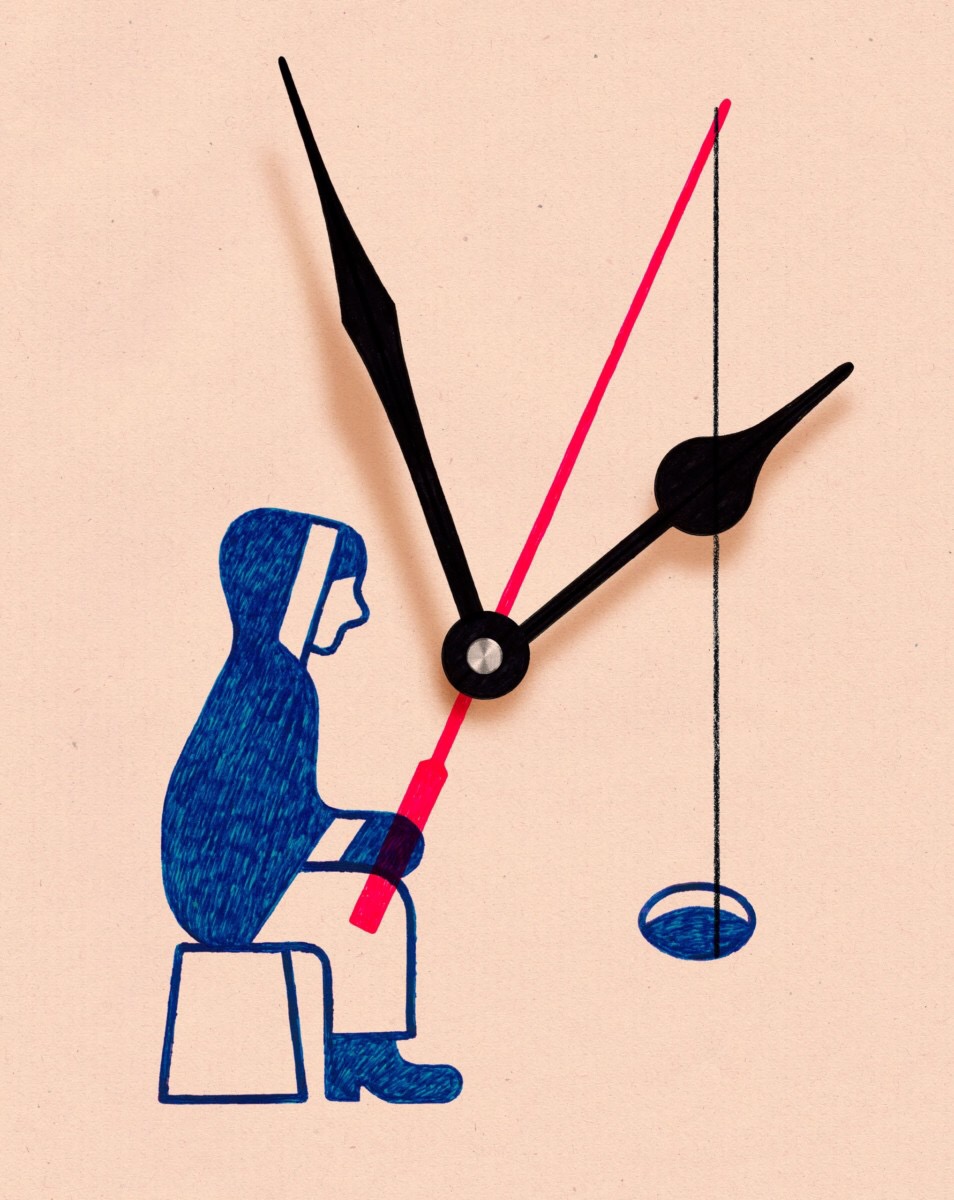
For more than two thousand years, the world’s great minds have argued about the essence of time. Is it finite or infinite? Does it flow like a river or is it granular, proceeding in small bits, like sand trickling through an hourglass? And what is the present? Is now an indivisible instant, a line of vapor between the past and the future? Or is it an instant that can be measured—and, if so, how long is it? And what lies between the instants? “The instant, this strange nature, is something inserted between motion and rest, and it is in no time at all,” Plato remarked in the fourth century B.C.E. “But into it and from it what is moved changes to being at rest, and what is at rest to being moved.”
Category: Psychology

Why You Can’t Help But Act Your Age
Most of us are slaves to our chronological age, behaving, as the saying goes, age-appropriately. For example, young people often take steps to recover from a minor injury, whereas someone in their 80s may accept the pain that comes with the injury and be less proactive in addressing the problem. “Many people, because of societal expectations, all too often say, ‘Well, what do you expect, as you get older you fall apart,’ ” says Langer. “So, they don’t do the things to make themselves better, and it becomes a self-fulfilling prophecy.”
It’s this perception of one’s age, or subjective age, that interests Antonio Terracciano, a psychologist and gerontologist at Florida State University College of Medicine. Horvath’s work shows that biological age is correlated with diseases. Can one say the same thing about subjective age?
The Voice in Your Head
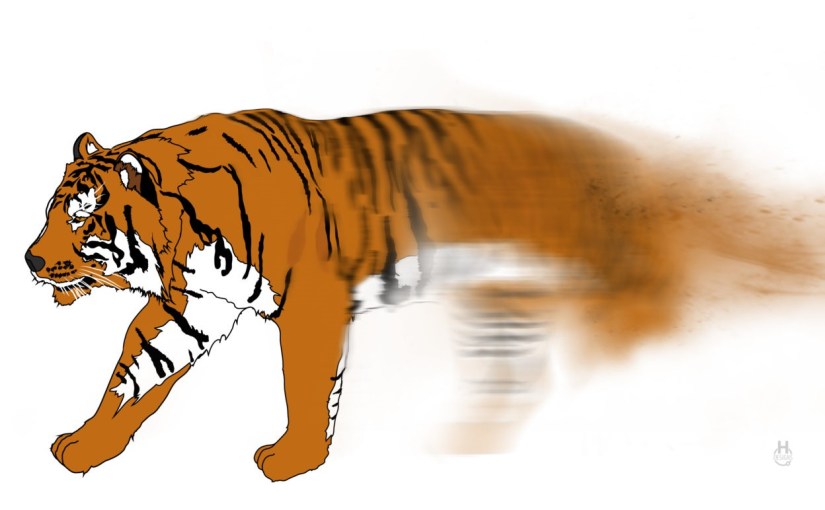
Given that thoughts are a jumble of fragments and pieces, it occurred to me that a recorded transcript of those jumbled pieces actually might not be very illuminating. It might not even be intelligible. Meanwhile the (admittedly much more arduous) process of writing down my thoughts had been surprisingly enlightening. In one swoop, my brain was capable of detecting the patchy notions swirling in my mind, filling in their gaps to make them whole—that is, adding the stripes—and then evaluating them for their credibility and value, or lack thereof.
In other words, my own brain was a brain decoder. It required a lot more effort than merely using a digital recorder as I’d imagined, but it was also a whole lot more sophisticated—say, a trillion times more—than anything scientists have conceived of inventing.

Kanye West Is A Human Being
Long life to The Outline, Joshua Topolsky’s new venture :
The pattern is by now familiar: a famous person makes a comment that inspires controversy and, in turn, sets off a public discussion about a number of serious issues. By the end, nothing is illuminated and someone has probably haphazardly apologized, publicly. It’s part of a broader flattening of the worlds of entertainment and news. In the online ecosystem where the two reside — more than 60 percent of adults in the US get their news on social media — everyone competes for attention by appealing to the same core emotions.
The Little Professor Syndrome

On the Asperger syndrome :
At first glance, this brightly decorated room is no different from that of any other elementary school. Shelves are filled with storybooks; on the chalkboard, a vertical line of words reads ”prudence,” ”pretzel,” ”prairie,” ”purple.” But the nervous agitation of the boys’ hands, punctuated by occasional odd flapping gestures, betrays the fact that something is off kilter. There is also a curious poster on one of the walls with a circle of human faces annotated with words like ”sad,” ”proud” and ”lonely.” When I ask Cacciabaudo about it, she explains that her students do not know how to read the basic expressions of the human face. Instead, they must learn them by rote.

