Google’s ‘TPU’ chip puts OpenAI on alert and shakes Nvidia investors

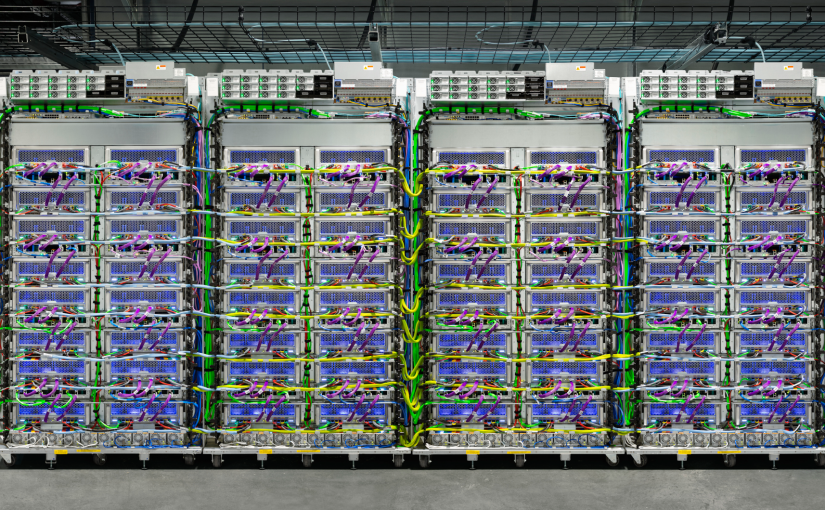
The origins of Google’s TPU date back to an internal presentation in 2013 by Jeff Dean, Google’s long-serving chief scientist, following a breakthrough in using deep neural networks to improve its speech recognition systems. 

“The first slide was: Good news! Machine learning finally works,” said Jonathan Ross, a Google hardware engineer at the time. “Slide number two said: “Bad news, we can’t afford it.”

Dean calculated that if Google’s hundreds of millions of consumers used voice search for just three minutes a day, the company would have to double its data-centre footprint just to serve that function — at a cost of tens of billions of dollars. 

→ Financial Times

Google’s AI Image Generator: No One’s Ready For This

Before / After Google’s Magic Editor

We briefly lived in an era in which the photograph was a shortcut to reality, to knowing things, to having a smoking gun. It was an extraordinarily useful tool for navigating the world around us. We are now leaping headfirst into a future in which reality is simply less knowable. The lost Library of Alexandria could have fit onto the microSD card in my Nintendo Switch, and yet the cutting edge of technology is a handheld telephone that spews lies as a fun little bonus feature. 

We are fucked.

→ The Verge

In Two Moves, AlphaGo and Lee Sedol Redefined the Future

Poignant documentary about the Lee Sedol versus the machine.

The symmetry of these two moves is more beautiful than anything else. One-in-ten-thousand and one-in-ten-thousand. This is what we should all take away from these astounding seven days. Hassabis and Silver and their fellow researchers have built a machine capable of something super-human. But at the same time, it’s flawed. It can’t do everything we humans can do. In fact, it can’t even come close. It can’t carry on a conversation. It can’t play charades. It can’t pass an eighth grade science test. It can’t account for God’s Touch.

But think about what happens when you put these two things together. Human and machine. Fan Hui will tell you that after five months of playing match after match with AlphaGo, he sees the game completely differently. His world ranking has skyrocketed. And apparently, Lee Sedol feels the same way. Hassabis says that he and the Korean met after Game Four, and that Lee Sedol echoed the words of Fan Hui. Just these few matches with AlphaGo, the Korean told Hassabis, have opened his eyes.

This isn’t human versus machine. It’s human and machine. Move 37 was beyond what any of us could fathom. But then came Move 78. And we have to ask: If Lee Sedol hadn’t played those first three games against AlphaGo, would he have found God’s Touch? The machine that defeated him had also helped him find the way.

→ Wired
Spreadsheet Superstars

His obnoxiousness stands out even more in this crowd, which seems to skew introverted and mild-mannered. Nobody’s exactly competing for stage time with Lau’s antics. But as uncomfortable as everyone appears to be with his shtick, they also seem to understand his point. After all, these people do puzzles for fun and overwhelmingly do financial modeling for work. For all the fun art projects and life-tracking stuff that everyday people do in Excel, the true customers for these tools are the money guys. The ones who used the advent of the spreadsheet to turn Wall Street into a global industry, that built wildly complicated things like collateralized debt obligations and helped usher in a financial crisis in 2008. The world may not run on spreadsheets, but spreadsheets run the world. Maybe all Lau is doing is saying the quiet part out loud, which is surprisingly uneasy in a room full of finance professionals.

→ The Verge

Andreessen Horowitz saw the future — but did the future leave it behind?

In many ways, a16z created the playbook for the boom times in tech. During the era of fawning tech journalism and low interest rates, valuations of private companies exploded. Founders were “geniuses” and “rockstars”; it was easy to raise and easy to spend. There were herds of “unicorns,” companies that are valued at more than $1 billion. (This is to say nothing of “decacorns.”) Startups stopped running lean and instead got fat, attempting to outspend their competition.

This strategy is now at least two vibe shifts behind.

→ The Verge