In Two Moves, AlphaGo and Lee Sedol Redefined the Future

Poignant documentary about the Lee Sedol versus the machine.

The symmetry of these two moves is more beautiful than anything else. One-in-ten-thousand and one-in-ten-thousand. This is what we should all take away from these astounding seven days. Hassabis and Silver and their fellow researchers have built a machine capable of something super-human. But at the same time, it’s flawed. It can’t do everything we humans can do. In fact, it can’t even come close. It can’t carry on a conversation. It can’t play charades. It can’t pass an eighth grade science test. It can’t account for God’s Touch.

But think about what happens when you put these two things together. Human and machine. Fan Hui will tell you that after five months of playing match after match with AlphaGo, he sees the game completely differently. His world ranking has skyrocketed. And apparently, Lee Sedol feels the same way. Hassabis says that he and the Korean met after Game Four, and that Lee Sedol echoed the words of Fan Hui. Just these few matches with AlphaGo, the Korean told Hassabis, have opened his eyes.

This isn’t human versus machine. It’s human and machine. Move 37 was beyond what any of us could fathom. But then came Move 78. And we have to ask: If Lee Sedol hadn’t played those first three games against AlphaGo, would he have found God’s Touch? The machine that defeated him had also helped him find the way.
→ Wired

One Nation, Tracked

One search turned up more than a dozen people visiting the Playboy Mansion, some overnight. Without much effort we spotted visitors to the estates of Johnny Depp, Tiger Woods and Arnold Schwarzenegger, connecting the devices’ owners to the residences indefinitely.

If you lived in one of the cities the dataset covers and use apps that share your location — anything from weather apps to local news apps to coupon savers — you could be in there, too.

If you could see the full trove, you might never use your phone the same way again.

→ The New York Times

Why CAPTCHA Have Gotten So Difficult

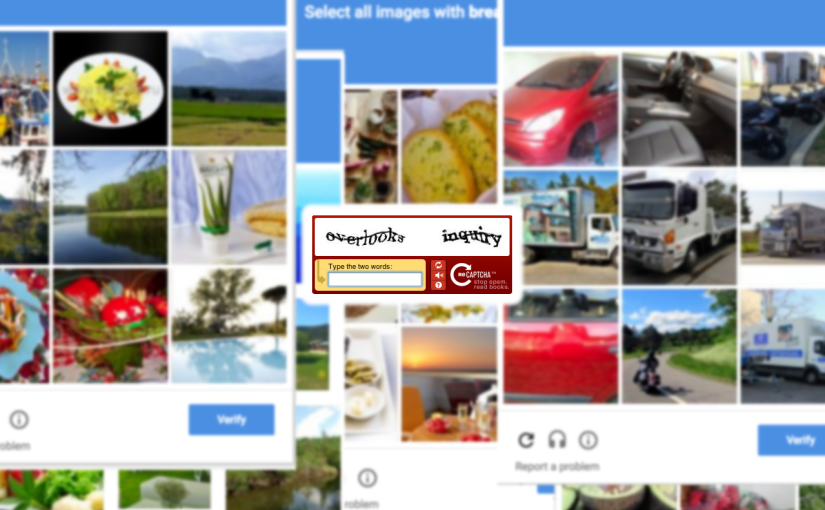
Because CAPTCHA is such an elegant tool for training AI, any given test could only ever be temporary, something its inventors acknowledged at the outset. With all those researchers, scammers, and ordinary humans solving billions of puzzles just at the threshold of what AI can do, at some point the machines were going to pass us by. In 2014, Google pitted one of its machine learning algorithms against humans in solving the most distorted text CAPTCHAs: the computer got the test right 99.8 percent of the time, while the humans got a mere 33 percent.

→ The Verge

The Dark Secret at the Heart of AI

Credit : Adam Ferriss

As the technology advances, we might soon cross some threshold beyond which using AI requires a leap of faith. Sure, we humans can’t always truly explain our thought processes either—but we find ways to intuitively trust and gauge people. Will that also be possible with machines that think and make decisions differently from the way a human would? We’ve never before built machines that operate in ways their creators don’t understand. How well can we expect to communicate—and get along with—intelligent machines that could be unpredictable and inscrutable?

Illustration : Adam Ferriss

→ MIT Technology Review

Is Artificial Intelligence Permanently Inscrutable?


The result is that modern machine learning offers a choice among oracles: Would we like to know what will happen with high accuracy, or why something will happen, at the expense of accuracy? The “why” helps us strategize, adapt, and know when our model is about to break. The “what” helps us act appropriately in the immediate future.

It can be a difficult choice to make. But some researchers hope to eliminate the need to choose—to allow us to have our many-layered cake, and understand it, too. Surprisingly, some of the most promising avenues of research treat neural networks as experimental objects—after the fashion of the biological science that inspired them to begin with—rather than analytical, purely mathematical objects.

→ Nautilus