A Different Approach To VC

Fred Wilson :

I wrote this to my partner the other day. I’m not going to provide the context. It doesn’t matter. It could have been about almost anything in the startup sector right now.
“the biggest thing that is wrong with the startup sector right now is entrepreneurs and their teams are too focused on valuation and not enough focused on business fundamentals”

→ A VC

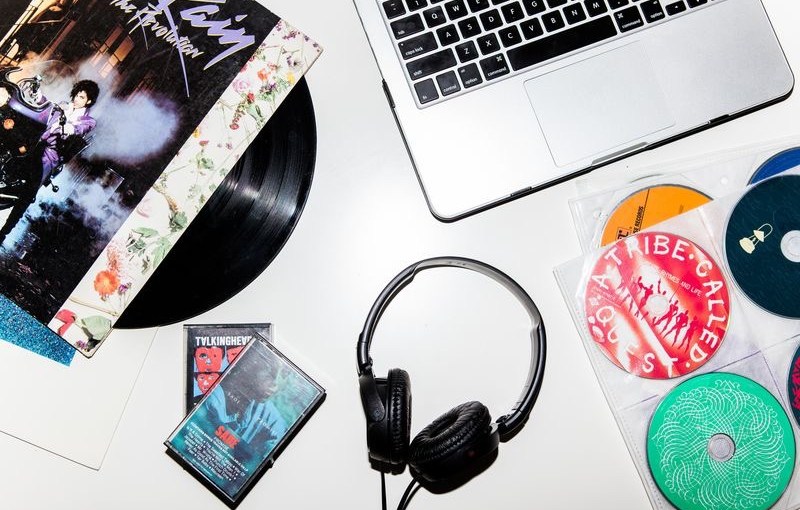
How Spotify’s Discover Weekly Cracked Human Curation At Internet Scale

The reason no one attempted something like Discover Weekly until now is because a static, personalized playlist is very risky. A radio stream usually begins with a prompt from the user and can adjust in real time based on a user’s feedback. Discover Weekly, by contrast, is two hours of music you get once a week with no real explanation of why you’re getting these tracks, or how to influence that process. Just like handing a mix tape to your crush in real life, once you finalize the playlist, you’re committed. Somehow Spotify’s algorithms manage to deliver me a consistently great experience.

Behind the scene :

“Today” contains the sample to “They Reminiscence Over You,” a hip-hop classic I’ve spun on Spotify dozens of times. Spotify knew I had never heard “Today,” at least not on their service, and was therefore ripe to be thrilled at connecting the dots. It was a recommendation driven less by the way the music sounds, or genre, than by the cultural and historical web that gives music so much of its power.

I tried pretty much every streaming services available and I’ve got to say that Spotify Discover Weekly is the best by far. The shear volume of tracks and artists that I’ve discovered and loved ever since is impressive. 

Looking at Monday’s playlist, I’ve liked 18 out of 30 tracks which means, at the end of the day, many more tracks and albums as soon as I will tap into the new artists that I’ve discovered today. A 60% positive-rate doesn’t seem much but the quality of the curation is here. Plus, all I had to do is to wait for my playlist to be refilled —every Monday. Not a bad way to start the week. 

A 100% music-match would freak me out, anyway, but isn’t that where we are heading to ?

→ The Verge

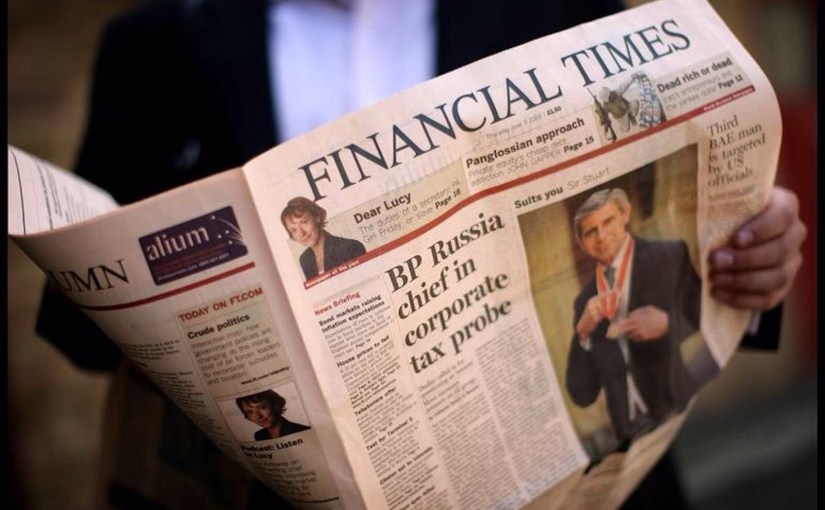
The Financial Times And The Future Of Journalism

John Cassidy interviews John Ridding, the F.T.’s chief executive :

With my time almost up, I asked Ridding if he believed that the existential threat to serious journalism had now passed. “Well, I never believed in the existential threat to journalism,” he said. “I believed in some major challenges to the business model that supported journalism. But we were very confident—it was almost an instinctive belief within the F.T.—that quality journalism has a value, and that there is a business model … if you have the confidence to charge for it. Remember, when we did start charging online, we were regarded as sort of freakish, particularly in the U.S., particularly on the West Coast of the U.S. But we fundamentally believed that if it’s quality journalism, people will pay for it. That’s been vindicated.”

→ The New Yorker

Apple Is Building Its Largest Startup Ever

Meanwhile in Cupertino, CA :

Apple’s ultimate success with Project Titan will depend not on whether Apple can build autonomous features into an automobile or come up with a breakthrough user interface. Rather, those features are byproducts of the much bigger product that Apple is trying to build: the best team of automotive experts in the world. Even though Apple prides itself on a culture that puts the product first, the biggest risk factor to Apple Car is corporate politics and too many layers of management and decision-making. Success will come from allowing ideas to grow from the design labs to showroom without having interference.

→ Above Avalon

The End Of The Free Web

The rise of ad-blocking will force us to confront the fact that the free lunch provided by advertising is not long for this world. The good news is that the ensuing crisis will compel us finally to look for what we should have invented decades ago, namely sustainable business models for the web. For example, it’s possible that cryptocurrencies might enable the “micro-payments” that would make users to pay a tiny amount for any article they read. We need more ideas like that, and I’m sure we’ll get them. Necessity is the mother of invention.

What about a monthly subscription ?

Let’s say that for 10 bucks a month you’d get access to several websites without having to deal with specific subscriptions, just a single one : the service. The service would gets a cut for its own profitability, then split variable revenues accros the differents publishers affiliated based on the pageviews of the reader/subscriber.

If the reader only opens a link per month, the 10 bucks minus the service‘s cut goes to that single publisher, and so on.

This idea has already been put in place in a rather confidential way by Elinea, a Dutch company, and more recently by another one — though I can’t remember its name. Both are based on the all-you-can-read model.

This could possibly gain momentum if indie publications with strong names jump onboard. But as of now, I bet they’re reluctant to get rid of The Deck and native ads, which they seem fine with.

Last week, the content-blocker Crystal announced a partnership with Eyeo, a service that whitelist website using ads considered as acceptable. The promise is that Crystal will indeed show ads that have been approved by the members of the organization, based on several criterias. 

From now on, I think this is a good trade of between cleaning big websites, which are imposing a shitload of ads (but also rely on subscriptions) and supporting indies (who don’t offer subscription for the most part). I encourage you to read more about Crystal’s initiative.

→ The Guardian