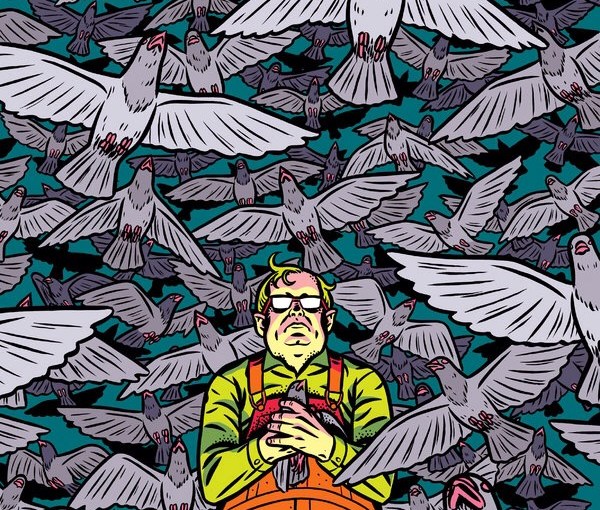
Birdman : The Pigeon King and the Ponzi Scheme

In a typical Ponzi scheme, like Bernie Madoff’s, the scammer moves money between investors, to pay what he claims are dividends on an investment that doesn’t actually exist. But Galbraith didn’t have a fake investment as a front. He had birds — lots of birds, and those birds created more birds, which he, in turn, was obligated to buy, then house, feed, water and medicate at considerable cost until he could sell them off to someone else. He appeared to miss the whole point of a Ponzi: He took the hidden, fungible fictions that give the scam its power and turned them into tangible liabilities.

→ The New York Times

Risky Business

Wishing all the best to the next endeavors.

David Sparks :

My other option was to leave my regular paycheck and health benefits behind and jump into the chaos that ensues from running a smaller, solo attorney law practice and (in my case) a book & video publishing business. I could serve just my clients with my own, smaller law practice and do things a bit more on my terms.

→ Mac Sparky

Interview : Gabriel García Márquez

Gabriel García Márquez on the solitude of writers and dictators :

The writer’s very attempt to portray reality often leads him to a distorted view of it. In trying to transpose reality he can end up losing contact with it, in an ivory tower, as they say. Journalism is a very good guard against that. That’s why I have always tried to keep on doing journalism, because it keeps me in contact with the real world, particularly political journalism and politics. The solitude that threatened me after One Hundred Years of Solitude wasn’t the solitude of the writer; it was the solitude of fame, which resembles the solitude of power much more. My friends defended me from that one, my friends who are always there.

→ The Paris Review

The Secret Life of Passwords

An ode to passwords :

But there is more to passwords than their annoyance. In our authorship of them, in the fact that we construct them so that we (and only we) will remember them, they take on secret lives. Many of our passwords are suffused with pathos, mischief, sometimes even poetry. Often they have rich back stories. A motivational mantra, a swipe at the boss, a hidden shrine to a lost love, an inside joke with ourselves, a defining emotional scar — these keepsake passwords, as I came to call them, are like tchotchkes of our inner lives. They derive from anything: Scripture, horoscopes, nicknames, lyrics, book passages. Like a tattoo on a private part of the body, they tend to be intimate, compact and expressive.

→ The New York Times