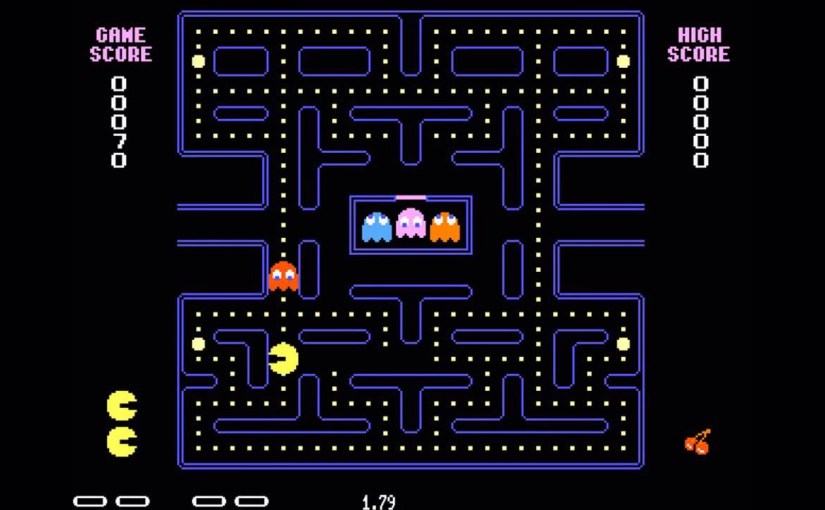
How Do The Ghosts In Pac-Man Decide Where To Go ?

The mathematics behind Pac-Man and the ghosts chasing him :

Put simply, Blinky is programmed to target whichever tile Pac-Man currently occupies, giving the illusion that he’s chasing the player. As the game progresses, Blinky’s speed increases to the point that he becomes marginally faster than Pac-Man at which point he becomes what fans refer to as “Cruise Elroy”. The exact number of dots you need to consume for Blinky to become Cruise Elroy depends on which level you’re currently playing, with the overall number dropping the further you get into the game to the point that he will assume Cruise Elroy form when there are still 60 dots left on screen. Blinky will momentarily cease being Cruise Elroy whenever the player loses a life.

→ Today I Found Out

The Age Of Loneliness

There’s just so much in this longform that I could not settle for just one or two paragraphs :

In the time I’d been gone, there had been a shift. Of course I had changed, and the trees had grown taller, but a greater swing—the kind that happens on a geological timescale of thousands or millions of years—was beginning to be widely acknowledged. Some scientists were becoming urgently vocal about the need to recognize that, in recent centuries, the world had entered a new epoch. They called it the Anthropocene. Planet Earth was now defined, they said, by the complete and utter dominance of human beings.

***

“It’s no longer us against ‘Nature,’” Paul Crutzen wrote in 2011. “Instead, it’s we who decide what nature is and what it will be.”

My favorite part — I love birds :

I stared down at my charge at the bottom of the basket. It was just a bird, but a bird that couldn’t be found anywhere on the East Coast forty years earlier, when DDT was so abundant that every falcon nest failed, the eggshells thinned beyond survival. This bird was hope. There in a room far above the famous Riverside Church sanctuary that gives so many people a place to put their faith, I looked into the bird’s dark eyes and found a place for my own.

A beautiful conclusion by Meera Subramanian. My thanks to her for this remarquable journey :

There is no trail going forward. We have to follow the lay of the land. We need to remember that when we leave the woods, it is not so easy to find our way back.

Credit : Steve McCurry, Canada

→ Guernica Magazine

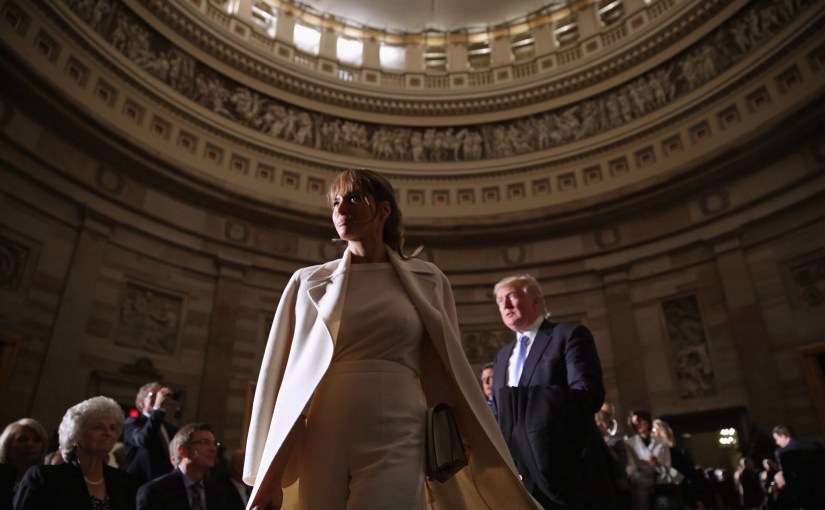
Melania Trump, the Silent Partner

Observers of the business and ongoing theater of a Trump candidacy are bound to be struck by the passive role played by the candidate’s wife, one seeming to predate gender equality, in an embrace of values from an era when a potential first lady might be less likely to have served as her husband’s former law firm mentor (as Michelle Obama once was) than his carpet ornament.

→ The New York Times

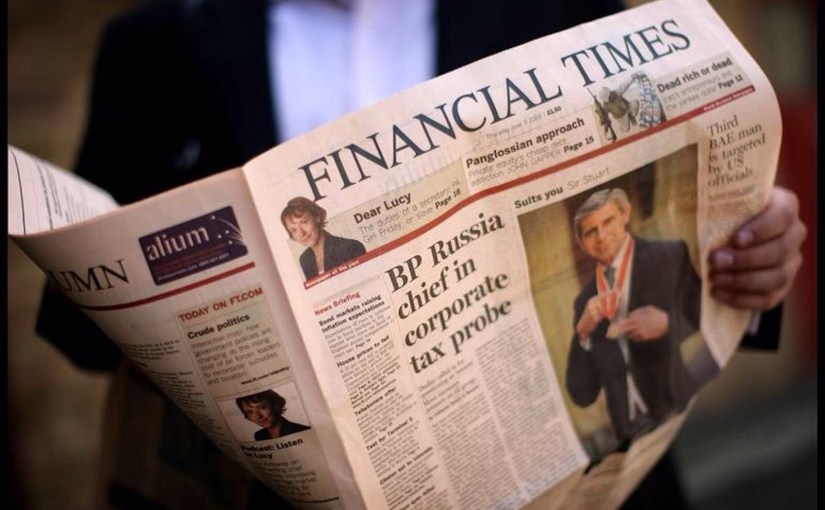
The Financial Times And The Future Of Journalism

John Cassidy interviews John Ridding, the F.T.’s chief executive :

With my time almost up, I asked Ridding if he believed that the existential threat to serious journalism had now passed. “Well, I never believed in the existential threat to journalism,” he said. “I believed in some major challenges to the business model that supported journalism. But we were very confident—it was almost an instinctive belief within the F.T.—that quality journalism has a value, and that there is a business model … if you have the confidence to charge for it. Remember, when we did start charging online, we were regarded as sort of freakish, particularly in the U.S., particularly on the West Coast of the U.S. But we fundamentally believed that if it’s quality journalism, people will pay for it. That’s been vindicated.”

→ The New Yorker

Michel Houellebecq : It’s Not My Role To Be Responsible

Credit : Richard Dumas
 
Some intellectuals said Houellebecq had been “irresponsible”. The media pressed him to apologise. Where once he was a bolshy rebel outsider, he now has a godlike status as France’s biggest literary export and, some say, greatest living writer – so what he says counts. But he denies any “responsibility”.

“It’s not my role to be responsible. I don’t feel responsible,” he says. “The role of a novel is to entertain readers, and fear is one of the most entertaining things there is.” To him, the fear in Submission comes in the dark violence at the novel’s start, before the moderate Islamist party comes to power. Was he deliberately playing on a mood of fear in France? “Yes, I plead guilty,” he says. For Houellebecq, the job of a novelist is foremost to hold a mirror up to contemporary society.

→ The Guardian