However China’s increased presence in East Africa has gradually raised concerns about the economic development of these countries as well as the environmental and social sustainability of their natural resources; what remains unclear is whether China’s recent FDI in East Africa has any real intention in helping to promote economic growth and development in these countries. In recent times, China has undertaken multiple investments in sub Saharan Africa that most people believe is due to China’s search for natural resources to feed its industrial output. But it has not always been the case.
Category: World
The Fall Of King Coal
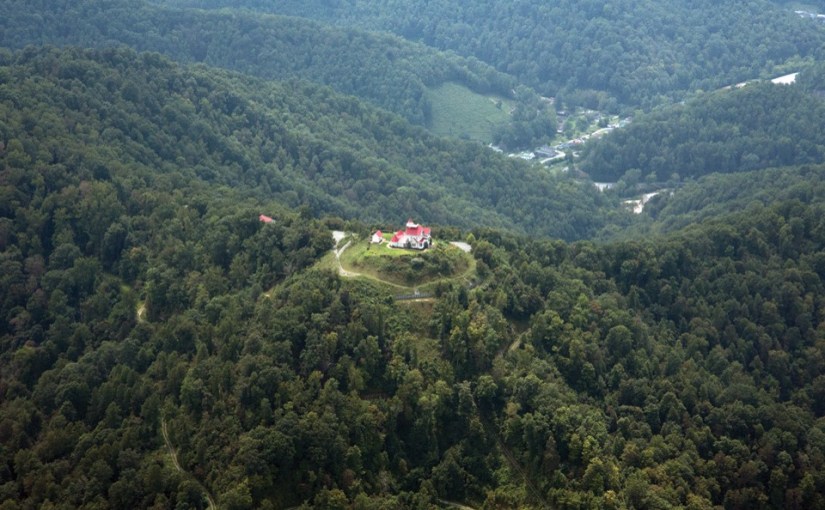
Even as Massey polluted the environment and exploited its employees, Blankenship cast himself as the true savior of West Virginia workers, who he claimed were being stifled by radical environmentalists perpetuating the hoax of climate change and by government bureaucrats imposing job-killing regulations. Increasingly he entered the political fray, spending millions to promote his anti-government philosophy.
Above is the one-time mountaintop estate of this gangster.
Apple, Amazon, Tesla and the Changing Dynamics of the Car Industry
The baby boomer generation romanticizes cars. Most boomers can recite the horsepower and other engine specs of every car they have ever owned. For the tail end of Gen X (my generation) and Millennials, a car is an interruption between Facebook and Twitter. We know the brand of speakers in our car, but if asked would have to google its horsepower. We feel little romanticism for our cars and have much higher brand loyalty to Apple and Google than to GM or Ford.

The Age Of Loneliness
There’s just so much in this longform that I could not settle for just one or two paragraphs :
In the time I’d been gone, there had been a shift. Of course I had changed, and the trees had grown taller, but a greater swing—the kind that happens on a geological timescale of thousands or millions of years—was beginning to be widely acknowledged. Some scientists were becoming urgently vocal about the need to recognize that, in recent centuries, the world had entered a new epoch. They called it the Anthropocene. Planet Earth was now defined, they said, by the complete and utter dominance of human beings.
***
“It’s no longer us against ‘Nature,’” Paul Crutzen wrote in 2011. “Instead, it’s we who decide what nature is and what it will be.”
My favorite part — I love birds :
I stared down at my charge at the bottom of the basket. It was just a bird, but a bird that couldn’t be found anywhere on the East Coast forty years earlier, when DDT was so abundant that every falcon nest failed, the eggshells thinned beyond survival. This bird was hope. There in a room far above the famous Riverside Church sanctuary that gives so many people a place to put their faith, I looked into the bird’s dark eyes and found a place for my own.
A beautiful conclusion by Meera Subramanian. My thanks to her for this remarquable journey :
There is no trail going forward. We have to follow the lay of the land. We need to remember that when we leave the woods, it is not so easy to find our way back.
Credit : Steve McCurry, Canada
The Deadly Disunity of the Europeans
Instead of mutualising, or sharing, risks, EU member states only share procedures and follow common rules. But the risks remain within member states. There are many areas where this approach is pragmatic and sensible. A sudden spike in immigration is not one of them. A quota system is far too crude, and politically as unsustainable as fiscal transfers between countries. Such policies breed resentment, and ultimately fail. In a quota system you do not kick cans down the road, but people.
 Abnormal Capitalist