However China’s increased presence in East Africa has gradually raised concerns about the economic development of these countries as well as the environmental and social sustainability of their natural resources; what remains unclear is whether China’s recent FDI in East Africa has any real intention in helping to promote economic growth and development in these countries. In recent times, China has undertaken multiple investments in sub Saharan Africa that most people believe is due to China’s search for natural resources to feed its industrial output. But it has not always been the case.
The Trouble With Financial Bubbles
Follow-up on macro-microprudential policies :
Industrial quantities of research, analysis, and debate have been devoted to the causes of the 2008 crisis and its consequences; so it seems odd that senior central bankers are still so sharply divided on the central issue of financial stability. All those days spent in secret conclave in Basel, drinking through the BIS’s legendary wine cellar, have apparently led to no consensus.
The Macro-Micro Conflict
Crisis, financial policy was dominated by microprudential regulations, the implicit assumption being that a successful micro policy was sufficient to maintain the efficient operation of the financial system, just as a successful anti-inflation policy was all that was required from monetary policy.
The limitations of both approaches became very clear during the Crisis and since then, macro has been a major part of financial policy. However, while the ultimate objectives and implementation tools of macro and micro are closely aligned, their intermediate objectives are not, setting the scene for conflict.
What It Takes to Pursue an NFL Dream
It sort of looks like a drama, but this heavily produced documentary is for real :
“Going from setting an NFL record and thinking that the sky’s the limit, and then slowly watching the walls close in on you…was the first time in my life when I feel like I let myself down,” Bell says in this sobering portrait documentary by the filmmaker Lance Oppenheim. Still, he is determined to find his way back to the NFL—football is the only kind of life he knows. “I wouldn’t even know how to go out and apply for a job today,” he says. “My resume was easy, you come to the game on Saturday, Friday, or Sunday, and you watch me play. And that’s my resume, it’s been my resume my whole life.”
The Passion Of Nicki Minaj
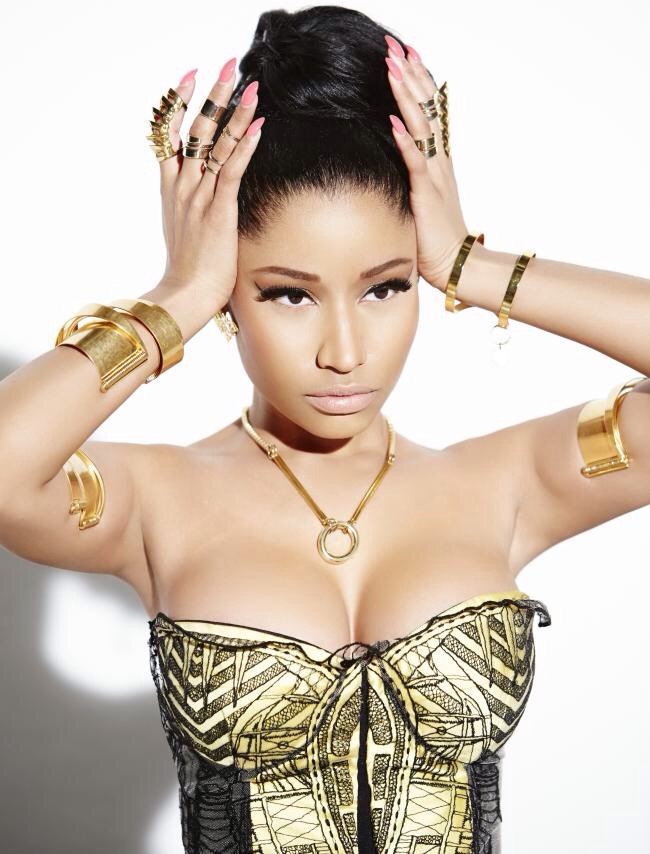
There’s nothing new about female artists struggling with issues of power and control, but we’re far today from the 1990s, when Queen Latifah proclaimed ‘‘every time I hear a brother call a girl a bitch or a ho/Trying to make a sister feel low/You know all that gots to go.’’ ‘‘Bitch,’’ in music, used to be an insult, a sneer, and it still can be. But female empowerment is a trend, and the word has been reclaimed — by Minaj, in many a track; by Rihanna, in ‘‘Bitch Better Have My Money’’; and triumphantly by Madonna, in her recent track ‘‘Bitch, I’m Madonna.’’ This is good for business and either good for women or not good for women at all.
In another era, Minaj’s sexuality, expressed semi-parodically — pretending she’s a Barbie doll; glorifying women dressed as prostitutes and set in red-light-district windows — might have given feminists pause. But in the 2010s, we have entered a different world in pop culture, one in which sexual repression is perceived as burdensome and perhaps even an inability to holistically integrate the body and self. Young people are identifying and exploring formerly unknown, or at least unlabeled, frontiers of sexuality and gender. And the fact that Minaj is in charge of her own objectification (describing her vagina with more words than I thought existed, and then amplifying its power by rhyming those words), as well as her own monetization (overt product placement in videos is a hallmark) has led most feminist voices to applaud her.

