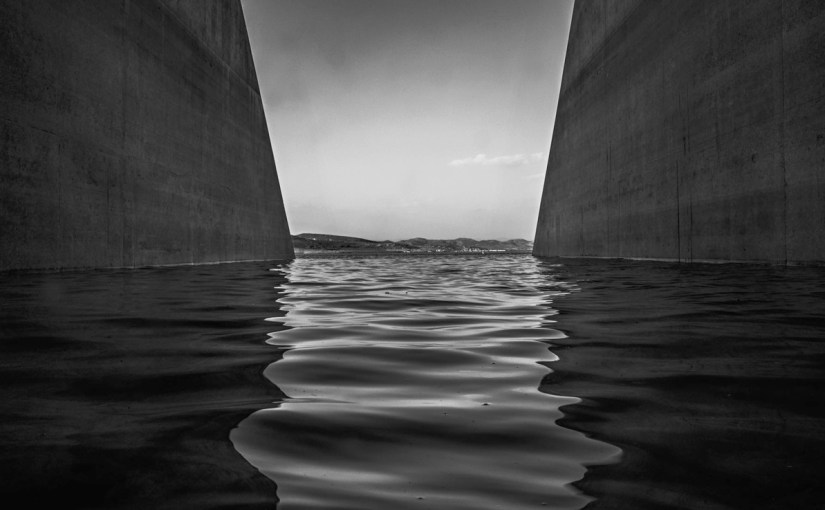
In the language of hydraulic engineering, the process eroding the foundation is known as “solutioning.” If that problem is not addressed, what happens next is “piping”: water begins to travel between the voids, moving horizontally beneath the dam. To illustrate, American engineers have devised a triangular chart. The process begins, at the apex, with solutioning, advances through cavity formation and piping, and ends with core collapse and, finally, dam breach—like a Florida sinkhole opening up, unannounced, beneath a shopping center. Engineers jokingly refer to the chart as the “triangle of death.” Schnittker told me, “Once piping begins, there is no going back. In twelve hours, the dam is gone.”
Author: Edouard Chazal
World War Three, by Mistake
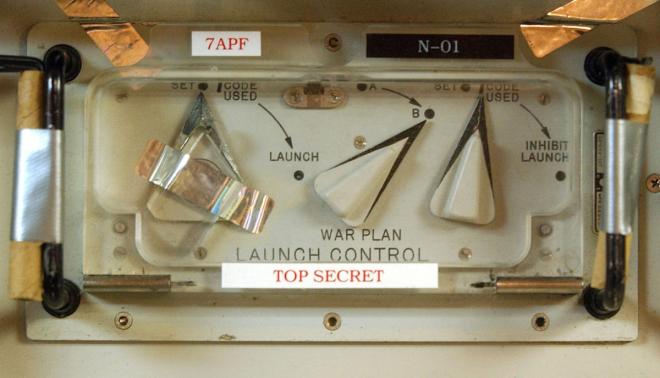
President Jimmy Carter’s national-security adviser, Zbigniew Brzezinski, was asleep in Washington, D.C., when the phone rang. His military aide, General William Odom, was calling to inform him that two hundred and twenty missiles launched from Soviet submarines were heading toward the United States. Brzezinski told Odom to get confirmation of the attack. A retaliatory strike would have to be ordered quickly; Washington might be destroyed within minutes. Odom called back and offered a correction: twenty-two hundred Soviet missiles had been launched.
Brzezinski decided not to wake up his wife, preferring that she die in her sleep. As he prepared to call Carter and recommend an American counterattack, the phone rang for a third time. Odom apologized—it was a false alarm. An investigation later found that a defective computer chip in a communications device at NORAD headquarters had generated the erroneous warning. The chip cost forty-six cents.

The Inside Story of Apple’s $14 Billion Tax Bill
The Maxforce concluded that Ireland allowed Apple to create stateless entities that effectively let it decide how much — or how little — tax it pays. The investigators say the company channeled profits from dozens of countries through two Ireland-based units. In a system at least tacitly endorsed by Irish authorities, earnings were split, with the vast majority attributed to a “head office” with no employees and no specific home base — and therefore liable to no tax on any profits from sales outside Ireland. The U.S., meanwhile, didn’t tax the units because they’re incorporated in Ireland.
Interesting detail about the secrecy surrounding the process of collecting such documents :
Three weeks after the Senate hearing, Lienemeyer’s team asked Ireland for details of Apple’s tax situation. The Irish tax authorities soon dispatched a representative carrying a briefcase filled with a bundle of bound pages. The Irish could have simply sent the material via e-mail, but they were cautious about sharing taxpayer’s information with the EU and have a ground rule to avoid leaks: never send such documents electronically.
The Secret Life of Time

For more than two thousand years, the world’s great minds have argued about the essence of time. Is it finite or infinite? Does it flow like a river or is it granular, proceeding in small bits, like sand trickling through an hourglass? And what is the present? Is now an indivisible instant, a line of vapor between the past and the future? Or is it an instant that can be measured—and, if so, how long is it? And what lies between the instants? “The instant, this strange nature, is something inserted between motion and rest, and it is in no time at all,” Plato remarked in the fourth century B.C.E. “But into it and from it what is moved changes to being at rest, and what is at rest to being moved.”
How to Hide $400 Million

This didn’t just threaten Oesterlund’s fortune. It also had the potential to carve open a portal into the world of offshore finance, a place that the global elite has spent hundreds of millions of dollars to build and defend. In the offshore archipelago, their interests are hidden behind shell companies and trusts, their anonymity guaranteed under the law, from Delaware to the Bahamas to the South Pacific. James S. Henry, a former chief economist at McKinsey, calls the offshore financial world the “economic equivalent of an astrophysical black hole,” holding at least $21 trillion of the world’s financial wealth, more than the gross domestic product of the United States.
 Abnormal Capitalist