A Fearful Frenzy : The Art Market Now

But the most intriguing motive for the rampage of collecting involves a term unfamiliar to me: “store of value,” having nothing to do with a type of retail outlet. It is about liquidity that is vested rather than invested, and it speaks to dread. Besides being something that people buy when they already own everything else, art shares with gold and diamonds the desideratum (lacked by real estate) of being portable. Charlesworth observes that “alongside global prosperity has come a lot more political instability, and it’s in the interests of the social elite to keep their options open as to where they relocate.”

Your van Gogh is thus the equivalent of a packed suitcase kept under the bed against the morning of a telltale noise from the street outside.

And JJ Charlesworth to add :

And hey, if you want to get some of your wealth out of crumbling roubles and into some other form of asset, why not try art? Not just a few thousand pounds-worth, but millions of pounds worth, all concentrated into a handy bit of wood and canvas with some colors on it. And the best guarantee of its value is its rarity and the security of its reputation.

But where Charlesworth misses the point is precisely when markets crash :

As long as the world economy keeps growing, the art market bubble isn’t set to burst anytime soon. So if you’re a Gurlitt, or preferably the lucky inheritor of a restituted work of early 20th Century modern art, it’s time to sell.

There’s certainly a higher volatility in areas where art pieces are the most coveted, Russia, Middle East and BRICS. And this could hurt prices in the long run. 

→ The New Yorker

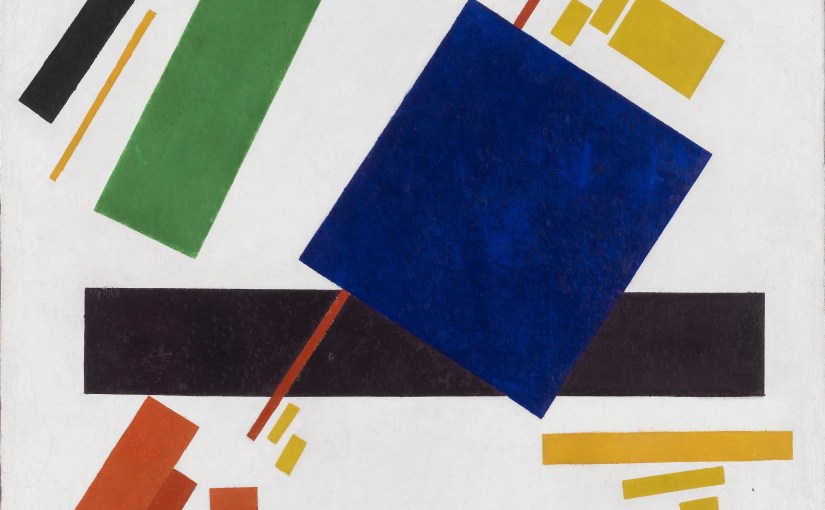
Credit : to the defunct Kazimir Malevich, Supermatist Composition, 1916

Stop Making Fun Of 50 Cent’s Bankruptcy

Rappers, like kings, like to brag about their money because it shows influence and status. Versailles, the vomitously elaborate gilded palace outside Paris, was nothing if not Louis XIV’s attempt to overcome doubters about his throne with an intimidating show of power and wealth. Meanwhile, he was driving himself and his aristocrats to near-bankruptcy — not to mention France itself, which suffered lost wars and financial hardship. This is why there are so many parallels between Renaissance bling and the rappers of today: Gold always speaks loudly, and frequently moreso than the truth.

From Fitty himself :

Could you love me in a Bentley?
Could you love me on a bus?
I’ll ask 21 questions and they all about us

→ Mashable

Complacency And Incrementalism Are Traps To Avoid

Lawrence Summers :

Famously, while you can fool all of the people some of the time and some of the people all of the time, you cannot fool all of the people all of the time. In the same way, markets may well be inefficient and diverge from fundamental value, and they may well be subject to government manipulation for significant intervals, but it is a foolish government that supposes it can indefinitely maintain speculative prices at politically convenient levels, as the Chinese authorities may soon discover.

→ Financial Times

Volatility As An Opportunity Class

Like navigating busy Southern California freeways, volatility option trading is path dependent: Whether one makes or loses money depends on the path taken from point A to point B – as well as what happens en route. As with the freeways, bypassing traffic and finding an optimal route can make a big difference. As a real world example, driving to downtown Los Angeles from Newport Beach can take anywhere from 45 minutes to four hours depending on the route and road conditions (such as, perhaps, unexpected construction). It’s a dynamic process, as volatility – or “traffic” – can create more volatility.

→ PIMCO

Bad Ads On Websites

René Ritchie is right to compare ad-exchanges to black-boxes, you never know what you’ll get :

We also have no ability to screen ad exchange ads ahead of time; we get what they give us. We can and have set policies, for example, to disallow autoplay video or audio ads. But we get them anyway, even from Google. Whether advertisers make mistakes or try to sneak around the restrictions and don’t get caught, we can’t tell. It happens, though, all the time.

When bad ads appear, we report them and ask that they be disabled. Since different people in different geographies see different ads, it can be a challenge to identify them, and it can take a while to get them pulled. It’s a horrible process for everyone involved.

It’s so bad, our tech team has been exploring their own “bad ads” extension that would identify any resource-heavy ads that violate our policies, and provide us with better information so the ad network can more easily find and kill them. And yes, we’re well aware of how insane that sounds.

→ iMore