Milestone #2 : Important to my Readers

Okay guys, we’ve made it. February 2015 is the best month for The AbCap.

I’d like thank you all for viewing, liking and sharing some of these articles. I take no pride in the process, they all belong to their authors.

Anyhow, you’ve probably contributed more to the blog than many of my friends, which feels weird, but that allowed me to connect with new people. I thank you for that.

Numbers remain undisclosed because they’re shy and irrelevant to any and especially me. I do it for my own pleasure and try to invest in it as much as I can — not much actually.

Being tied to a blog made me even more curious, more opened in order to deliver to you some great pieces. Many didn’t make it to The AbCap, but it certainly cultured me.

It doesn’t matter the outcome as long as it feels great to you.

→ Merci
Lost in Syria

Heartbreaking :

Ann learned from the funeral parlor that Harroun, an honorably discharged veteran, was entitled to a plot in Arizona’s national cemetery. A year earlier, he had been awaiting trial for supporting an affiliate of Al Qaeda; now he would be buried among war heroes.

It rained on the day of the funeral service. Family and friends gathered under a portico to hear Ann speak about Harroun’s compassion, the “many tears” he had caused, and the “many trips to the principal’s office” she had made. Flags flew at half-mast. A bugler played taps. Two uniformed soldiers wearing white gloves presented Ann with a folded American flag.

→ The New Yorker

Game Theory Calls Cooperation Into Question

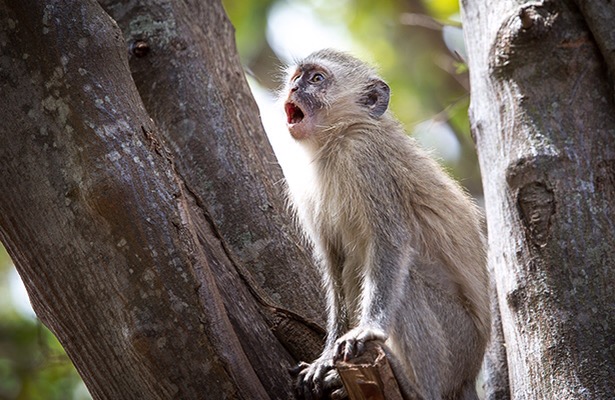
Vervet monkeys are known for their alarm calls. A monkey will scream to warn its neighbors when a predator is nearby. But in doing so, it draws dangerous attention to itself. Scientists going back to Darwin have struggled to explain how this kind of altruistic behavior evolved. If a high enough percentage of screaming monkeys gets picked off by predators, natural selection would be expected to snuff out the screamers in the gene pool. Yet it does not, and speculation as to why has led to decades of (sometimes heated) debate.

Researchers have proposed different possible mechanisms to explain cooperation. Kin selection suggests that helping family members ultimately helps the individual. Group selection proposes that cooperative groups may be more likely to survive than uncooperative ones. And direct reciprocity posits that individuals benefit from helping someone who has helped them in the past.

→ Quanta Magazine

Overnight vs. Intraday Expected Returns

IMG_1378
Panel A lists the close-to-close returns of the momentum strategy. As discussed above, close-to-close return equals the sum of the overnight return and the intraday return. Momentum seems to show up in close-to-close returns. Panel B shows the main result of this paper: Almost ALL of the abnormal returns in the momentum strategy are generated overnight, rather than intraday.

→ Alpha Architect