The Most Important Watch Ever Made

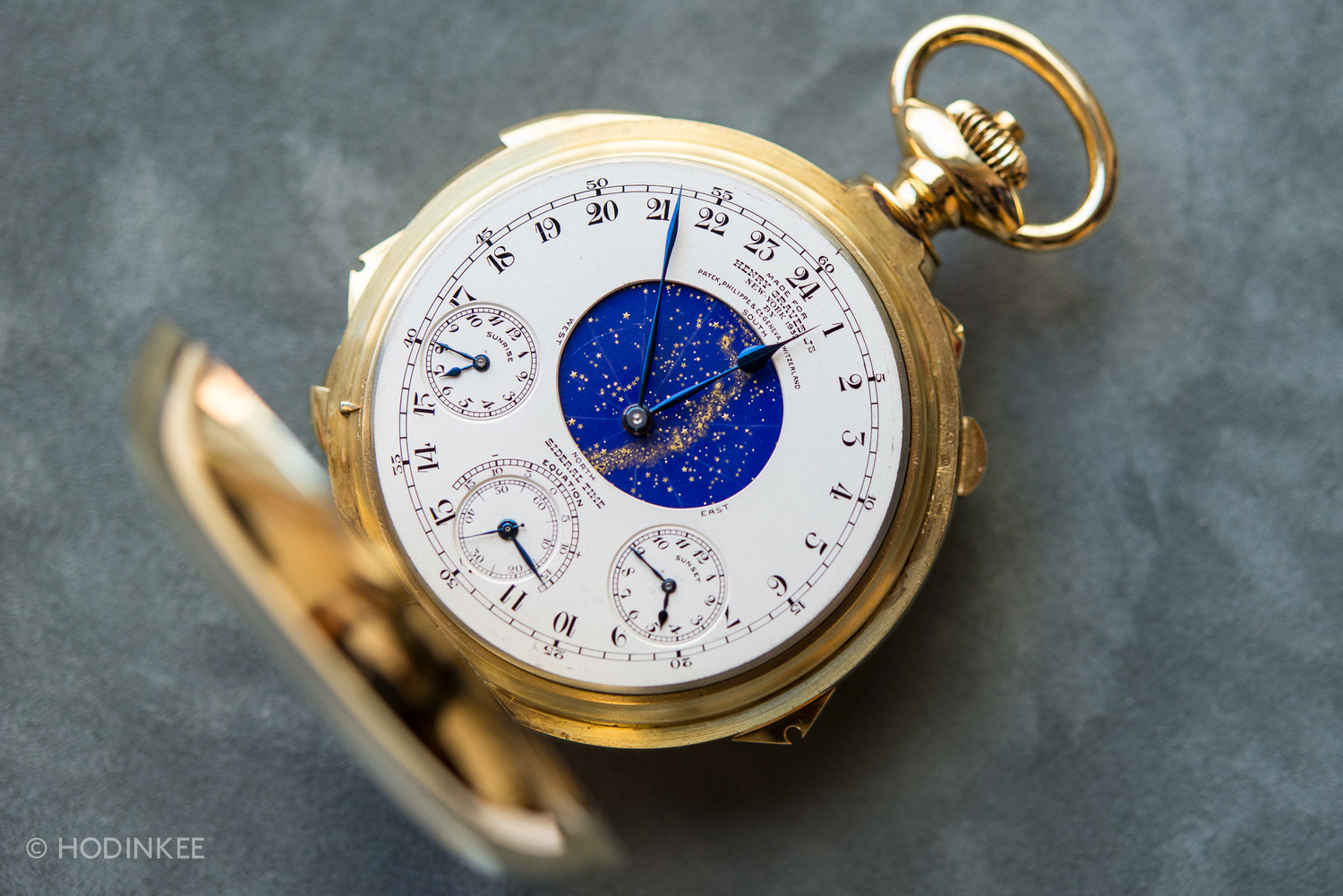
This is quiet simply the most unique and complicated timepiece ever made.

The Henry Graves’ Patek Philippe Supercomplication represents the pinacle of watchmaking, featuring 24 complications, twenty-four. It took 7 years to develop, starting in 1925, no computer involved in the process. It weights around 500 grams and 70mm in diameter.

It’s been previously sold in 1999, for a staggering $11’000’000.

Today, on November 11th, 2014, Sotheby’s will be making history, again, by auctioning the most important watch ever made.
1413047591397

→ Hodinkee

The Apple Watch: What Does It Mean For the Swiss Watch Industry ?

In short, the Apple WATCH means nothing to Swiss manufactures.

If smartwatches were ever to totally supplant traditional mechanical watches, I believe it would be a sign of something much more momentous: a large-scale abandonment of the luxurious and the artisanal in favor of the mass-market and the utilitarian. And somehow that is difficult to imagine.

→ WatchTime

The Ethical Cost of High-Price Art

If artists, art critics, and art buyers really had any interest in reducing the widening gap between the rich and the poor, they would be focusing their efforts on developing countries, where spending a few thousand dollars on the purchase of works by indigenous artists could make a real difference to the wellbeing of entire villages.

→ Project Syndicate

Graff Hallucination And The Reasonable 55 Millon Dollar Price Tag

Of course who ever buys this watch will not drive a rusty Ford Pinto and most likely has never heard of Timex, they are the 1% of the 1%, and are far more interested in the fact that the Graff Hallucination is a one of a kind, ultra-rare piece of Haute Horlogerie and Haute Joaillerie combined. A watch that cannot be made again, simply because the same diamonds, in the same quality and the same cut-styles cannot be found again. This makes the Graff Hallucination nothing less than a rare piece of art, and given the current market prices for a Van Gogh or Klimt, you might actually get a deal with this Graff.

→ Revolution

For the Love of Art, and Money

The latest auctions here demonstrated how buyers have now split into two main groups: Longer-term investors who hold to more traditional notions of collecting and who tend to focus on Impressionist, modern and classic contemporary works; and short-term speculators, known as “flippers,” who busy themselves with cut-and-run deals in the red-hot market for emerging artists.

→ The New York Times