Black Monday, Kinda

Monday, August 24th brought you one of the weirdest trading day ever seen in the past several years.  

So to sum up what happened today, here are a few charts, courtesy of Bloomberg, ZeroHedge and NANEX — time of the events may vary :

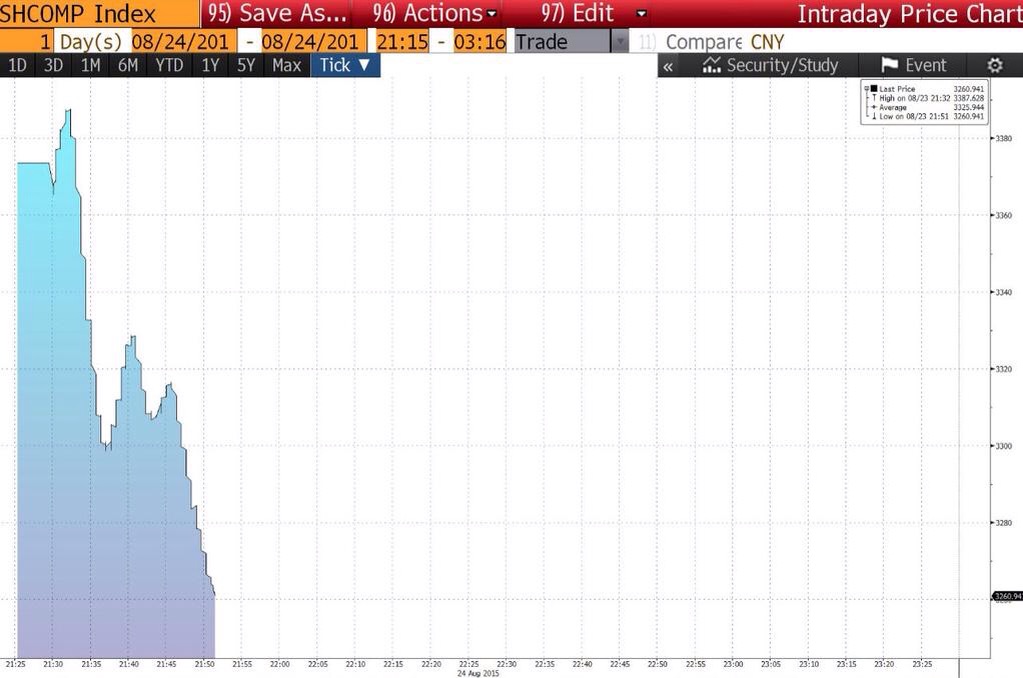
  • It all started sometimes in China, when it’s business as usual these days :
 

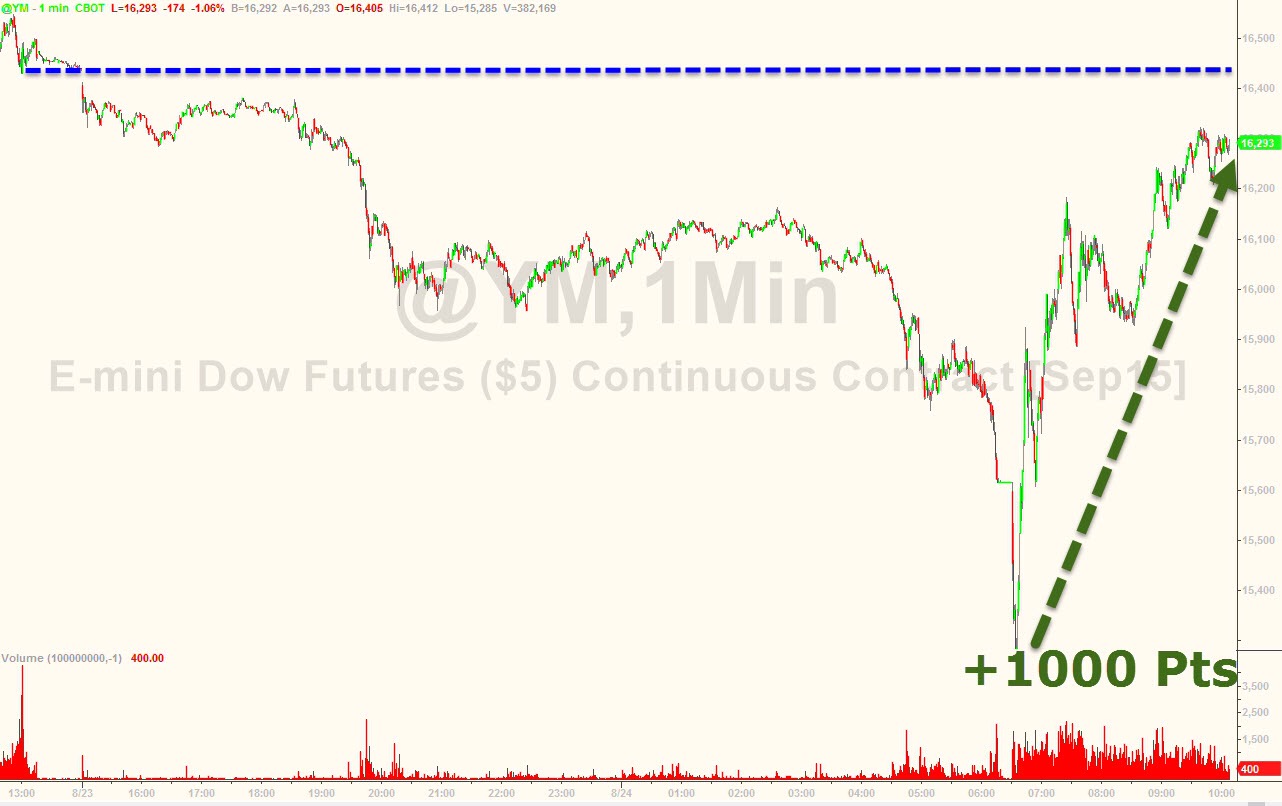
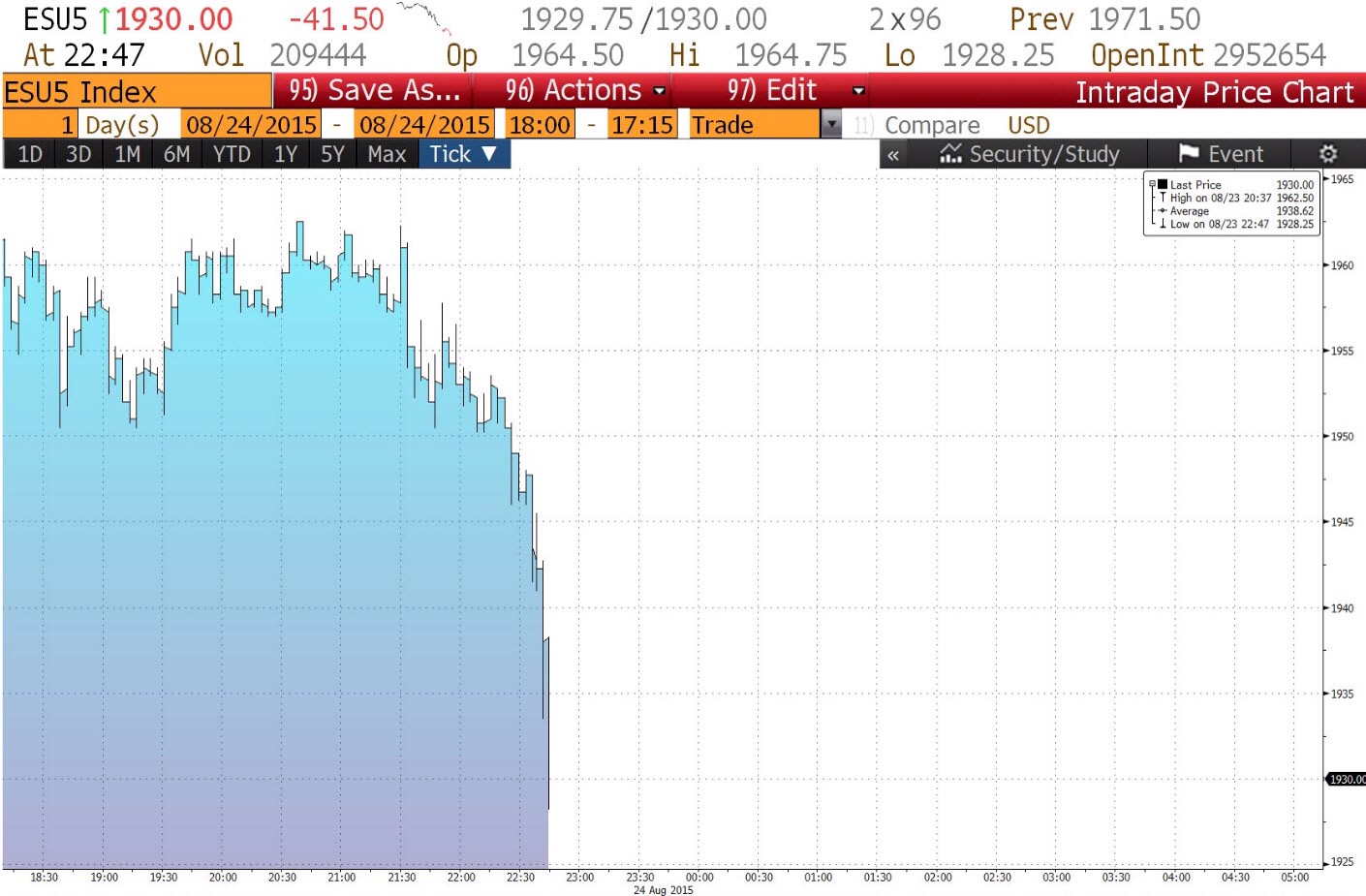
  • S&P Futures followed, kissing the dirt :
 

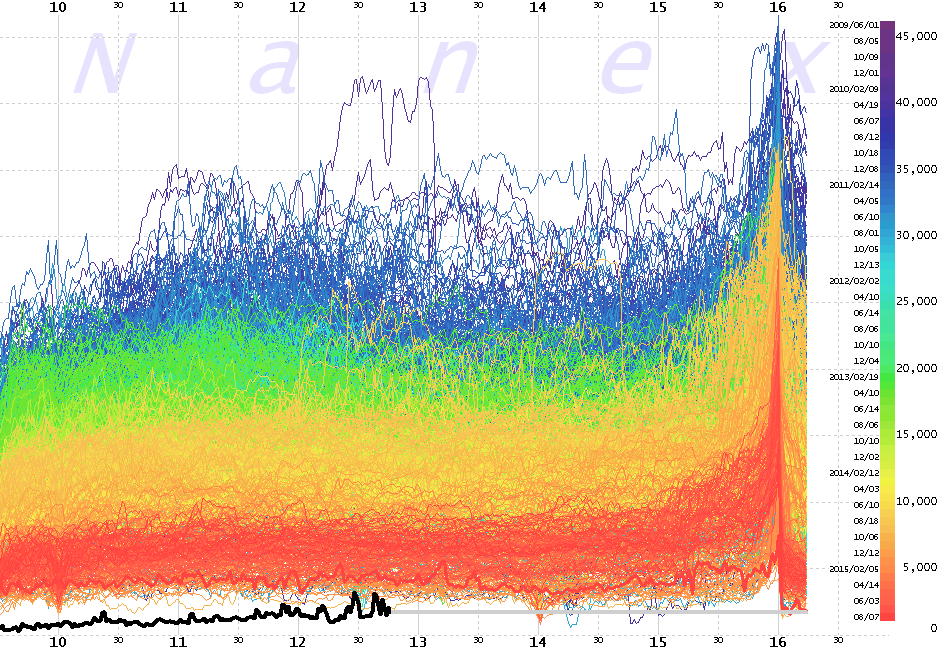
  • Which then started a major liquidity squeeze on the US market, as seen on the following charts by NANEX :
 

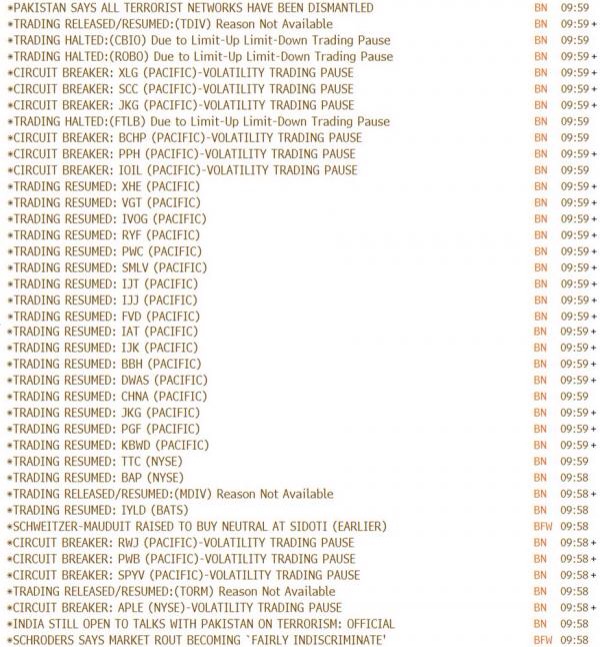
  • Causing buy-sell orders to never quiet match — courtesy of ZeroHedge :
 

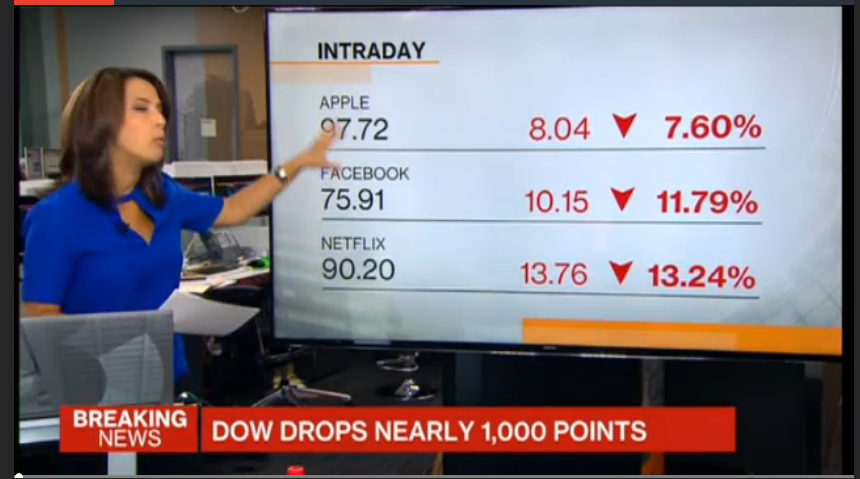
  • Shortly after the opening bell, something like this on the Dow Jones : 
 

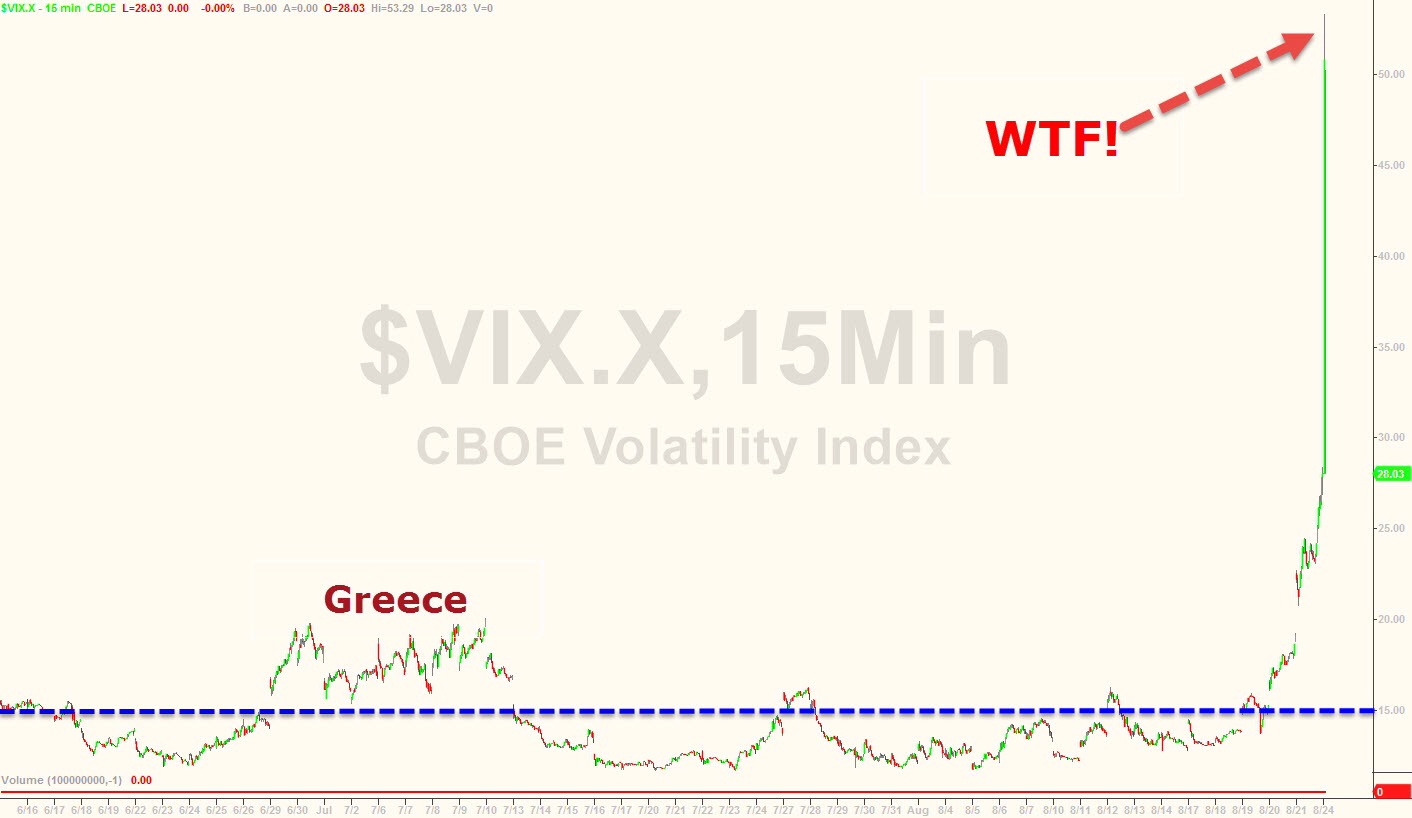
  • And an impressive rise on the VIX :


  • In the meantime, major (mini) crashes : 
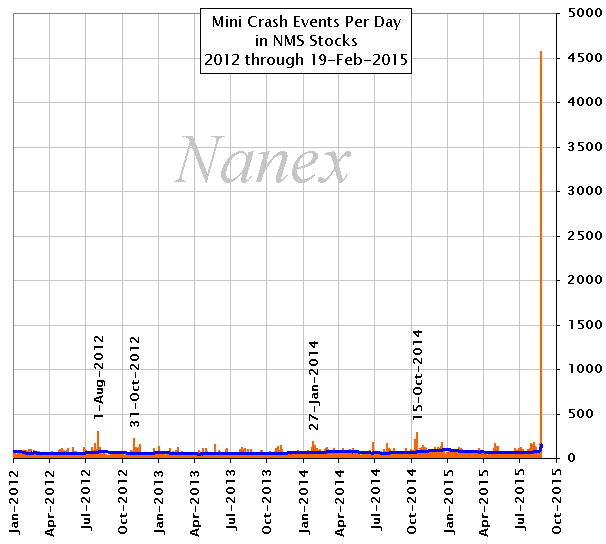
 

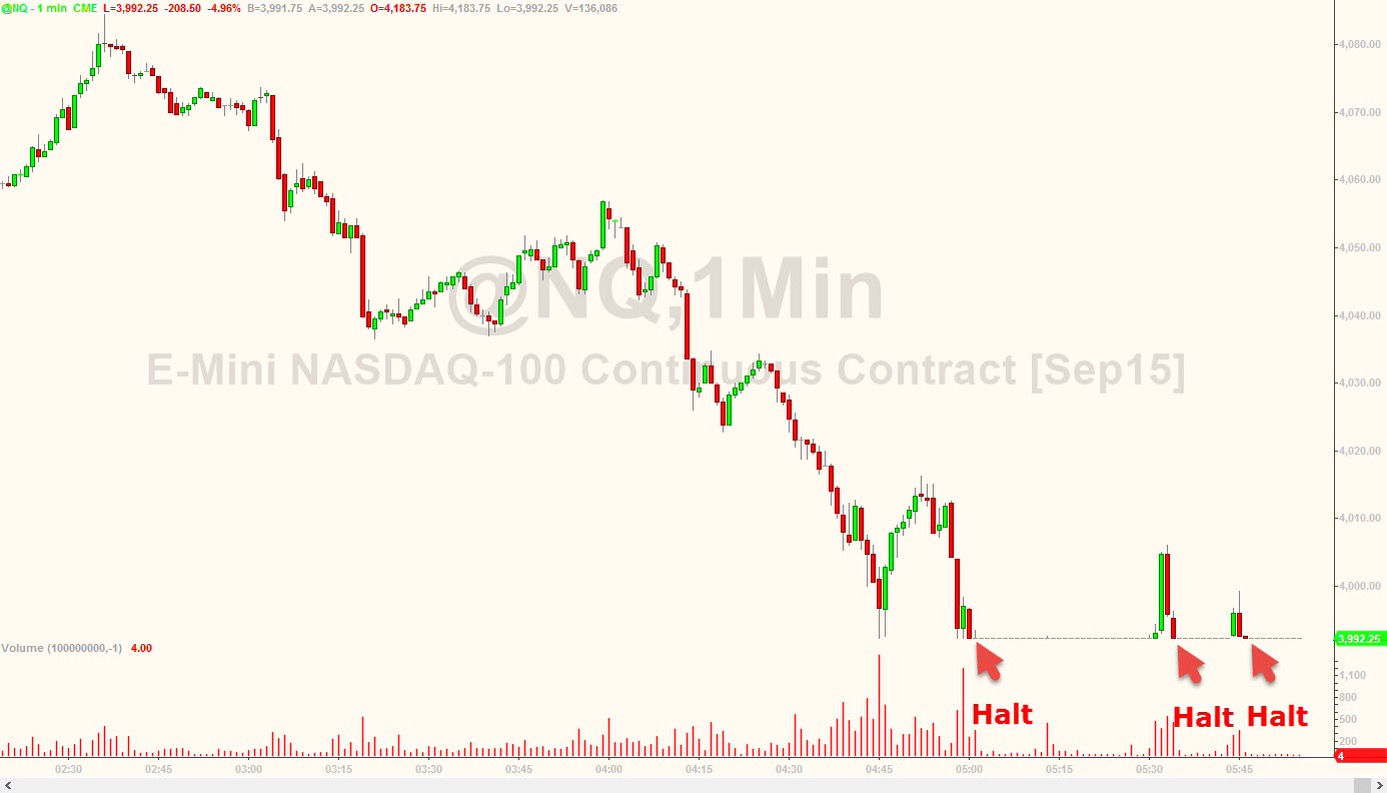
  • To prevent further deterioration, just press the “HALT” button across major indices, including 3 consecutive press on the NASDAQ and 1’200 times during that day :

  

  • Then the master of markets, Tim Cook, dropped an email to Jim Cramer stating the following :

I get updates on our performance in China every day, including this morning, and I can tell you that we have continued to experience strong growth for our business in China through July and August. Growth in iPhone activations has actually accelerated over the past few weeks, and we have had the best performance of the year for the App Store in China during the last 2 weeks.

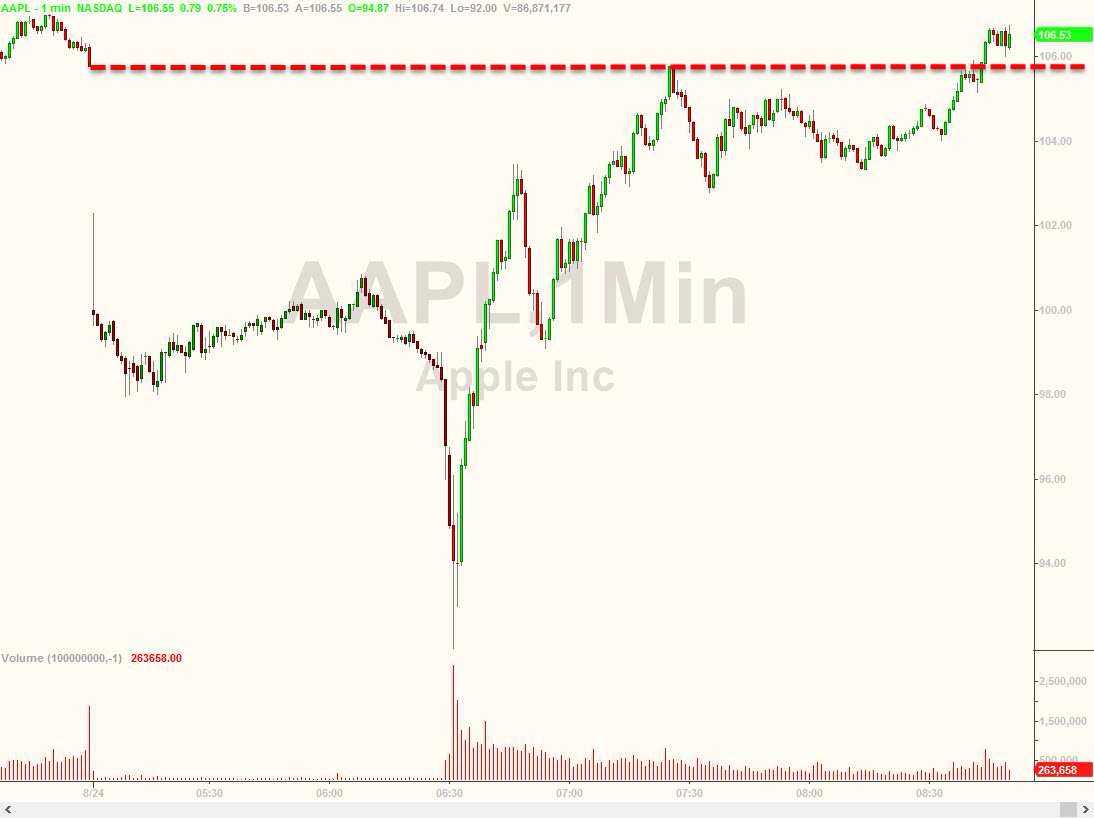
  • Which caused this :


  • Then, all of a sudden, while unrelated from the previous event — well, who knows : 

IMG_3010

  • Oups…


  • …While European markets will stay stucked for a little longer :

 
There’s more to it for sure, but here are some events, mostly correlated, to show the newcomer what’s up for today on the trading side. 

Finally here’s a fun tweet from Josh  Brown :

@ReformedBroker: Look, it doesn’t matter what you bought or what you sold. The important thing is that you panicked.
Mastering the Machine

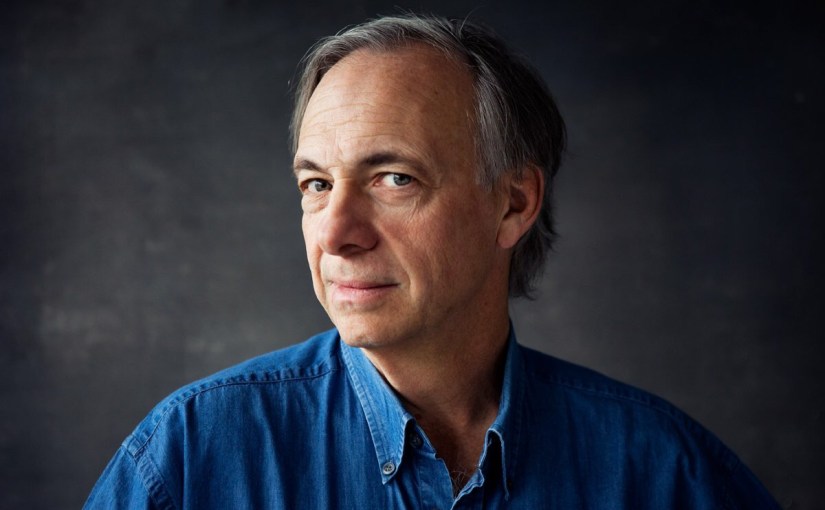
“In any given market, Bridgewater may have a dozen or more different indicators. However, even when most or all of the indicators are pointing in a certain direction, Dalio doesn’t rely solely on software. Unless he and Jensen and Prince agree that a certain trade makes sense, the firm doesn’t make it. While this inevitably introduces an element of human judgment to the investment process, Dalio insists it is still driven by the rules-based framework he has built up over thirty years. “When I’m thinking, ‘What is going on today?,’ I also need to make the connection to ‘How does what is happening today fit into our framework for making this decision?’ ’’ he said. Ultimately, he says, it is the commitment to systematic analysis and systematic investment that distinguishes Bridgewater from other hedge funds. “I hear a lot of people describing what’s happening today without the proper historical context and without the framework of how the machine works,” he says.”

The New York Magazine on the culture of Bridgewater :

The path to Principles began early in Bridgewater’s history, when Dalio began to think that employees, like economies, could be understood as following patterns. Transcendental Meditation informed his belief that a person’s main obstacle to improvement was his own fragile ego; at his firm, he would make constant, unvarnished criticism the norm, until critiques weren’t taken personally and no one held back a good idea for fear of being wrong. Dalio’s chosen investment system depended on such behavior. Unlike at a hedge fund such as Steven Cohen’s SAC Capital, where star traders are given chunks of the firm’s capital to run quasi-independent desks (and offset each other’s losses), everyone at Bridgewater essentially contributes to the same strategy as they work under Dalio and his longtime confidants and co-CIOs Bob Prince and Greg Jensen. Dalio thought radical transparency could optimize the hive mind. “The culture makes you have to listen to other people,” says Giselle Wagner, a former Bridgewater chief operating officer.

→ The New Yorker

Lunch with the FT: Neil Shen

It is getting late. After prodding doubtfully at a bright yellow jellylike substance that turns out to be mango salad dressing, the smartphones on the table begin to vibrate and beep once more. “Venture capital is a regret business,” concludes one of China’s most successful investors. And with that he finally turns his attention back to the gyrations of the market.

→ Financial Times

Hairy Days as New Bond Shops Struggle to Dent $8 Trillion Market

In mid-July, Amar Kuchinad, a former Goldman Sachs Group Inc. banker turned bond entrepreneur, was sporting a thick beard. He refused to shave, he said, until his new company, Electronifie Inc., turned a profit.

As Electronifie competed among the dozen or more new electronic bond-trading systems to come on the scene in the last year, Kuchinad’s beard was growing conspicuously bushy. The new trading venues face the unenviable challenge of changing the behavior of bankers and investors who for decades have bought and sold corporate bonds over the telephone or by instant message.

→ Traders Magazine

The Greek Warrior

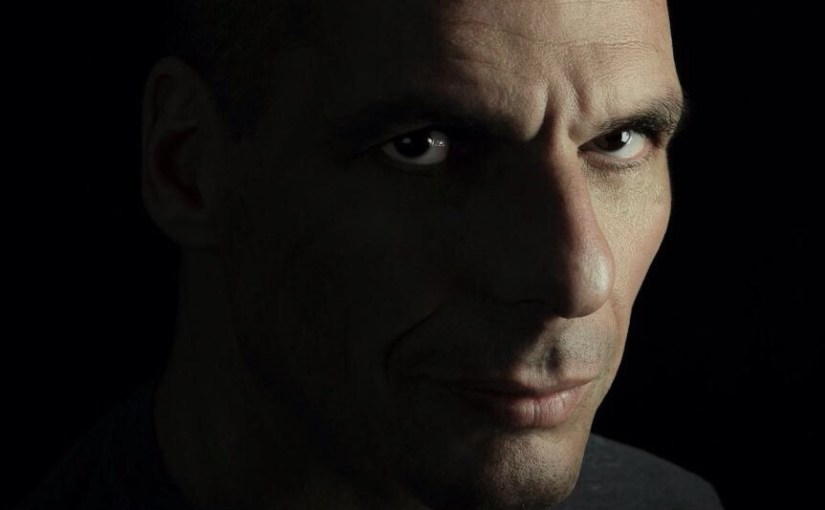
A few years ago, Varoufakis told Yorgos Avgeropoulos, a documentary filmmaker, that the difference between a debt of ten thousand euros and one of three hundred billion euros is that only the latter gives you negotiating power. And it does so only under one condition: “You must be prepared to say no.” Upon his election, Varoufakis used the less than ideal influence available to a rock climber who, roped to his companions, announces a willingness to let go. On behalf of Tsipras’s government, Varoufakis told Greece’s creditors, and the world’s media, that his country objected to the terms of its agreements. This position encouraged widespread commentary about Greece following a heedless path from “no” to default, and from default to a “Grexit” from the euro currency, which might lead to economic catastrophe in Europe and the world.

→ The New Yorker