
The Passion Of Nicki Minaj


There’s nothing new about female artists struggling with issues of power and control, but we’re far today from the 1990s, when Queen Latifah proclaimed ‘‘every time I hear a brother call a girl a bitch or a ho/Trying to make a sister feel low/You know all that gots to go.’’ ‘‘Bitch,’’ in music, used to be an insult, a sneer, and it still can be. But female empowerment is a trend, and the word has been reclaimed — by Minaj, in many a track; by Rihanna, in ‘‘Bitch Better Have My Money’’; and triumphantly by Madonna, in her recent track ‘‘Bitch, I’m Madonna.’’ This is good for business and either good for women or not good for women at all.

In another era, Minaj’s sexuality, expressed semi-parodically — pretending she’s a Barbie doll; glorifying women dressed as prostitutes and set in red-light-district windows — might have given feminists pause. But in the 2010s, we have entered a different world in pop culture, one in which sexual repression is perceived as burdensome and perhaps even an inability to holistically integrate the body and self. Young people are identifying and exploring formerly unknown, or at least unlabeled, frontiers of sexuality and gender. And the fact that Minaj is in charge of her own objectification (describing her vagina with more words than I thought existed, and then amplifying its power by rhyming those words), as well as her own monetization (overt product placement in videos is a hallmark) has led most feminist voices to applaud her.
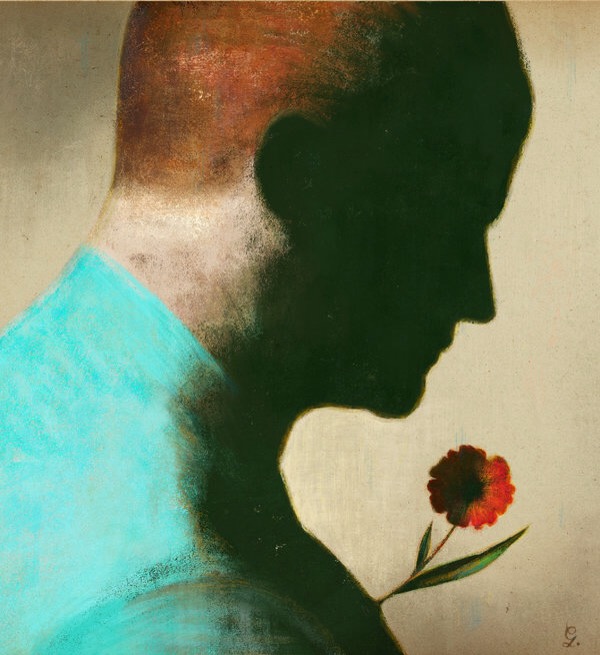
→ The New York Times Magazine

The Sad Fate Of America’s Whistleblowers

The American people accept the persecution of truth-tellers, because they have been brainwashed into believing that patriotism means defense of the government no matter what. As truth is so unfavorable to Washington, Americans believe that it must not be revealed, and if revealed, covered up, and those who reveal truth must be punished.

A country with such a population as this is a police state, not a free country.

→ Zero Hedge

Volkswagen and the Future of Honesty

The market is giving its own answer to the question “Is honesty for suckers?” Its response is: “No, honesty is for those who want to maximize value over the long term.” Of course, some corporations will get away with cheating. But the risk is always there that they will be caught. And often – especially for corporations whose brands’ reputation is a major asset – the risk just isn’t worth taking.

Honesty maximizes value over the long term, even if by “value” we mean only the monetary return to shareholders. It is even more obviously true if value includes the sense of satisfaction that all those involved take from their work. Several studies have shown that members of the generation that has come of age in the new millennium are more interested in having an impact on the world than in earning money for its own sake. This is the generation that has spawned “effective altruism,” which encourages giving money away, as long as it is done efficiently.

→ Project Syndicate

Bros Funding Bros : What’s Wrong with Venture Capital

A VC on VCs :

From the foundations and NGOs that are eradicating poverty and taking care of the world’s worst off, to companies like Facebook, Google and Apple that are inventing the future while looking after our best off, they have all explicitly decided to become less consensus driven and less homogeneous. They have found this increases creativity and drives business results. In turn, they are doing the ambitious, groundbreaking work that we used to do. And even though they have more work to do, when you compare the complexion of these leaders to the leaders within our industry, we look like total laggards.

→ The Information