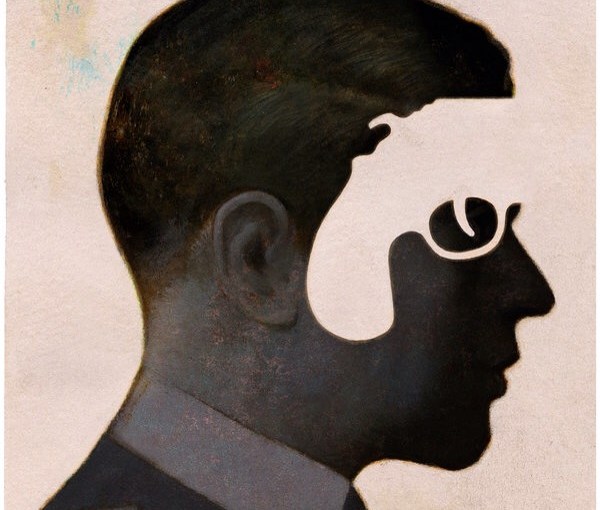
In every moment, your brain consults its vast stores of knowledge and asks, “The last time I was in a similar situation, what sensations did I encounter and how did I act?” If you’re in a produce section, your brain is already predicting that an apple is nearby. If you are in a part of town with a high crime rate, your brain may well predict a weapon. Only after the fact does your brain check the world to see if its prediction was right.
Category: Life
Lost in Syria
Heartbreaking :
Ann learned from the funeral parlor that Harroun, an honorably discharged veteran, was entitled to a plot in Arizona’s national cemetery. A year earlier, he had been awaiting trial for supporting an affiliate of Al Qaeda; now he would be buried among war heroes.
It rained on the day of the funeral service. Family and friends gathered under a portico to hear Ann speak about Harroun’s compassion, the “many tears” he had caused, and the “many trips to the principal’s office” she had made. Flags flew at half-mast. A bugler played taps. Two uniformed soldiers wearing white gloves presented Ann with a folded American flag.
Game Theory Calls Cooperation Into Question
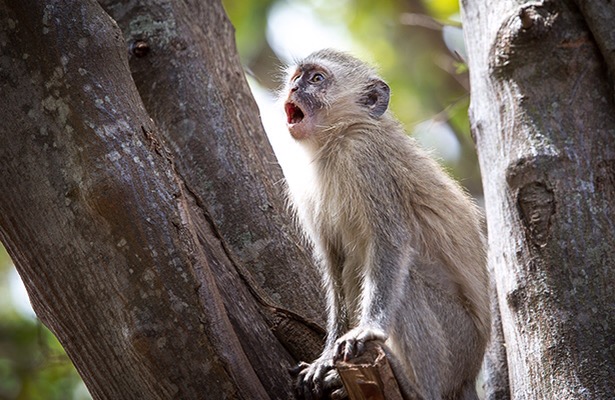
Vervet monkeys are known for their alarm calls. A monkey will scream to warn its neighbors when a predator is nearby. But in doing so, it draws dangerous attention to itself. Scientists going back to Darwin have struggled to explain how this kind of altruistic behavior evolved. If a high enough percentage of screaming monkeys gets picked off by predators, natural selection would be expected to snuff out the screamers in the gene pool. Yet it does not, and speculation as to why has led to decades of (sometimes heated) debate.
Researchers have proposed different possible mechanisms to explain cooperation. Kin selection suggests that helping family members ultimately helps the individual. Group selection proposes that cooperative groups may be more likely to survive than uncooperative ones. And direct reciprocity posits that individuals benefit from helping someone who has helped them in the past.
The Anti-Information Age
Myself, I sometimes think that I’d gladly censor what’s coming out from the tubes — what you get access to can be so depressing and conflicting with our own beliefs.
No place shows the contradictions of this contest on as grand a scale as China does. The country with the most Internet users and the fastest-growing connected population is also the world’s most ambitious censor. Of the 3 billion Internet users on the planet, 20 percent live in China (10 percent live in the U.S.). The government maintains the “Great Firewall” to block unacceptable content, including foreign news sites. An estimated 2 million censors police the Internet and the activities of users. Yet a 2014 BBC poll found that 76 percent of Chinese reported feeling free from government surveillance. This was the highest rate of the 17 countries surveyed.
The Epidemic of Facelessness
The Gyges effect :
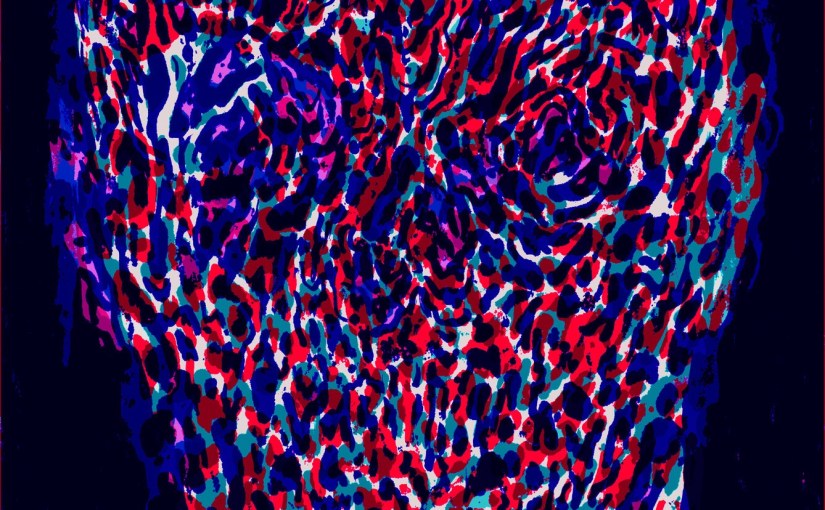
When the police come to the doors of the young men and women who send notes telling strangers that they want to rape them, they and their parents are almost always shocked, genuinely surprised that anyone would take what they said seriously, that anyone would take anything said online seriously. There is a vast dissonance between virtual communication and an actual police officer at the door. It is a dissonance we are all running up against more and more, the dissonance between the world of faces and the world without faces. And the world without faces is coming to dominate.

