Apple Is Selling You A phone, Not Civil Liberties

Let’s start with an important fact that Apple elides in its statement: Apple engineered this problem and it did so intentionally. In the wake of the Snowden leaks, Apple specifically decided to encrypt material end-to-end and at rest by default on the devices it manufactures and to not maintain any ability to decrypt material unless users specifically gave it the power to recover that material. It boasted about this decision and used it as a marketing weapon against its competitors. Reasonable people can argue about whether or not Apple did so for good reasons and whether or not doing so was the optimal way for the company to enhance the cybersecurity of its users. But the simple fact remains that Apple used to have the capacity to comply with warrants, and now it cannot without a certain amount of reengineering. And that was a matter of its own choosing made despite repeated warnings from the government that this choice would cause substantial problems for law enforcement, national security investigators, and public safety.

• • •

FBI and Justice Department officials, we think, can be forgiven if they’re a touch cynical about all of Apple’s elaborate legal argumentation and suspect that this all just masks what appears to be Apple’s genuine litigating posture towards the government: You can’t make us do anything, because we are immensely politically powerful, our CEO is on the phone with the President regularly, we are too big and way too cool to fail, and people around the world like us more than they like you. So what about that dead woman in Louisiana? Sorry, but bringing her killer to justice—and preventing his or her future violence—just isn’t as important as the data security of our devices. And about protecting people from ISIS? We’ll help out if it’s not too much trouble, but don’t ask us—ever—to do something that will make us look bad to the ACLU, even if there’s a very good legal argument that you can.
→ Brookings

El Chapo Speaks

Sean Penn :

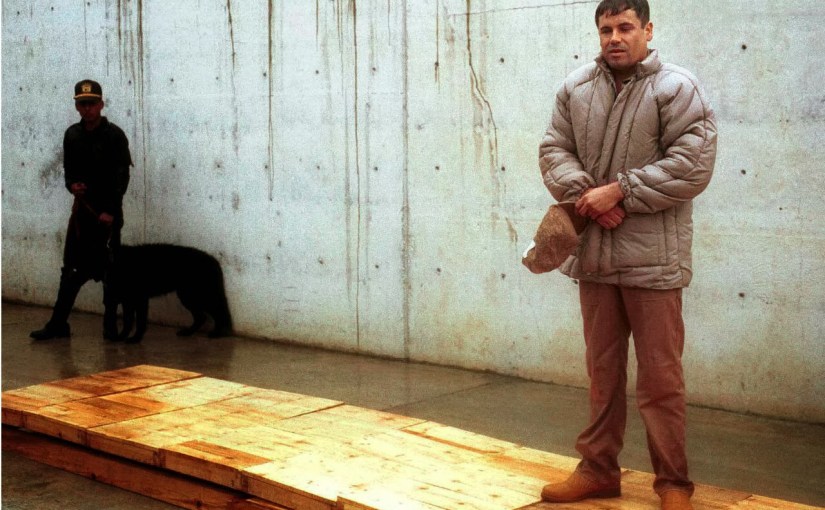
I take no pride in keeping secrets that may be perceived as protecting criminals, nor do I have any gloating arrogance at posing for selfies with unknowing security men. But I’m in my rhythm. Everything I say to everyone must be true. As true as it is compartmentalized. The trust that El Chapo had extended to us was not to be fucked with. This will be the first interview El Chapo had ever granted outside an interrogation room, leaving me no precedent by which to measure the hazards. I’d seen plenty of video and graphic photography of those beheaded, exploded, dismembered or bullet-riddled innocents, activists, courageous journalists and cartel enemies alike. I was highly aware of committed DEA and other law-enforcement officers and soldiers, both Mexican and American, who had lost their lives executing the policies of the War on Drugs. The families decimated, and institutions corrupted.

• • •

Still, today, there are little boys in Sinaloa who draw play-money pesos, whose fathers and grandfathers before them harvested the only product they’d ever known to morph those play pesos into real dollars. They wonder at our outrage as we, our children, friends, neighbors, bosses, banks, brothers and sisters finance the whole damn thing. Without a paradigm shift, understanding the economics and illness of addiction, parents in Mexico and the U.S. will increasingly risk replacing that standard parting question to their teens off for a social evening – from “Where are you going tonight?” to “Where are you dying tonight?”

El Chapo? It won’t be long, I’m sure, before the Sinaloa cartel’s next shipment into the United States is the man himself.

→ Rolling Stone

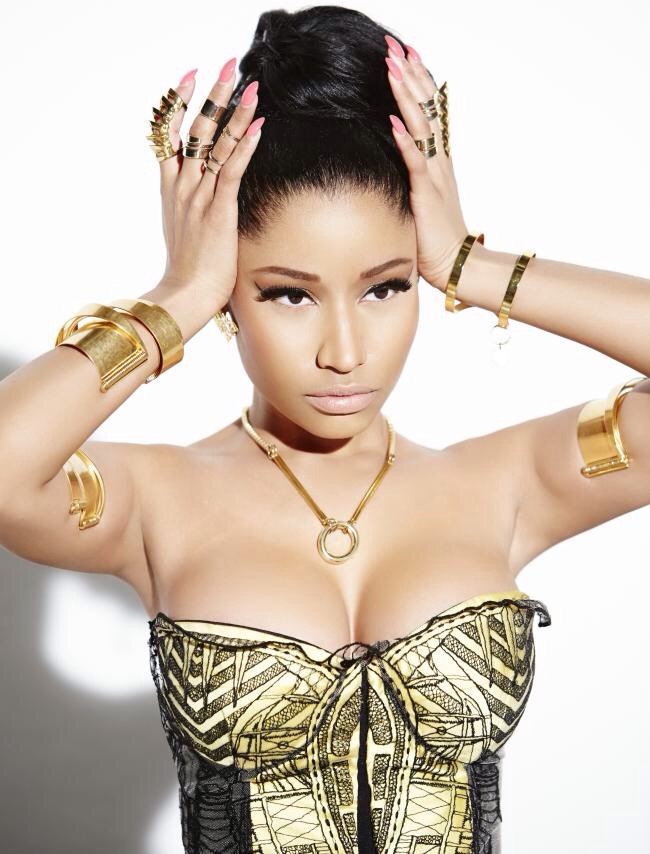
The Passion Of Nicki Minaj


There’s nothing new about female artists struggling with issues of power and control, but we’re far today from the 1990s, when Queen Latifah proclaimed ‘‘every time I hear a brother call a girl a bitch or a ho/Trying to make a sister feel low/You know all that gots to go.’’ ‘‘Bitch,’’ in music, used to be an insult, a sneer, and it still can be. But female empowerment is a trend, and the word has been reclaimed — by Minaj, in many a track; by Rihanna, in ‘‘Bitch Better Have My Money’’; and triumphantly by Madonna, in her recent track ‘‘Bitch, I’m Madonna.’’ This is good for business and either good for women or not good for women at all.

In another era, Minaj’s sexuality, expressed semi-parodically — pretending she’s a Barbie doll; glorifying women dressed as prostitutes and set in red-light-district windows — might have given feminists pause. But in the 2010s, we have entered a different world in pop culture, one in which sexual repression is perceived as burdensome and perhaps even an inability to holistically integrate the body and self. Young people are identifying and exploring formerly unknown, or at least unlabeled, frontiers of sexuality and gender. And the fact that Minaj is in charge of her own objectification (describing her vagina with more words than I thought existed, and then amplifying its power by rhyming those words), as well as her own monetization (overt product placement in videos is a hallmark) has led most feminist voices to applaud her.

→ The New York Times Magazine

The Sad Fate Of America’s Whistleblowers

The American people accept the persecution of truth-tellers, because they have been brainwashed into believing that patriotism means defense of the government no matter what. As truth is so unfavorable to Washington, Americans believe that it must not be revealed, and if revealed, covered up, and those who reveal truth must be punished.

A country with such a population as this is a police state, not a free country.

→ Zero Hedge