Brad Katsuyama’s Next Chapter

 
In the summer of 2014, Puzz had another puzzle to solve. From March to July, the frequency with which an IEX customer could have gotten a better price less than 10 milliseconds after a trade posted rose from about 3 percent to as much as 10 percent. This wasn’t meant to happen. IEX was supposed to protect investors from what’s known as stale quote arbitrage; that’s when a high-frequency trader takes advantage of milliseconds-long delays in how markets update prices to reflect movements on other exchanges. These tiny delays allow high-speed traders to see a price fluctuation on one exchange and then quickly send an order to another market—often a dark pool—that it knows updates its prices more slowly, hoping to pick off the orders resting there at stale prices. It’s a bit like betting on yesterday’s horse race against someone who doesn’t know the result.

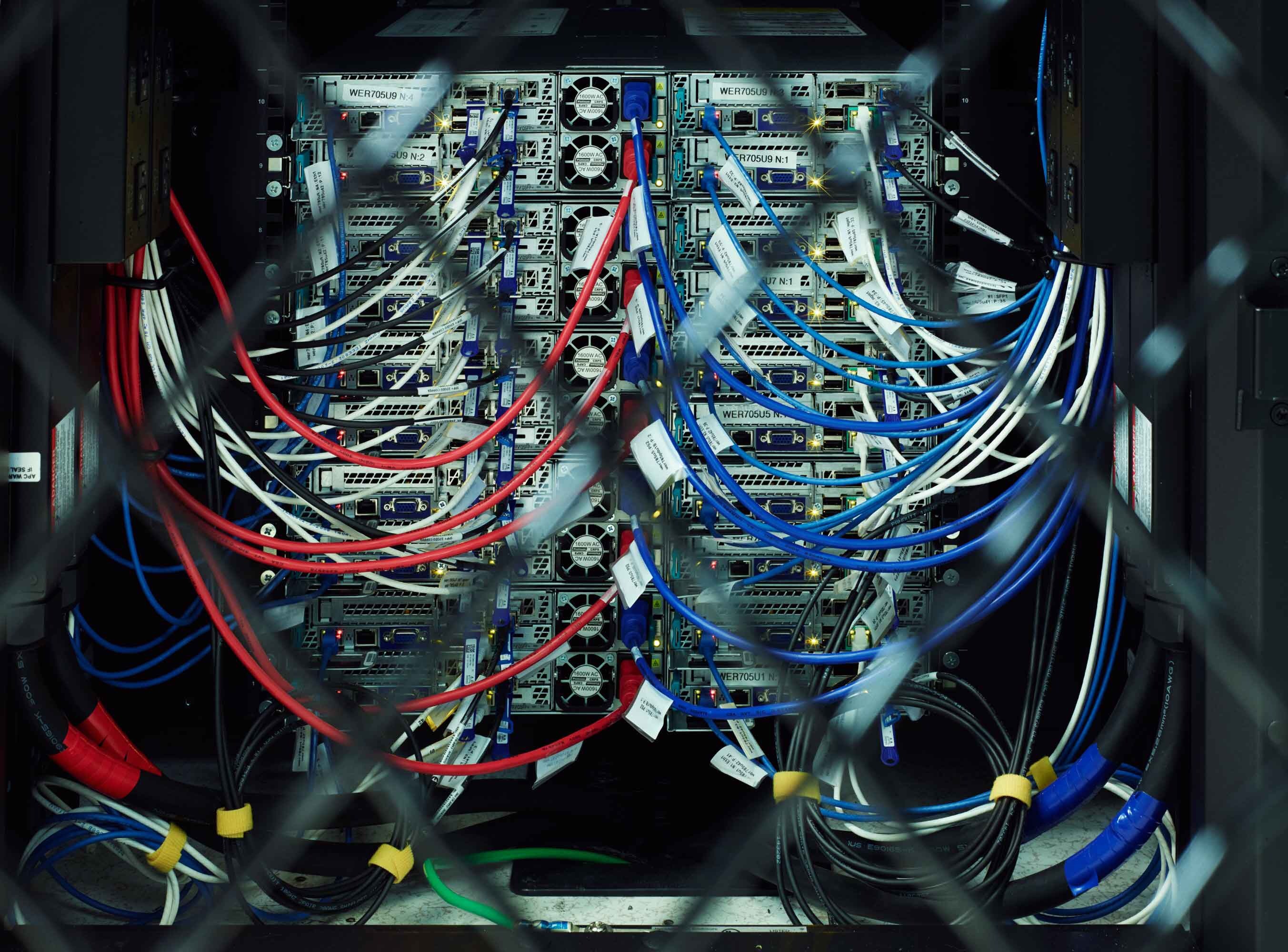
IEX prevents stale quote arbitrage with its “magic shoe box,” a metal container in its data center in Weehawken, New Jersey. Crammed into it are 38 miles (61 kilometers) of coiled fiber-optic wire, creating IEX’s speed bump of 350 microseconds (about one one-thousandth of the time it takes to blink). The idea of countering super-fast traders by creating a slower market might seem like a paradox. It’s not. IEX uses the same high-speed data feeds as HFT firms do to monitor other exchanges for price changes. But because IEX didn’t want to be in a technological arms race with the high-frequency traders to process this information faster than they do, it uses the speed bump to slow down all new orders—just enough to ensure IEX has time to update its prices to reflect any movements on public exchanges. This prevents orders on IEX from being traded against at stale prices.

So how, Aisen wondered, could HFT firms be picking off IEX orders despite the magic shoe box? It didn’t take Puzz long to solve the riddle. He discovered that some HFT algorithms could predict price changes—like surfers sitting out past the break, scanning the swell for their next ride—and target orders before the magic shoe box’s speed bump could protect them.

→ Bloomberg

Black Box Trading : Why They All “Blow-Up”

While in Greenwich Ct. one afternoon I will never forget a conversation I had with a leading quantitative portfolio manager. He said to me that despite its obvious attributes “Black Box” trading was very tricky. The algorithms may work for a while [even a very long while] and then, inexplicably, they’ll just completely “BLOW-UP”. To him the most important component to quantitative trading was not the creation of a good model. To him, amazingly, that was a challenge but not especially difficult. The real challenge, for him, was to “sniff out” the degrading model prior to its inevitable “BLOW-UP”. And I quote his humble, resolute observation “because, you know, eventually they ALL blow-up“…as most did in August 2007.

→ Global Slant

Psyching Out Borrowers

Follow-up on yesterday’s article about personality tests approval to get loans. Payoff adds a touch of algorithms on top of psychology to determine the creditworthness of the borrower.

Galen helped develop the matching algorithms at eHarmony, which are responsible for 4 percent of U.S. marriages. We’re using his expertise to bring psychology to finance. Our science is ultimately about behavior change and helping people make better financial decisions. This process of change begins with self-understanding, and we’re using advanced psychometric assessments to understand people’s mindsets— the goal being to improve how they approach their financial decisions. We’ve taken the hundreds of questions you might answer in a typical psychometric assessment and compressed them into a three-minute “gamified” online assessment that gauges your financial personality.

→ Bloomberg

Robots On Wall Street ?

As automation in financial services grows, computers and algorithms have taken on some of the traditional work of traders, clerks and financial advisers. Now, a host of startups that use artificial intelligence to write news stories and other reports have set their sights on writing work at banks and financial-service companies.

→ The Wall Street Journal

Robots Can’t Dance

A great interview with Ken Goldberg :

There are so many aspects of human unpredictability that we don’t have a model for. When you watch a ballet or a dance or see a great athlete and realize the amazing abilities, you start to appreciate those things that are uniquely human. The ability to have an emotional response, to be compelling, to be able to pick up on subtle emotional signals from others, those are all things that we haven’t made any progress on with robots.

→ Nautilus