Life After Cancer: How the iPhone Helped Me Achieve a Healthier Lifestyle

Kudos to Federico Viticci, what a great man and an excellent writer. Wishing him all the best. 

Stupidly enough, because I thought that “I was okay”, I fell into my old habits of careless eating, no exercise, and a sedentary lifestyle. If cancer couldn’t kill me, did McDonald’s really have a chance?

Seriously: how stupid was I – after all I had gone through, ignoring the wellness of my body just because I was done with treatments? If anything, my experiences should have taught me about the importance of taking care of myself, so I could be well and spend time with the people I love and doing the things I care about.

→ MacStories

Game Theory Calls Cooperation Into Question

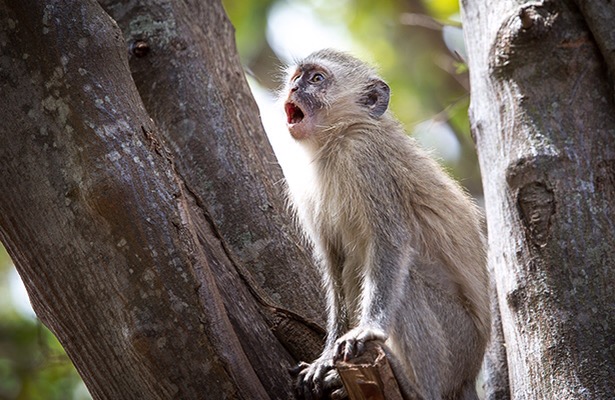
Vervet monkeys are known for their alarm calls. A monkey will scream to warn its neighbors when a predator is nearby. But in doing so, it draws dangerous attention to itself. Scientists going back to Darwin have struggled to explain how this kind of altruistic behavior evolved. If a high enough percentage of screaming monkeys gets picked off by predators, natural selection would be expected to snuff out the screamers in the gene pool. Yet it does not, and speculation as to why has led to decades of (sometimes heated) debate.

Researchers have proposed different possible mechanisms to explain cooperation. Kin selection suggests that helping family members ultimately helps the individual. Group selection proposes that cooperative groups may be more likely to survive than uncooperative ones. And direct reciprocity posits that individuals benefit from helping someone who has helped them in the past.

→ Quanta Magazine

Solving an Unsolvable Math Problem

In “The Psychology of Invention in the Mathematical Field,” published in 1945, Jacques Hadamard quotes a mathematician who says, “It often seems to me, especially when I am alone, that I find myself in another world. Ideas of numbers seem to live. Suddenly, questions of any kind rise before my eyes with their answers.” In the back yard, Zhang had a similar experience. “I see numbers, equations, and something even—it’s hard to say what it is,” Zhang said. “Something very special. Maybe numbers, maybe equations—a mystery, maybe a vision. I knew that, even though there were many details to fill in, we should have a proof. Then I went back to the house.”

→ The New Yorker

Why the Chess Computer Deep Blue Played Like a Human

What Kasparov might have sensed when he played Deep Blue is something that appeared like that creative randomness, which he took to be a “human” intuition of danger. Deep Blue programmer Feng-Hsiung Hsu writes in his book Behind Deep Blue that during the match, outside analysts were divided over a mysterious move made by the program, thinking it either weak or obliquely strategic. Eventually, the programmers discovered that the move was simply the result of a bug that had caused the computer not to choose what it had actually calculated to be the best move—something that could have appeared as random play. The bug wasn’t fixed until after game four, long after Kasparov’s spirit had been broken.

→ Nautilus

San Francisco Is Smarter Than You Are

A good environment and a greener living is like the energy to innovate.

If people are to cities as neurons are to brains, and cities (unlike brains) do not have any known limit to their size, then gigantic cities of the future might produce innovations on a scale that wouldn’t be possible for the cities of today. Faced with pollution, disease, and scarcity, should we be looking to creative environments rather than to individual innovators?

→ Nautilus