Projecting the Ad Revenue Effect of iOS 9 Content Blocking

The effect of the iOS content blocker. Worst case scenario is an 11% decrease in revenue :

We invented a hypothetical mid-size publisher based in the United States and reliant on exchange banner ads, using private data from a variety of sources and industry data reviewed in the report, including adoption models that predict equal or greater adoption compared to desktop ad blockers.


Eight months from now, our hypothetical publisher could see a 3.7% drop in ad revenue. With astronomical content blocker adoption (3x desktop rates) driven by App Store visibility and media coverage, that number could be as high as 11%. A potentially severe setback for businesses with thin margins.

And Ben Ilfeld to predict :

A trend toward native advertising will accelerate.

But I couldn’t disagree with Ben Brooks’ position on native ads. For the most part, ads feel impersonal and unrelated to the website bearing them, as they are supposed to be tailored to the reader by Google’s algorithms. On the other side, native ads are selected and delivered by the publisher himself (here, the website or blog) based on its perceived relevance to the reader. The issue is that the reader might sense a conflict of interest or being fooled by the publisher if the product or service doesn’t delivers what is promised by the trusted pen or voice of the publisher, putting himself at unnecessary risk. 

And if [John Gruber] does accept the [Apple] ad, even knowing that the has more than a decade of history for being objective about Apple — how does a reader look at Gruber’s praise of Apple now? It’s potentially devastating for the writers authenticity, and for reader trust. The entire system could crumble. Even though it seems like a logical sponsor for his site.

→ 10up

Touch Me Harder

Craig Federighi on building the 3D Touch screen, a marvel of complication :

It starts with the idea that, on a device this thin, you want to detect force. I mean, you think you want to detect force, but really what you’re trying to do is sense intent. You’re trying to read minds. And yet you have a user who might be using his thumb, his finger, might be emotional at the moment, might be walking, might be laying on the couch. These things don’t affect intent, but they do affect what a sensor [inside the phone] sees. So there are a huge number of technical hurdles. We have to do sensor fusion with accelerometers to cancel out gravity—but when you turn [the device] a different way, we have to subtract out gravity. … Your thumb can read differently to the touch sensor than your finger would. That difference is important to understanding how to interpret the force. And so we’re fusing both what the force sensor is giving us with what the touch sensor is giving us about the nature of your interaction. So down at even just the lowest level of hardware and algorithms—I mean, this is just one basic thing. And if you don’t get it right, none of it works.

→ Bloomberg Businessweek

D’Auguste Comte à Bachelard … à Apple et Dr Dre

Jean-Philippe Denis, mon professeur mémorable de gestion, sur les racines du Hip-Hop management :

En épistémologie des sciences, on considère la première planète comme celle du positivisme hérité des lumières d’Auguste Comte. La seconde, elle, est celle conçue par le grand philosophe Gaston Bachelard pour lequel « rien n’est donné, tout est construit ».

Sur la planète héritée de Comte, le monde est vu comme régi par des forces implacables, et par des lois déterministes de performance. Comme dans un roman d’Houellebecq, une sorte de sélection naturelle des formes les plus adaptées s’y opère mécaniquement. Il vaut mieux dès lors se soumettre puisque rien ne sert de courir ni même de se battre : après tout, comme le disait Keynes, à long terme on est tous morts. Au risque de la provocation on pourrait ajouter : qu’on se sente ou qu’on ne se sente pas Charlie.

Sur la planète léguée par Bachelard, les habitants raisonnent à l’inverse. Derrière chaque calamité, ils voient une opportunité. Dès lors ils ne perdent jamais puisque, pour filer Nelson Mandela, soit ils gagnent soit ils apprennent. L’avenir est donc toujours ouvert même si tout n’est pas possible. Et pour peu qu’on envisage d’abord la manière de s’embusquer pour mieux l’attendre, il est toujours plein de promesses nouvelles, toujours en devenir.

Les transformations de l’industrie musicale depuis vingt ans illustrent à merveille l’existence de ces deux planètes.

→ The Conversation

The Semiotics of “Rose Gold”

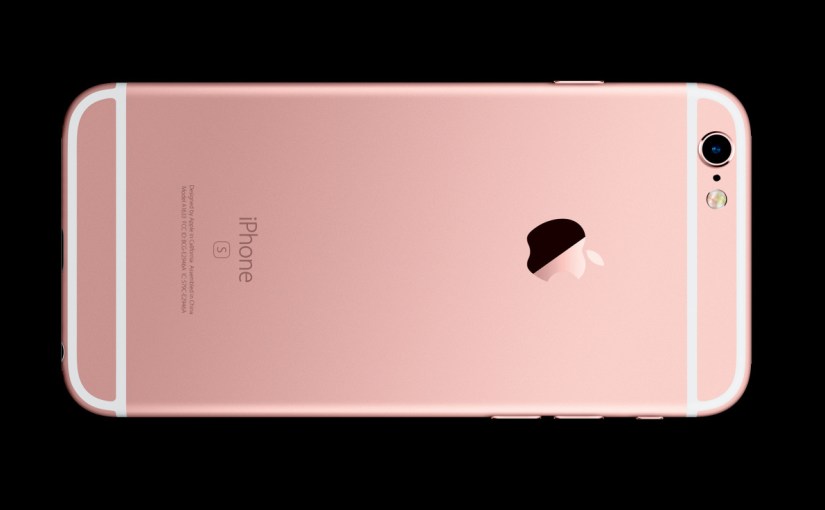
Am I the only one to see the yet-to-be released iPhone 6S Rose Gold as Red Gold or Rolex Everose ?

Rose gold, however, has quite a different symbolic valence. Deliberately adulterated, it is gold that has an inclination to be something else. Rose gold is perverse. Unlike yellow gold—but like its cooler cousin, white gold, which is an alloy with nickel or manganese that has also risen and declined in popularity throughout the years—rose gold is subject to the vagaries of fashion. The desire it stimulates is inherently temporary. In rose gold, a substance of enduring value is transformed into a consumer item with the half-life of all things modish. Rose gold is decadent. It is gold for people who already have enough gold gold.

For the sake of colour-comparaison, here are three watches in different gold cases :

From left to right : Patek 1518 (rose gold), Cartier Santos Dumont Squelette (red gold), Rolex Day-Date (everose gold)

→ The New Yorker

Goldman vs. Bloomberg

Will Goldman ever turns Bloomberg into Blackberry ? Ain’t a sure thing.

It’s something like the social register for the global one percent, mixed with the Gutenberg press and a little bit of the iPhone. Getting even more reductive, it’s the ball in tennis: it’s hard to imagine the financial industry without it. As such, many banks and hedge funds gladly shell out the $21,000 or so per unit. Some trading floors, in fact, resemble primal villages in which the biggest bosses can be identified as the guys with the most terminal screens mounted on their desk. Bloomberg L.P. throws off around $9 billion in revenue, making it about as valuable as the N.F.L.

→ Vanity Fair