Google’s AI Image Generator: No One’s Ready For This

Before / After Google’s Magic Editor

We briefly lived in an era in which the photograph was a shortcut to reality, to knowing things, to having a smoking gun. It was an extraordinarily useful tool for navigating the world around us. We are now leaping headfirst into a future in which reality is simply less knowable. The lost Library of Alexandria could have fit onto the microSD card in my Nintendo Switch, and yet the cutting edge of technology is a handheld telephone that spews lies as a fun little bonus feature. 

We are fucked.
→ The Verge

Andreessen Horowitz saw the future — but did the future leave it behind?

In many ways, a16z created the playbook for the boom times in tech. During the era of fawning tech journalism and low interest rates, valuations of private companies exploded. Founders were “geniuses” and “rockstars”; it was easy to raise and easy to spend. There were herds of “unicorns,” companies that are valued at more than $1 billion. (This is to say nothing of “decacorns.”) Startups stopped running lean and instead got fat, attempting to outspend their competition.

This strategy is now at least two vibe shifts behind.

→ The Verge

One Nation, Tracked

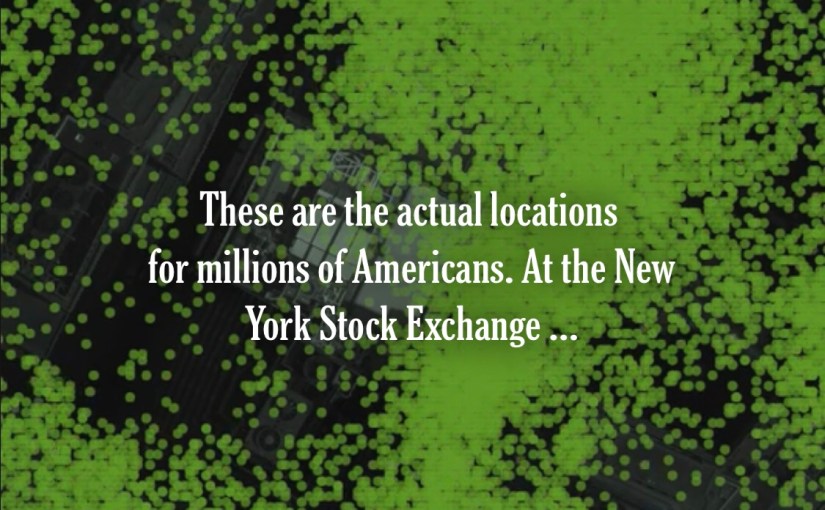
One search turned up more than a dozen people visiting the Playboy Mansion, some overnight. Without much effort we spotted visitors to the estates of Johnny Depp, Tiger Woods and Arnold Schwarzenegger, connecting the devices’ owners to the residences indefinitely.

If you lived in one of the cities the dataset covers and use apps that share your location — anything from weather apps to local news apps to coupon savers — you could be in there, too.

If you could see the full trove, you might never use your phone the same way again.

→ The New York Times

Social Media Was Made For This

It’s easy to say that the technology companies can do better. They can, and should. But ultimately, that’s not the problem. The problem is the media ecosystem they have created. The only surprise is that anyone would still be surprised that social media produce this tragic abyss, for this is what social media is supposed to do—what it was designed to do: to spread the images and messages that accelerate interest, without check, and absent concern for their consequences. It’s worth remembering that “viral” spread once referred to contagious disease, not to images and ideas. As long as technology platforms drive the spread of global information, they can’t help but carry it like a plague.

The Secret Lives of Facebook Moderators in America

That people don’t know there are human beings doing this work is, of course, by design. Facebook would rather talk about its advancements in artificial intelligence, and dangle the prospect that its reliance on human moderators will decline over time.

But given the limits of the technology, and the infinite varieties of human speech, such a day appears to be very far away. In the meantime, the call center model of content moderation is taking an ugly toll on many of its workers. As first responders on platforms with billions of users, they are performing a critical function of modern civil society, while being paid less than half as much as many others who work on the front lines. They do the work as long as they can — and when they leave, an NDA ensures that they retreat even further into the shadows.

To Facebook, it will seem as if they never worked there at all. Technically, they never did.