
Experience: I own the world’s ugliest dog

A lovely story :

I wish I’d known her as a puppy. I picture her small enough to hold in your hand, and she’s with her brothers and sisters; they’re all normal little dogs and then there’s this tiny hunchback. Working at the shelter, I could adopt all the beautiful purebreds if I wanted to; but Quasi shows that you don’t need to be the most perfect-looking animal to be a loving pet. She gets on with all our other animals and cuddles up to one of our cats who likes sleeping with her.

I don’t feel sorry for her. She teaches people tolerance, especially those who initially stare, because they think she’s ugly or they’re afraid; she always wins them over. She’s taught me not to dwell on what’s wrong in life. She’s not self-conscious. She doesn’t look in the mirror and go, “Oh, poor me.” She’s the epitome of happiness.

→ The Guardian

Jo felt being an MP mattered. She was right


I am tired beyond words of the cynical nonsense spouted every day by professional pundits (as well as amateur ones) that politicians are just in it for themselves, want nothing other than glory or the opportunity to fiddle bath plugs on their parliamentary expenses. Attention must be paid. Most MPs, of all parties, are decent people doing a tough job as well as they can.

When do we ever stop to applaud the manifold virtues of our politics? Why are we so receptive to the calumny that politicians are habitual liars? Jo Cox has been added, senselessly and without compensating progress, to the roll-call of people who lost their lives doing a democratic duty.

→ The Times

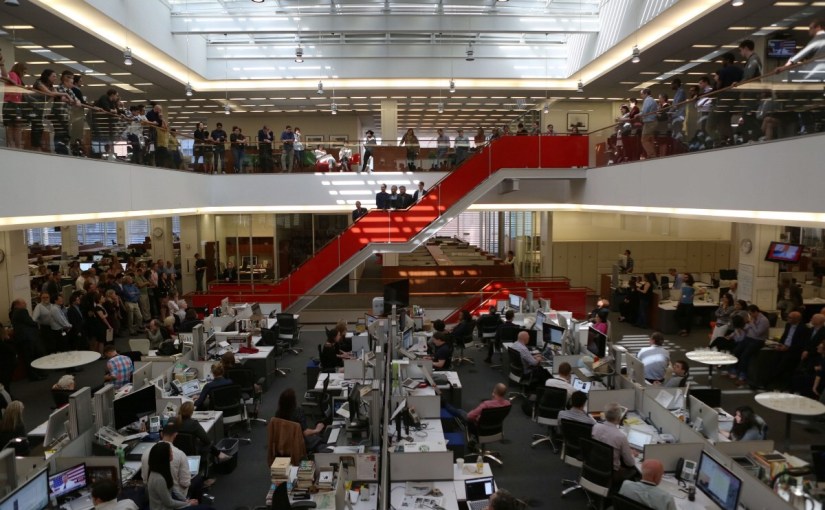
Why People Pay To Read The New York Times

In the United States, the ranks of journalists keep shrinking. As I travel around the world for The New York Times, I hear from journalists everywhere about the painful downsizing happening across the industry. This has meant important stories go untold. Costly investigative reporting units pare back their ambition in the face of budget cuts. Expensive trips to conflict zones suddenly seem like a luxury publishers cannot afford, and news organizations everywhere rely more and more on wire services to cover the world. This has reduced the vibrancy and diversity of the journalism we consume, and the world is poorer for it. Above all, local journalism has suffered. Cities that once supported two or more daily newspapers find themselves with one, or none at all.

→ Medium

Learning to Love Complex Numbers

Numbers are curious things. On one hand, they represent one of the most natural things known to humans, which is quantity. It’s so natural to humans that even newborn babies are in tune with the difference between quantities of objects between 1 and 3, in that they notice when quantity changes much more vividly than other features like color or shape.

But our familiarity with quantity doesn’t change the fact that numbers themselves (as an idea) are a human invention. And they’re not like most human inventions, the kinds where you have to tinker with gears or circuits to get a machine that makes your cappuccino. No, these are mathematical inventions. These inventions exist only in our minds.

→ Math ∩ Programming