The group was tired, but also optimistic. Yangon is an N.L.D. stronghold and, although the final results wouldn’t be released until the next day, they predicted that Tint would win. All three had spent years in military prisons for resisting the regime. Kyaw, the campaign manager, shared a hundred-square-foot prison cell with two other men for eight years, as punishment for participating in the 1988 student movement against military rule. “Back then prison was the place for people who believed in democracy,” he said, laughing. “Now it’s Parliament.” More than fifty former political prisoners were candidates.
Why Your Phone Battery Is Rubbish
What about the rest of us? Can we expect our gadgets to last longer than a day any time soon? “As long as our batteries are based on a chemical reaction, we will have huge limitations,” Buchmann says. “The health of a battery is almost like the health of a living organism or human being. We have to take care of it.” Limer says: “I don’t think things will change much in 10 years. A realistic future to hope for is one where even in extreme heavy use you can get through a day without losing your battery.” Right now, he adds, what we have is “a battery stalemate”.
Warren Buffett: Oracle or Orang-utan?
Buffett has taken the criticism from these fellow giants of finance in his stride, responding with trademark wit and humour. He even compared himself to an orang-utan flipping coins. Joking aside, this is a testable hypothesis: Is Buffett’s performance better than chance? To test it, we will stand on the shoulders of another giant: Jacob Bernoulli.
• • •
Again it is a very small number, but we can use our formula to calculate its value:
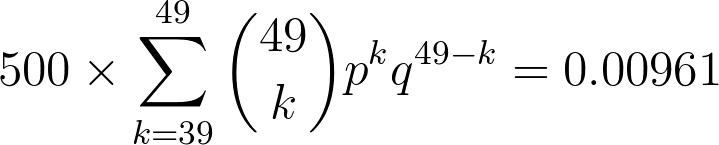
The expected value is much smaller than 1, so we can conclude that Buffett is a better investor than the luckiest orang-utan. If stock returns really do follow a random process – as Eugene Fama asserted – then Warren Buffett is more than just lucky. Compared with his competitors in the S&P 500, he’s brilliant.
The Cost Of Treating Troops As Free Labor Providers
Not everything in the military can or should come down to direct dollars-and-cents analysis. Good order and discipline is hard to put a pricetag on. But, just because the military doesn’t pay by the hour doesn’t mean that time is free. The costs aren’t reflected in a balance sheet, but they are real, borne by the military and its people.
Math’s Beautiful Monsters
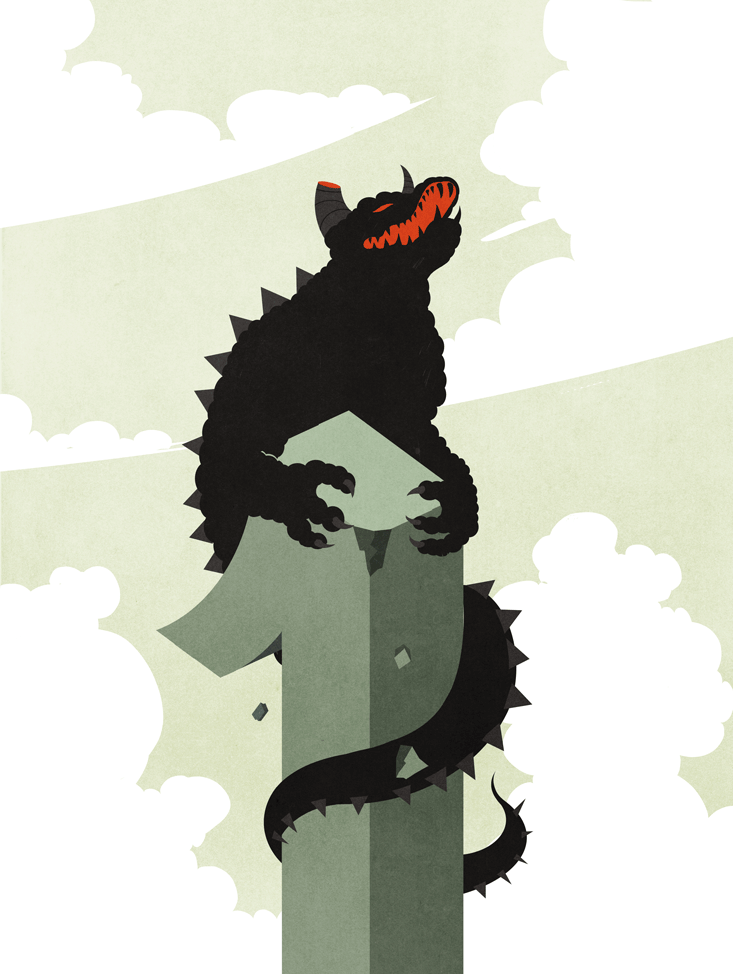
From fluid dynamics to finance, creatures like the Weierstrass function have challenged our ideas about the relationship between mathematics and the natural world. Mathematicians around the time of Weierstrass used to believe that the most useful mathematics was inspired by nature, and that Weierstrass’ work did not fit into that definition. But stochastic calculus and Mandelbrot’s fractals have proven them wrong. It turns out that in the real world—the messy, complex real world—monsters are everywhere. “Nature has played a joke on the mathematicians,” as Mandelbrot put it. Even Weierstrass himself fell victim to the trick. He created his function to argue that mathematics should not be based only on physical observations. His followers believed that Newton had been constrained by real-life intuition and that, once free of these limitations, there were vast, elegant new theories to be discovered. They thought that mathematics would no longer need nature. Yet Weierstrass’ monster has revealed the opposite to be true. The relationship between nature and mathematics runs deeper than anyone ever imagined.
Illustration : Alessandro Gottardo

