Inside Job

A story on Raj Rajaratnam’s inside job and an unsuspected collateral damage:

In my many conversations with Das, I had failed to explain to her what insider trading was, how she ended up a millionaire on paper, and what her employer did in her name. Her sole source of aggrievement was the sum of Rs 8.5 lakh she believed Kumar owed her. Now, I heard her voice on the crackling line fill with hope. “Will he give me the two years’ pay he promised?” she asked. “If he does, that will be very good.” But, after a pause, she added, “If he does not, my life will continue.”

→ Caravan Magazine

The Invention Of The Wah-Wah Pedal

After a few days of fiddling around with spare parts, Plunkett succeeded in designing a circuit that could change the frequency of notes by simply rotating a potentiometer. Then, something unexpected happened:

“I went next door, and asked a friend of mine to plug a guitar into this pile of wires, resistors, and capacitors I had on the bench. He strummed a few chords while I turned the knob on the potentiometer. It went ‘WAH-WAH-WAH.’ We looked at each other, and said, ‘Wow! This is really great!’”

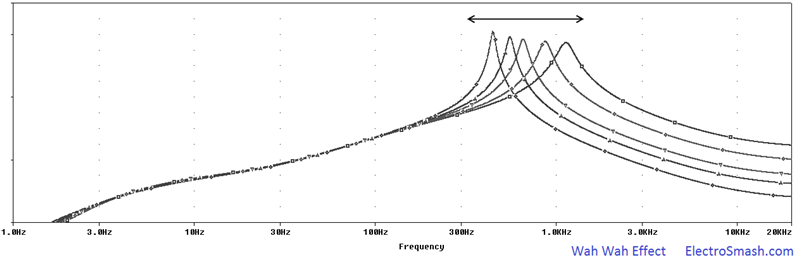
And it looks like this :

→ Priceonomics

Why The World’s Most Famous Acoustic Architect Says His Design Strategy Is To ‘Just Pray’

There are all kinds of theories about what makes a room sound good. One of the leading researchers in the field compares concert hall acoustics to tasting wine: some characteristics are easyily classifiable, but perception and taste are part of the equation, too. Another has suggested that understanding the way sound reflects in a room, not the shape of it, is the critical component to good concert hall design.

But the craziest theory comes from a researcher named Zackery Belanger. He thinks that acoustics is primarily a geometric problem, a theory so radical that he was forced out of his Ph.D. program because his advisor disagreed with it.

→ Fusion

What If Banks Didn’t Create Money?

Switzerland to revive the 100 percent reserve banking argument :

The fall of Communism completely discredited the idea of a planned economy; even in the Soviet Union for about two decades before its collapse, few believed state planning could work. Somehow, the idea that governments are less evil and better at making financial decisions than private banks has survived that disaster. It’s mainly the banks’ fault: They have been flagrantly irresponsible. A state monopoly on money could test the theory, and Switzerland, where the central bank is disinclined to do crazy things and democratic institutions are more powerful than in most other places, could be an ideal proving ground.

→ Bloomberg

Growing Old, But Not Together

HP is splitting into two separate companies on the NYSE :

Founded by two tech guys in a garage in Palo Alto in 1939, the giant created by Bill Hewlett and Dave Packard is remembered as Silicon Valley’s original startup. In its heyday, its flair for innovation was unrivalled, and it devised technologies that shaped people’s work and personal lives, from calculators to cameras to computers. Today it is regarded as a has-been: a reminder of Silicon Valley’s past but not a beacon of its future.

→ The Economist