Ben Bernanke: More Execs Should Have Gone to Jail for Causing Great Recession

Bernanke has been interested in the Great Depression since his grandmother told him stories about it from her front porch in Charlotte, N.C., during quiet summer evenings. Her family had been living in Norwich, Conn., where some children went to school in worn-out shoes or even barefoot because their fathers lost their jobs when the shoe factories closed. That meant their families didn’t have enough money to buy shoes — which presumably would have kept the factories in business and their fathers employed.

I agree for the most part with the following, but how do you distinguish between human actions and a process, the securitization to name it, that once pushed to its limits and at a fragile moment gives birth to monsters all around?

And didn’t Bernanke knew about the unprecedent levels and untested territories of loan originations that were about to be pooled into CDOs ?

I doubt he was unaware.

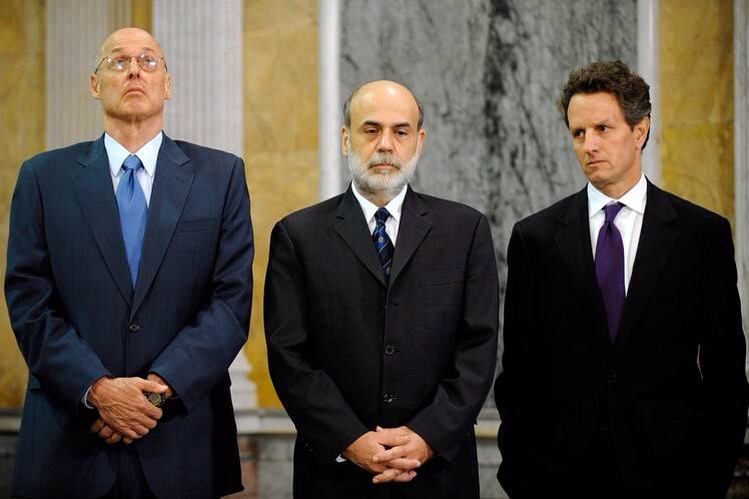
He would have favored more individual accountability. “While you want to do everything you can to fix corporations that have bad cultures and encourage bad behavior — and the Fed was very much engaged in doing that — obviously illegal acts ultimately are done by individuals, not by legal fictions.”
→ USA Today

The Art World’s Biggest Lie: A Dealer Apologizes for Collecting as Investing

Adam Lindemann :

Just over the horizon was a whole new group of people who would change the game. Appearing as if from nowhere, like a biblical swarm of locusts: The art advisors. When I wrote my collecting book, there were just a few of them, influential and very knowledgeable, so I included some (Mark Fletcher, Thea Westreich, Sandy Heller among them). But, in the last few years, advisorshave popped up literally everywhere and now outnumber collectors 2 to 1. There are almost as many of them as yoga instructors.

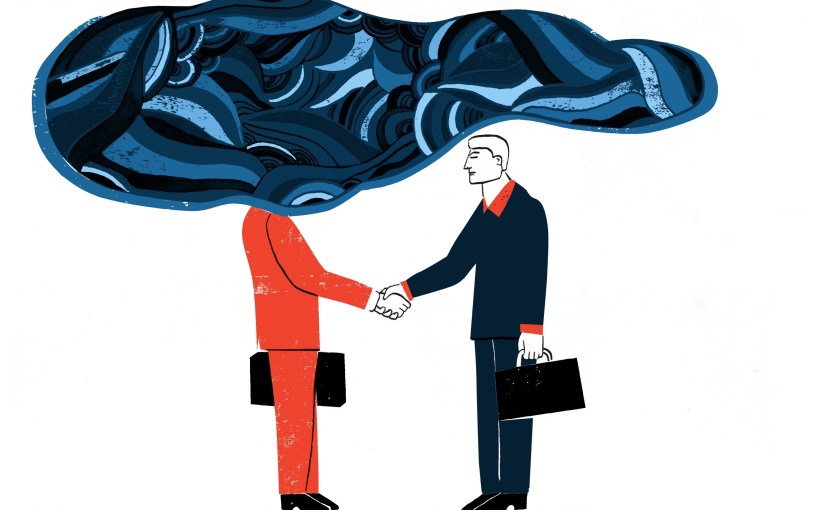
The art-advisor phenomenon is a direct result of the change in the way buyers view their art buying. Today, the “collecting” audience no longer needs to be convinced their money is being well spent; they have bought into the art-as-investment thesis hook, line and sinker. So, in the same way you hire an investment advisor to manage your portfolio, and a management consultant to streamline your business, you now must hire an advisor to help you decide what art to “invest” in.

Gone are the days of “I simply must have it,” today there are two serious types of buyers. The mega art buyers who want international trophy art, who have no budget limit and only want the artistic equivalent of oceanfront property. Then there’s the hot money players: Wise guys, hooligans and celebrities. They go for what’s hot, what’s going to make them look smart and make them fast money.

Credit : Hanna Barczyk

→ The Observer

The Flâneur Discovers Paris, a Step at a Time

I became a serious flâneuse (a female flâneur) when I fell madly, passionately, obsessively in love — with a street, the half-mile Rue des Martyrs in my Paris neighborhood. I was swept away by its spirit, feeling giddy when I strolled up and down the street at random hours of the day or night. I embraced its rhythm, which began at 6 a.m. when street sweepers opened valves that sent rivers of water downhill along the gutters, and ended well after midnight with the closing of the bars and the cross-dresser cabaret.

→ The New York Times

The Art Market: Impact of Weakening Chinese Economy

‘Girls in the Windows, New York’ (1960) by Ormond Gigli

Inevitably, all conversations in China turned to its weakening economy and whether this would affect the art market. Dealers tended to be upbeat though, according to collector Qiao Zhibing, the market has slackened: “Before the slowdown, buyers would have ‘definitely want’ and ‘maybe’ pieces and buy both; now they only buy the ‘definite’ ones,” he said. However, he added: “The rising middle class is interested in art and will buy to decorate their homes, and this will grow the market here”.

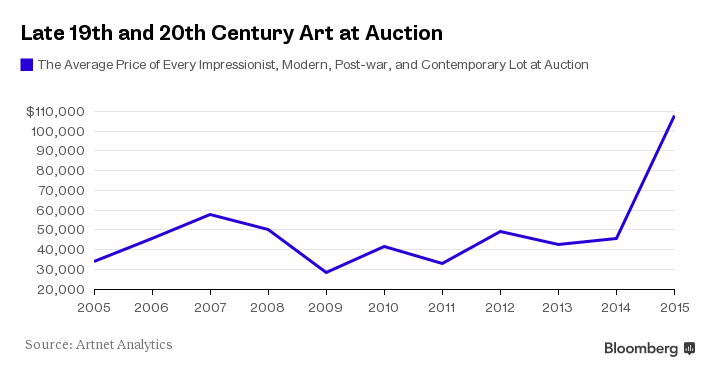
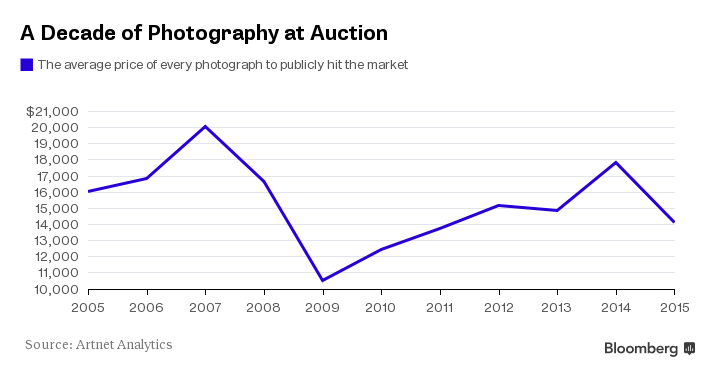
Big buyers will still be focused on ultra high-end paintings (the big uptrend of 2015 was mainly driven by a few unprecedented sales), while less prominent buyers might have a closer look into photographs as soon as the Chinese turmoil eases. Prices will certainly surpass previous tops when buyers will be more educated about the inner value of photography: cheaper and timeless, while less complex than modern art.

I’m wondering if the average price of paintings will be sustained in the coming years : Will there be as many impressive lots ? Will this lack of liquidity in the high-end inflates lower, fairly priced works ? Will there finally be a move into photographs ?

The fact that prices may at least stay flat, or fall in a context of moderate economic growth would not be unsurprising but it is the sign that prices in the market will move closer to home, at a less inherently speculative level.

→ The Financial Times

Is Photography the Best Deal in the Art Market?

From this vantage point, nope.

But I don’t think comparing both (a bubble and a niche market, except for a few odds like this expensive piece of sheet) makes much sense right now.

But to be fair, price irrationality isn’t the only factor for this asymmetry : a 19th-20th century painting is obviously more valuable then any photography will ever be.
So my guess is that to compare both mediums fairly, you need to be equally unfair, like this Bloomberg report, and reverse periods : the old masters of photography from the first half of the 20th (HCB, Klein, Brassaï) against 21th century contemporary painters.

Maybe that would help, maybe not —Chinese painting is quite expansive while worth it.


→ Bloomberg