David Zwirner’s Art Empire


Follow-up on Bouvier’s portrait, here’s David Zwirner’s :

By one-thirty, there was no sign of the American collector. Braka and Ortuzar huddled, and Ortuzar said, “I’m on it.” At one-fifty-two, the American appeared and resumed scrutinizing the painting. “Look at him sweating,” Zwirner whispered. After a while, he gave the collector a now-or-never gesture. The man borrowed a chair, sat down, and stared at the Richter for a while, chin in hand. Braka stood ten feet behind him. Soon the American got into what appeared to be a heated discussion with Schouwink. Ortuzar approached Braka, and Braka, with a pained smile, nodded and walked away. Zwirner joined the collector and Schouwink. He spoke emphatically to each of them, slapping the knuckles of one hand against the palm of the other. Everything is negotiable. At two-fourteen, the collector shook Zwirner’s hand and bent to kiss Schouwink’s. The Richter was his, and Zwirner had earned three hundred thousand dollars, enough to cover more than half the cost of the gallery’s booth in Basel.

→ The New Yorker

The Art-World Insider Who Went Too Far


The relationship between art dealer and collector is particular and charged. The dealer is mentor and salesman. He informs his client’s desires while subjecting himself to them at the same time. The collector has money, but he is also vulnerable. Relationships start, prosper, and fail for any number of reasons. It is not always obvious where power lies. Over time, each one can convince himself that he has created the other.

→ The New Yorker

Bowie: The Man Who Sold Royalties and Brought Music to Bonds

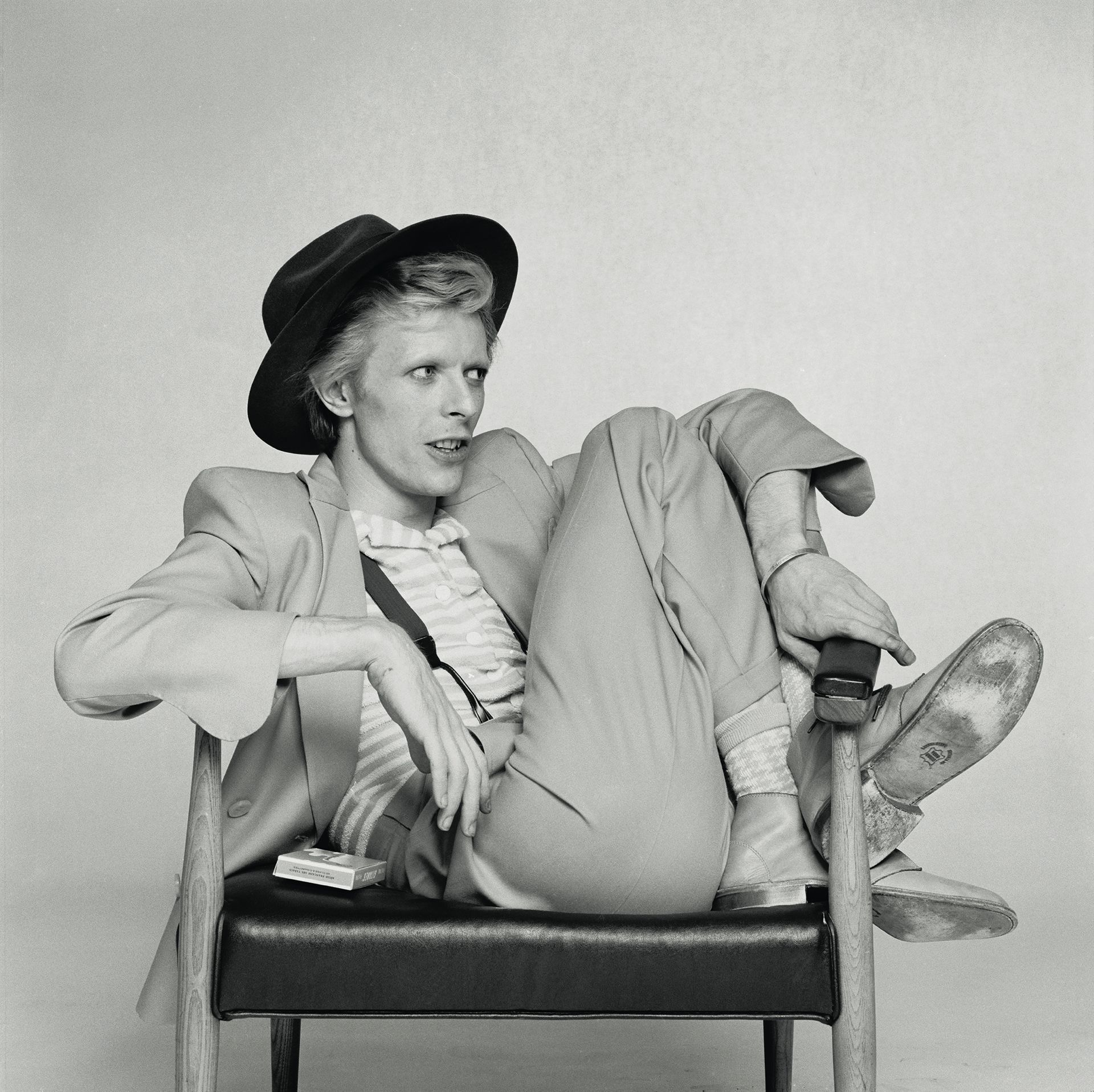
Credit : Terry O’Neil

Sure, this might be the last thing to come up when remembering Bowie, but hey—that’s genius :

The man behind “The Man Who Sold the World” was the first recording artist to go to Wall Street to tap the future earnings of his music, paving the way for a thriving market for esoteric securities backed by everything from racehorse stud rights to commercial washing machines.

David Bowie, who died from cancer at age 69 on Sunday, sold $55 million of bonds in 1997 that were tied to future royalties from hits including “Ziggy Stardust,” “Space Oddity” and “Changes.” Following his example were singers James Brown and Rod Stewart and the heavy-metal band Iron Maiden. Securities backed by royalties allow artists to raise money without selling the rights to their work or waiting years for payments to trickle in.

“Bowie’s bonds were as groundbreaking as his music,” said Rob Ford, a London-based money manager at TwentyFour Asset Management, which oversees 5.3 billion pounds ($7.7 billion). “Not only were they followed by a number of other artists, but they set the template for deals backed by a whole range of assets.”

And to conclude :

Bowie “changed the way people think about art and commerce,” Pullman said.

See you on Mars.

→ Bloomberg

How to Fix a Monet After Somebody Punches It

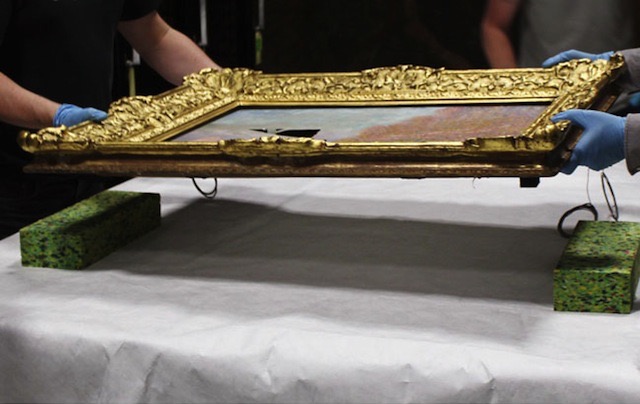
Conservators are probably the closest thing the art world has to surgeons. With care and precision, they repair wounds caused by old age, negligence, and, every once in a while, crazed attackers — as happened in 2012 to Claude Monet’s “Argenteuil Basin with a Single Sailboat.” Painted in 1874, it was punched by an angry madman as it hung in Ireland’s National Gallery.

The team tasked with repairing the artwork had their work cut out for them. The assailant had left a massive triangular tear in the middle of the canvas, and some of the paint had been so badly pulverized that it couldn’t be reattached. Over the course of two years, conservators worked carefully to repair the painting and restore it to its original condition. A true labor of love [abridged].

→ Hyperallergic

Charlie Brown Never Found His Little Red-Haired Girl, but We Did

The romance between the artist, Charles Schulz, and his muse, the little girl with the red hair :

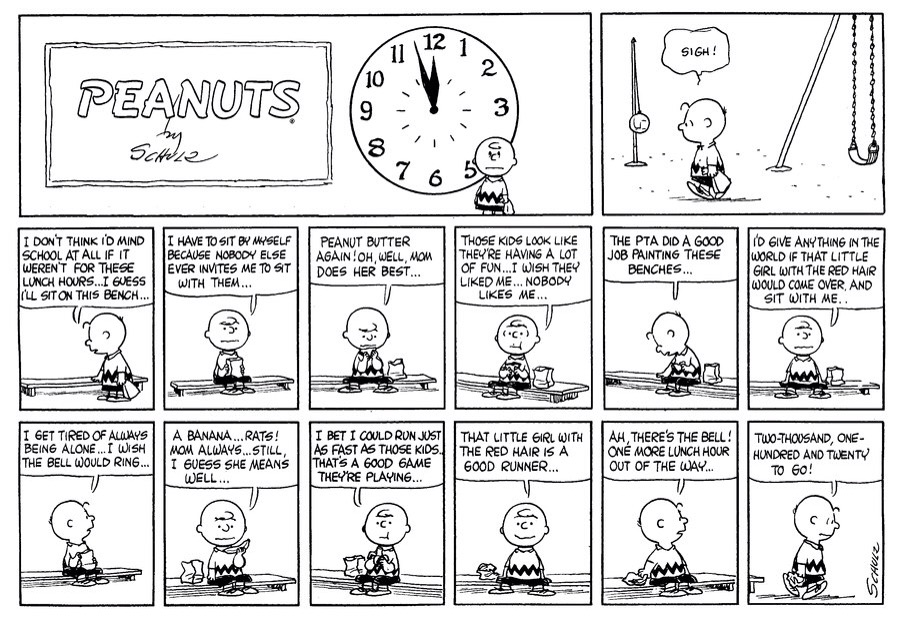
In the Peanuts Sunday strip that ran on November 19, 1961, Charlie Brown sits down to lunch, as usual, accompanied only by his abundant anxieties. He watches longingly as the other children enjoy themselves, laments his aloneness and unpopularity, and despairs over the lunch that he finds packed for him: a peanut-butter sandwich and a banana.

And, for the first time, he glimpses someone new in the schoolyard. “I’d give anything in the world if that little girl with the red hair would come over, and sit with me,” he says, to no one in particular.

→ Vanity Fair