The NYTimes Could Be Worth $19bn Instead Of $2bn

IMG_1358

Frédéric Filloux :

Through this lens, if Wall Street could assign to The New York Times the ratio Silicon Valley grants BuzzFeed (8.5 instead of a paltry 1.4), the Times would be worth about $19bn instead of the current $2.2bn.

Again, there is no doubt that Wall Street would respond enthusiastically to a major shrinkage of NYTCo’s print operations; but regardless of the drag caused by the newspaper itself, the valuation gap is absurdly wide when considering that 75% of BuzzFeed traffic is actually controlled by Facebook, certainly not the most reliably unselfish partner.

While BuzzFeed relies on ridiculous headlines and traffic from Facebook, investors are more inclined to value BuzzFeed way higher than the Times because of the potential it can generate in the future.

On the other hand, the Times is a safe-house, which proved to be realistic 5-7 years ago by transitioning into a successful digital brand. So all in all, the growth of Times is less tangible than a relatively new website. That’s precisely why there’s such a gap between the two. Though to be perfectly realistic, considering that one is kinda overvalued and the other one undervalued (in Silicon Valley standard) these two ratios should adjust and get closer together.
→ Monday Note

Games People Play

Monthly Investment Outlook from Bill Gross :

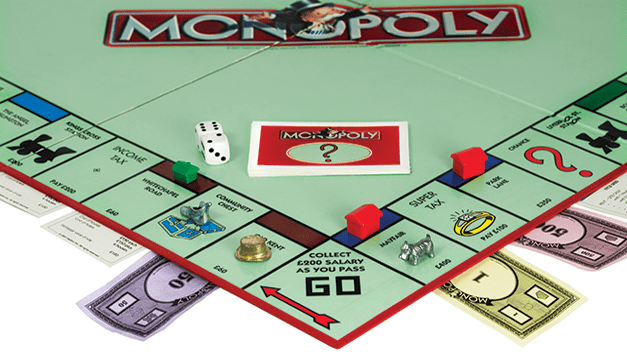
Good players know that it is critical to move quickly around the board, make acquisitions and then develop the properties by creating hotels. Three hotels on each property are desirable and of course as every Monopoly pro knows, it’s not Boardwalk or Park Place that are the key holdings but the Oranges and the Reds. Same thing in reality’s markets, I would suggest. Which companies and which investments to overweight and how much leverage to use usually point to the eventual winners. But an ample amount of cash is important as well as you land on other owners’ properties. You need liquidity to pay rent or service debt – otherwise you sell assets at a discounted price and are swiftly out of the game. That reminds me of Lehman Brothers and its aftermath. Early in Monopoly, property is king but later in the game, cash becomes king and those without cash and the ability to get it go bankrupt.

→ Janus Capital

The Art Of Investing In Art

Only recently has art investing been viewed through the lens of modern portfolio theory and considered as a potential alternative investment in a portfolio of assets. Though research continues to shed more light on what has been historically an opaque market, studies show that art can offer long-term return potential that is uncorrelated with other asset classes.

→ J.P. Morgan

A Man in the Mirror

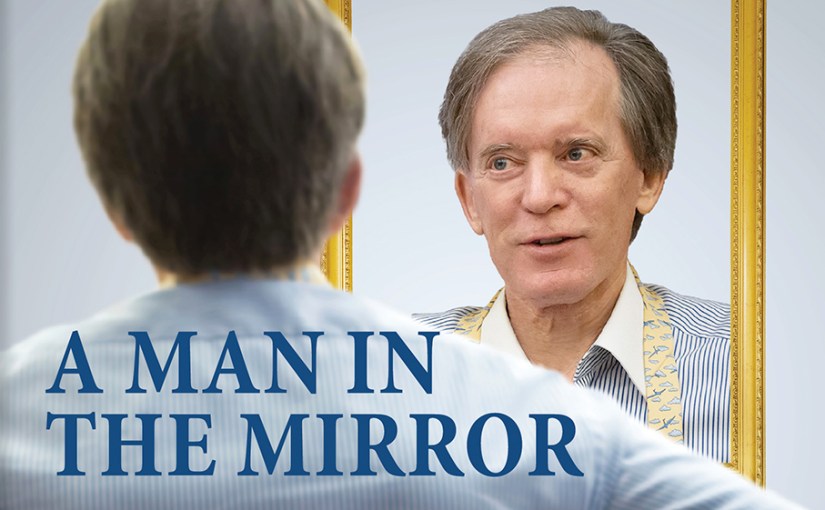
Bill Gross on our relationship to success, the heydays of investing and Michael Jackson :

Since the early 1970s when the dollar was released from gold and credit began its incredible, liquefying, total return journey to the present day, an investor that took marginal risk, levered it wisely and was conveniently sheltered from periodic bouts of deleveraging or asset withdrawals could, and in some cases, was rewarded with the crown of “greatness.” Perhaps, however, it was the epoch that made the man as opposed to the man that made the epoch.

→ PIMCO

Oracle: The Worst-Governed, Best-Run Company Around

So, basically, Oracle is a horribly governed company, but it seems to be pretty well run. Which inevitably raises some questions about the true value of the standards and practices that go under the label of good governance.

***

But it’s hard to get around the reality that, so far, the company’s frequent disdain of good-governance practices has gone hand in hand with spectacular, sustained success. It could be that Larry Ellison knows a few things that the governance watchdogs don’t.

→ Harvard Business Review