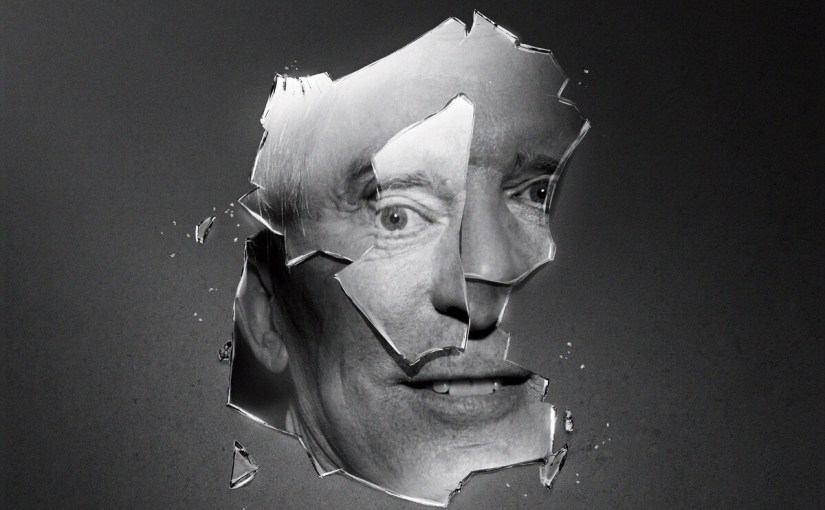
But make no mistake: This Bill Gross, the one eying the French crullers, isn’t that Bill Gross, the one who bent markets to his will at Pacific Investment Management Co., who built one of the most enduring track records in bond management history, who moved markets with his pronouncements. That old Gross wanted fame more than power and riches, and he wanted it with a hot eagerness that made enemies. By the time Pimco cast him out, he was considered by colleagues—there’s no way to sugarcoat this—to be a world-class jerk who’d lost his touch.
Category: Investments

Bill Gross Thinks The End Is Near
Sorkin: I have to know: Why do you wear your tie like that?
Gross: I came down here to Orange County in ’71 from L.A., and Pimco had this brand-new, beautiful building, but they didn’t have a gym or showers. I was an exercise nut. At noon, I’d change in the bathroom and then run for about five miles. Since there wasn’t a shower, I’d towel off as best I could, but I’d be sweating and hot for an hour or two. So in the afternoon, I began to just not tie my tie. Then a year or two later, I said: “Well, what the hell, I guess I’m not tying it in the afternoon, I’ll just not tie it in the morning either.”

Bill Gross’s Bloomberg Terminal, Now A Piece of History
The keyboard will be on display as part of the Smithsonian’s “American Enterprise” exhibition and become part of the permanent collection, according to Peter Liebhold, chair and curator of the division of work and industry at the Washington-based National Museum of American History. Accompanying the keyboard are two Beanie Babies — a bull and a bear that were draped over Gross’s monitors at Pimco — and a pair of fuzzy dice representing “his beginnings as a professional blackjack player,” Liebhold said.
“My favorite thing is the password,” Liebhold said in a telephone interview Friday. “If you look at the keyboard you can see that Bill Gross, who’s controlling maybe the biggest bond fund in the world, on a piece of paper Scotch taped to the top of his keyboard has written his ID and his password. So he’s just like everybody else.”
Mr. Bleu

Delighted to hear Bill Gross’ point of view regarding art collecting. He and his wife seem more impressed by stamps, which they’re renowned collectors.
I’ve never been much of an art aficionado myself, having settled for framing some All American Rockwells neatly clipped from old Saturday Evening Post covers. There was a time though when a well-publicized Rockwell came to auction and Sue and I expressed some interest. Ever since, we’ve been on the art house’s mailing lists and I must admit, it’s fun to browse through the Picassos, Rothkos, and whatever else currently frenzies modern collectors. I’m no expert though, and if I begin to pretend that I am, Sue puts me in my place because she’s the artist in the family. She likes to paint replicas of some of the famous pieces, using an overhead projector to copy the outlines and then just sort of fill in the spaces. “Why spend $20 million?” she’d say – “I can paint that one for $75”, and I must admit that one fabulous Picasso with signature “Sue”, heads the fireplace mantle in our bedroom
Birdman : The Pigeon King and the Ponzi Scheme
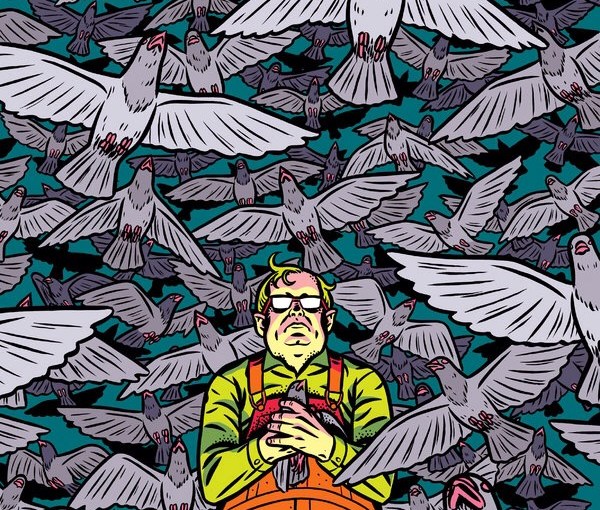
In a typical Ponzi scheme, like Bernie Madoff’s, the scammer moves money between investors, to pay what he claims are dividends on an investment that doesn’t actually exist. But Galbraith didn’t have a fake investment as a front. He had birds — lots of birds, and those birds created more birds, which he, in turn, was obligated to buy, then house, feed, water and medicate at considerable cost until he could sell them off to someone else. He appeared to miss the whole point of a Ponzi: He took the hidden, fungible fictions that give the scam its power and turned them into tangible liabilities.

