Sean Parker : Hacker Philanthropist

Not your average pharma bro’ :

Hacker philanthropy is meant to be the antidote to what Parker calls the conservative, incremental work of most charitable foundations; a timidity he says is borne of institutional self-preservation and a need to assuage philanthropists’ “deep-seated anxiety that their capital may not be accomplishing anything”.

Hackers, by contrast, are iconoclasts drawn to fix the holes in big, complex systems, and they are willing to make bold experiments and embrace failure as a learning experience. Since the world’s billionaires lists are increasingly populated by computer programmers who have built insanely large tech companies, it is only a matter of time until their hacker mentality is brought into the world of philanthropy.

→ Financial Times

Terrence Malick’s “Knight of Cups” Challenges Hollywood to Do Better

It reminds me of Claude Lelouch :

For Malick, the cinema is also a matter of the unconscious, of indeterminacy, of tension between decision and accident. Most of the movie’s images are done with a handheld camera, and most of them involve so much motion, on the part of the actors and the camera alike, that they would defy, in the rapidity of their complexity, any attempt to calibrate them in advance to the exact framing and composition. Malick creates the circumstances under which Lubezki can make these images; Lubezki, untethered to storyboards, roaming freely around and past the action, collects images that embody Malick’s ideas and emotions without being overdetermined by his intentions.

The Knight of Cups is a good movie, but unfortunately not a great one.

→ The New Yorker

The Art of Larry Gagosian’s Empire

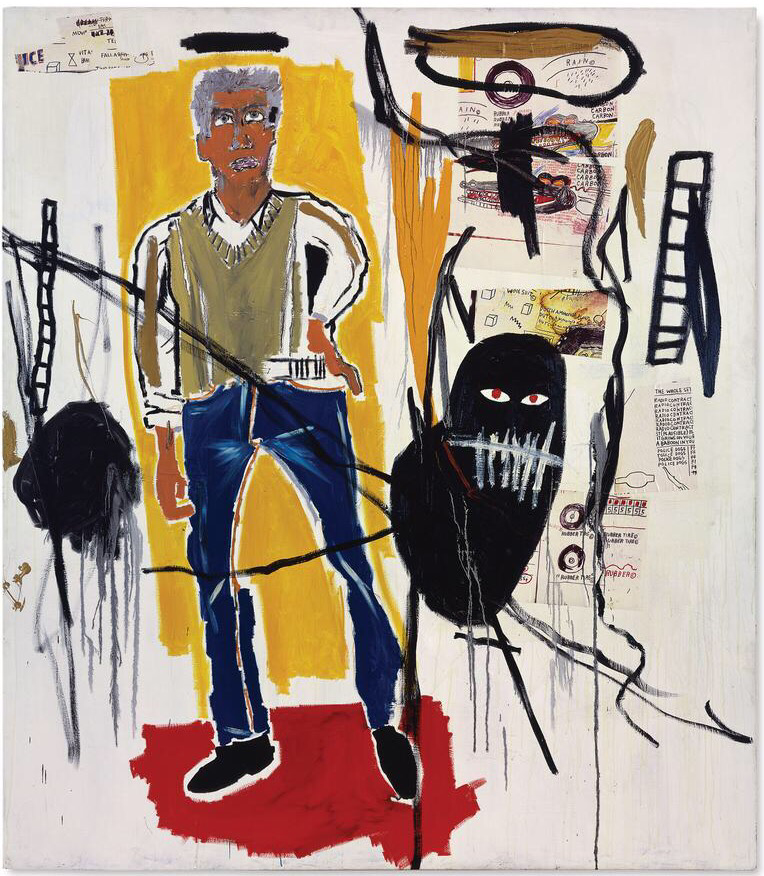
Larry, Jean-Michel Basquiat (1985)

One of Gagosian’s particular talents is conjuring complex, chesslike transactions that offer elements more enticing than cash. “He’s like a block trader,” says collector and Blackstone chairman, CEO and co-founder Stephen Schwarzman, referring to the financial practice of making high-risk, fast-moving private deals on large quantities of shares. “He’s in the matching business.” When Schwarzman, for example, was seeking a rare Twombly “blackboard” painting for his apartment, “Larry found someone in Korea who owned a painting and found another painting that was larger and more important,” Schwarzman says. “So they sold their painting and bought another from Larry. That’s a classic Larry Gagosian execution—where everyone’s happy and Larry makes tons of money.”

→ WSJ Magazine

The Rise Of Autism

Credit : Eric Petersen

A recent study in JAMAPaediatrics, a science journal, calculated that the lifetime cost of supporting an American with autism was $1.4m-2.4m. Paul Leigh of the University of California at Davis and Juan Du of Old Dominion University have added up not only the cost of care but also the opportunity costs of autism in America. They include an estimate of the output lost when autistic people are jobless or underemployed, and when their relatives cut back on working hours to look after them. They put the total at $162 billion-367 billion in 2015, the equivalent of 0.9-2% of GDP, on a par with both diabetes and strokes. By 2025 the figure could exceed $1 trillion, they predict. Confronting autism is costly, but failing to do so may cost even more.

→ The Economist

Who Funds the Future?

“The biggest outcomes come when you break your previous mental model. The black-swan events of the past forty years—the PC, the router, the Internet, the iPhone—nobody had theses around those. So what’s useful to us is having Dumbo ears.” A great V.C. keeps his ears pricked for a disturbing story with the elements of a fairy tale. This tale begins in another age (which happens to be the future), and features a lowborn hero who knows a secret from his hardscrabble experience. The hero encounters royalty (the V.C.s) who test him, and he harnesses magic (technology) to prevail. The tale ends in heaping treasure chests for all, borne home on the unicorn’s back.

→ The New Yorker