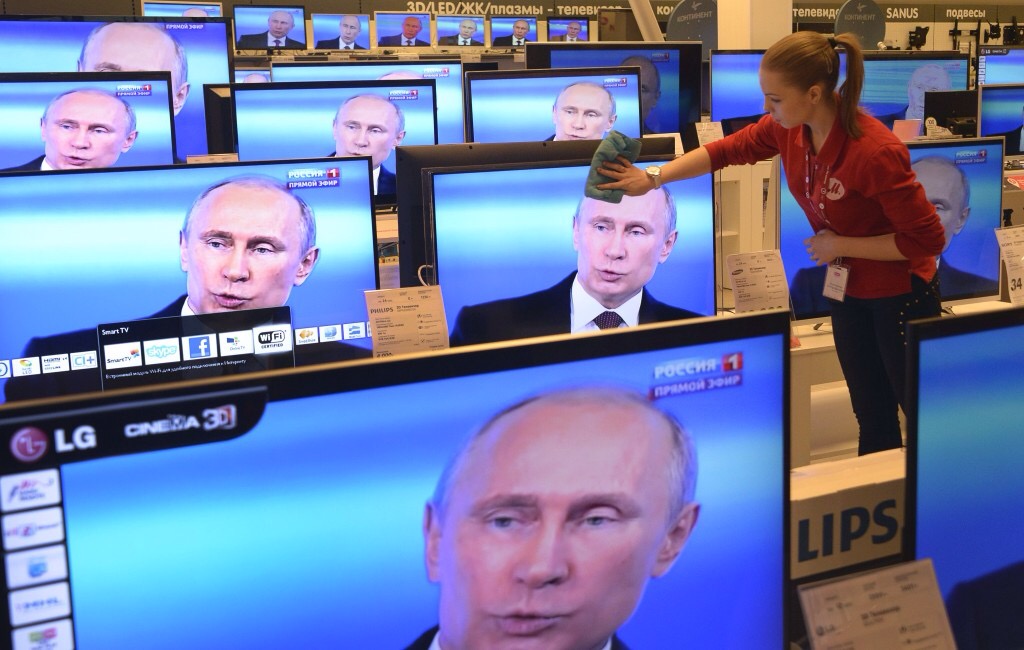
There was no channel war now, I mean, no competition. A directive came from the Presidential Administration saying: stop trying to outdo each other, stop showing who’s got the best exclusives here. The only exclusive stuff you could have was when one person found someone’s granny, and another found someone else’s granddad. On the whole, though, it was a massive stream [of content]. United in a common impulse, everyone shared everything with everyone else: pictures, speakers, contacts. Everything became a single whole. Different holding companies, different shareholders, different media organisations. A united propaganda body emerged.
Category: World

40 Years Since Saigon’s Fall
Rembering a brother and one of the most iconic photograph of the century :
“My brother, very good photographer,” Ut says, stepping away from where he shot his most famous photo. “I really love him. Every time he came back from assignments and showed the pictures, people die, the war. He showed his wife, he showed me. He was very angry. He said one day he was going to take a picture that would stop the war. But he never did. When he died, I heard his words in my ear. When I took the picture of Kim Phuc, I told my brother: ‘I have it for you.’”
Note : Title purposely shortened.
Who Is Saudi Arabia Really Targeting In Its Price War?
Follow-up on the previous article, this one from Arthur Berman for Naked Capitalism :
Prolonged low oil prices will prove that tight oil plays need at least $75 per barrel to break even. When oil prices recover to that level, only the best parts of the tight oil core areas will be competitive in the global market. As production declines from expensive tight oil, oil sand and ultra-deep-water plays, inexpensive Saudi oil will gain market share.
Saudi Arabia is not trying to crush tight oil plays, just the stupid money that funded the over-production of tight oil. Too much supply combined with weak demand created the present oil-price collapse. Saudi Arabia hopes to prolong low prices to benefit their long-term needs for market share and higher demand.
Why Oil Prices Came Down, And Won’t Anymore
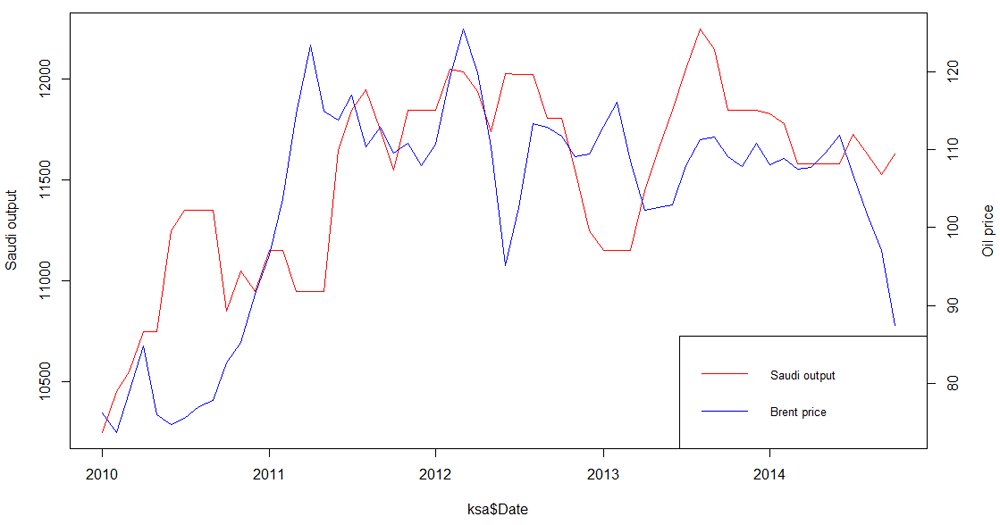 Historically, Saudi Arabia has played a stabilizing role in world oil prices, by adjusting its output to ensure global supply is stable. The above graph show how Saudi output increased to lower prices when they were high, and vice versa. However, since July, the Saudis have not responded to newly low oil prices by decreasing output. In fact, the Kingdom have insisted that they would rather bear lower oil prices than decrease their market share (read: be squeezed out by shale).
Lost in Syria
Heartbreaking :
Ann learned from the funeral parlor that Harroun, an honorably discharged veteran, was entitled to a plot in Arizona’s national cemetery. A year earlier, he had been awaiting trial for supporting an affiliate of Al Qaeda; now he would be buried among war heroes.
It rained on the day of the funeral service. Family and friends gathered under a portico to hear Ann speak about Harroun’s compassion, the “many tears” he had caused, and the “many trips to the principal’s office” she had made. Flags flew at half-mast. A bugler played taps. Two uniformed soldiers wearing white gloves presented Ann with a folded American flag.
 Abnormal Capitalist