Reign of the Algorithm

Writers, remember: the more we play the algorithmic game, the more the algorithmic game plays us. (All hail the great Algorithm in the Cloud!)

Algorithm-oriented content is becoming ubiquitous. It doesn’t matter what you read or what topics you search for, a growing percentage of online material is designed ground-up for the acquisition of ‘Likes’ and the courtship of search engines. Food, politics, current affairs, cats, academia — everything. It doesn’t matter what you are interested in, there is an army of people writing about it with strategic intent to leverage the algorithmic landscape for their advantage.

→ James Shelley

Fintech: Search For A Super-Algo

The rise of the machine learning :

The quantitative investment world plays down the prospect of machines supplanting human fund managers, pointing out that the prospect of full artificial intelligence is still distant, and arguing that human ingenuity still plays a vital role. But the confident swagger of the money management nerds is unmistakable. Already there are quasi-AI trading strategies working their magic in financial markets, and the future belongs to them, they predict.

→ Financial Times

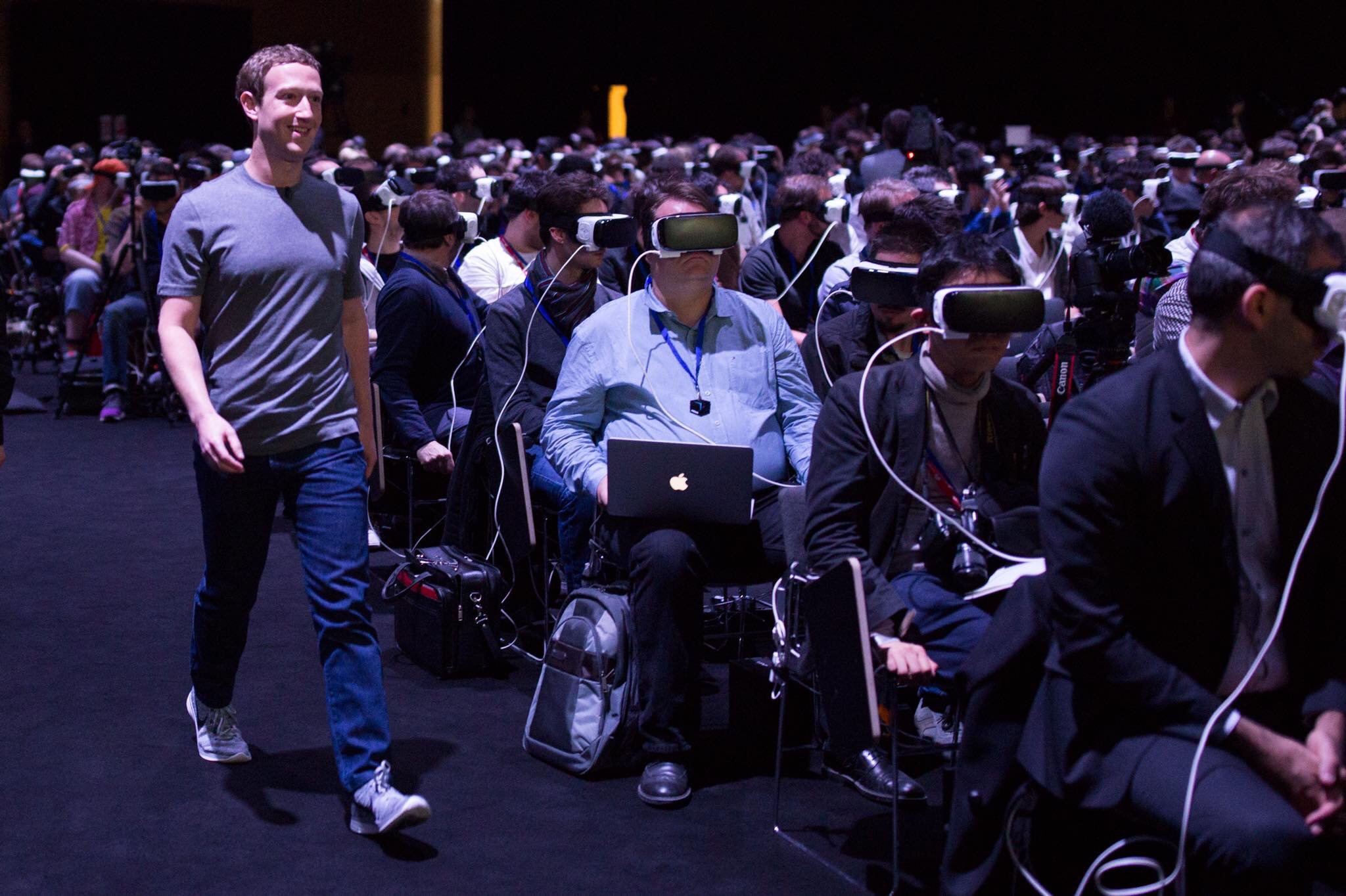
This Image Of Mark Zuckerberg Says So Much About Our Future


The image above looks like concept art for a new dystopian sci-fi film. A billionaire superman with a rictus grin, striding straight past human drones, tethered to machines and blinded to reality by blinking plastic masks. Golden light shines down on the man as he strides past his subjects, cast in gloom, toward a stage where he will accept their adulation. Later that night, he will pore across his vast network and read their praise, heaped upon him in superlatives, as he drives what remains of humanity forward to his singular vision.

→ The Verge

Apple Is Selling You A phone, Not Civil Liberties

Let’s start with an important fact that Apple elides in its statement: Apple engineered this problem and it did so intentionally. In the wake of the Snowden leaks, Apple specifically decided to encrypt material end-to-end and at rest by default on the devices it manufactures and to not maintain any ability to decrypt material unless users specifically gave it the power to recover that material. It boasted about this decision and used it as a marketing weapon against its competitors. Reasonable people can argue about whether or not Apple did so for good reasons and whether or not doing so was the optimal way for the company to enhance the cybersecurity of its users. But the simple fact remains that Apple used to have the capacity to comply with warrants, and now it cannot without a certain amount of reengineering. And that was a matter of its own choosing made despite repeated warnings from the government that this choice would cause substantial problems for law enforcement, national security investigators, and public safety.

• • •

FBI and Justice Department officials, we think, can be forgiven if they’re a touch cynical about all of Apple’s elaborate legal argumentation and suspect that this all just masks what appears to be Apple’s genuine litigating posture towards the government: You can’t make us do anything, because we are immensely politically powerful, our CEO is on the phone with the President regularly, we are too big and way too cool to fail, and people around the world like us more than they like you. So what about that dead woman in Louisiana? Sorry, but bringing her killer to justice—and preventing his or her future violence—just isn’t as important as the data security of our devices. And about protecting people from ISIS? We’ll help out if it’s not too much trouble, but don’t ask us—ever—to do something that will make us look bad to the ACLU, even if there’s a very good legal argument that you can.

→ Brookings
Why Do Humans Have Thumbs?

Of all the motions the hand can perform, perhaps none is so distinctively human as a punch in the nose. Other animals bite, claw, butt or stomp one another, but only the species that includes Muhammad Ali folds its hands into a fist to perform the quintessential act of intra-species male-on-male aggression.

David Carrier, an evolutionary biologist at the University of Utah, believes our key advantage is the dexterity and configuration of our thumb, which folds over the second and third fingers as a buttress, concentrating the striking power and protecting the delicate hand bones. (Crucially, male index fingers are short relative to the ring fingers, so they fit snugly behind the bulge of muscle at the thumb’s base; in women, the second and fourth fingers are typically the same length.)

→ Smithsonian Magazine