
“Art” is a capacious term. We typically imagine artists to be solitary people creating art by hand. But many artists work in more expansive, disembodied ways. We all recognize that film directors are artists, even though, in its substance, the work of directing often involves the management of teams and budgets on a corporate scale. Jeff Koons employs a hundred and fifty people, and the art works those workers create, at his direction, sell for tens of millions of dollars. Clearly, a vast distance separates Koons’s studio from the world of high-tech device manufacturing, but—at least in theory—the difference could be one of scale rather than kind. If a giant sculpture built to order by a team of employees can be a work of art, it’s at least possible that mass-produced computers could be art works, too.
Category: Culture
Art: An Alternative Asset Wealth Managers Can Do Without
“Making money is art,” Andy Warhol once wrote :
Another reason for advisers’ hesitance is the unique due diligence skillset that art fund investments require. Investors must evaluate the fund’s financial structure and its investment potential. Wealth managers can readily grasp the finance projections, but few are equipped to gauge the fund manager’s art market expertise, proposed acquisition market or strategy for buying and selling profitably, Beard notes.
A Feminist Version Of The Pirelli Calendar

A great initiative :
The show consists of 24 self-portraits shot by Marshall using a self-timer, 12 of which are glossy, sexually explicit images that channel those you might find in Pirelli or while leafing through the pages of Playboy, while the other 12 are raw, unadorned photos that express a femininity rarely observed in the mainstream media outside the occasional celebrity sans-makeup social media post.
Laid side-by-side, the contrast between these two women—who are in fact the same woman—is jarring. Both an homage to and a critique of the form it inhabits, “The Feminist Calendar” posits that perhaps these two aspects of womanhood aren’t as contradictory they seem.
American Apparel Files for Bankruptcy

In one piece, hopefully :
American Apparel, the one-time arbiter of edgy made-in-America cool, filed for bankruptcy protection early Monday, its business crippled by huge debts, a precipitous fall in sales, employee strife and a drawn-out legal battle with the retailer’s ousted founder, Dov Charney.
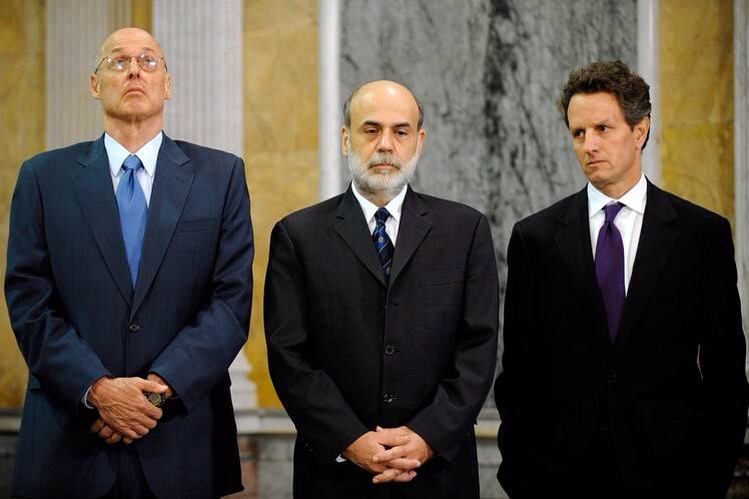
Ben Bernanke: More Execs Should Have Gone to Jail for Causing Great Recession
Bernanke has been interested in the Great Depression since his grandmother told him stories about it from her front porch in Charlotte, N.C., during quiet summer evenings. Her family had been living in Norwich, Conn., where some children went to school in worn-out shoes or even barefoot because their fathers lost their jobs when the shoe factories closed. That meant their families didn’t have enough money to buy shoes — which presumably would have kept the factories in business and their fathers employed.
I agree for the most part with the following, but how do you distinguish between human actions and a process, the securitization to name it, that once pushed to its limits and at a fragile moment gives birth to monsters all around?
And didn’t Bernanke knew about the unprecedent levels and untested territories of loan originations that were about to be pooled into CDOs ?
I doubt he was unaware.
He would have favored more individual accountability. “While you want to do everything you can to fix corporations that have bad cultures and encourage bad behavior — and the Fed was very much engaged in doing that — obviously illegal acts ultimately are done by individuals, not by legal fictions.”
 Abnormal Capitalist