The Legend Of The Donald

While the King may not be dead yet, long live the King :

The Donald’s reputation for building castles had inspired many apprentices who sought to learn at his feet. When apprentices displeased him, however, he would elucidate their inferior qualities and then place them inside a cannon. As an underling fired it, the Donald would declare, “You’re fired—out of a cannon.”

This phrase had long delighted the people, as had the other phrases he habitually employed, but the people were in a quandary. Experts in kingship had assured them that there was no harm in voting for the Donald, as he did not stand a real chance of ascending to the throne; yet these scholars were now saying, tarry, it might happen, and imagine what our realm would actually look like if we had a King the Donald!

→ The New Yorker

Lunch with the FT: Ben Bernanke

Martin Wolf :

I ask him whether he is confident that the improvement in the resilience of the banks is adequate. “It’s a fool’s game to predict that everything is going to be fine, because either it is fine, in which case nobody remembers your prediction, or something happens, and then … ” They remember your prediction, I interject.

Bernanke continues: “My mentor, Dale Jorgenson [of Harvard], used to say — and Larry Summers used to say this, too — that, ‘If you never miss a plane, you’re spending too much time in airports.’ If you absolutely rule out any possibility of any kind of financial crisis, then probably you’re reducing risk too much, in terms of the growth and innovation in the economy.”

→ Financial Times

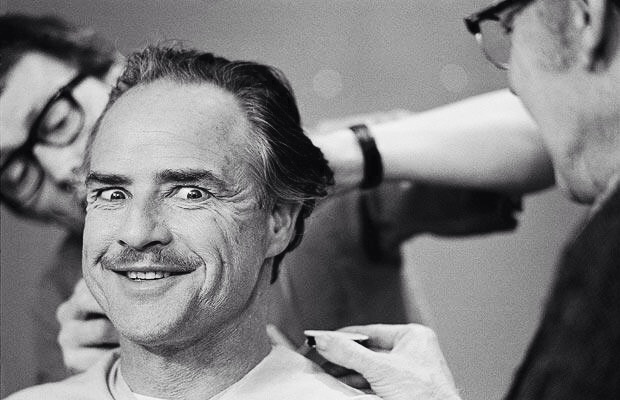
Marlon On Marlon… The Brando Tapes

Stevan Riley, the director of Listen To Me Marlon :

When Marlon was talking about acting, he’d say that your brain is your enemy. The first thing you must do is shut off your brain and just focus on feeling. It was about accessing emotions from the past for the character, which according to the method would involve you delving into your own past as well. Then, once you’d accessed the character emotionally, you’d bring your brain back in and figure out all the character’s mannerisms. The small details about what they eat, whether they’ve got fluff on their jumper they pick off on a regular basis – just tiny details you could stack, stack, stack so that they were there in your subconscious mind and you could then ditch them when the director said “Action!”

→ The Guardian

The Passion Of Nicki Minaj


There’s nothing new about female artists struggling with issues of power and control, but we’re far today from the 1990s, when Queen Latifah proclaimed ‘‘every time I hear a brother call a girl a bitch or a ho/Trying to make a sister feel low/You know all that gots to go.’’ ‘‘Bitch,’’ in music, used to be an insult, a sneer, and it still can be. But female empowerment is a trend, and the word has been reclaimed — by Minaj, in many a track; by Rihanna, in ‘‘Bitch Better Have My Money’’; and triumphantly by Madonna, in her recent track ‘‘Bitch, I’m Madonna.’’ This is good for business and either good for women or not good for women at all.

In another era, Minaj’s sexuality, expressed semi-parodically — pretending she’s a Barbie doll; glorifying women dressed as prostitutes and set in red-light-district windows — might have given feminists pause. But in the 2010s, we have entered a different world in pop culture, one in which sexual repression is perceived as burdensome and perhaps even an inability to holistically integrate the body and self. Young people are identifying and exploring formerly unknown, or at least unlabeled, frontiers of sexuality and gender. And the fact that Minaj is in charge of her own objectification (describing her vagina with more words than I thought existed, and then amplifying its power by rhyming those words), as well as her own monetization (overt product placement in videos is a hallmark) has led most feminist voices to applaud her.

→ The New York Times Magazine
Playboy Magazine Will No Longer Publish Nude Photo

The Internet has claimed one of its highest profile victims yet: As of March 2016, Playboy magazine will no longer feature fully nude models. This follows on from August last year, when the Playboy website also stopped publishing nude photos and videos. Yes, you’ll now be able to read Hugh Hefner’s flagship publication, which published its first nude centrefold way back in 1953, just for the articles.

Speaking to The New York Times, Playboy CEO Scott Flanders explained the reasoning behind the change: “You’re now one click away from every sex act imaginable for free. And so it’s just passé at this juncture.” Basically, Playboy stems from a time when nudity was racy and exciting; today, it’s de rigueur. The circulation figures illustrate that fact nicely: from a peak of around 5.6 million subscribers in 1975, Playboy is now down to around 800,000.

→ Ars Technica