Mastering the Machine

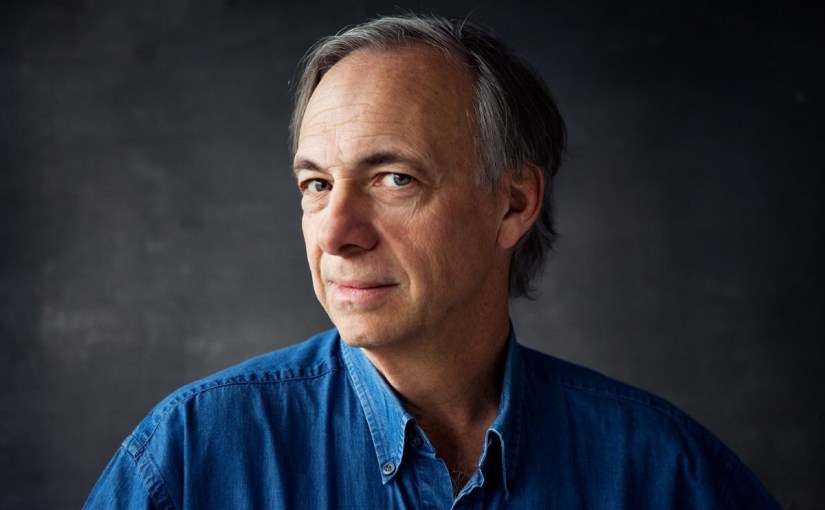
“In any given market, Bridgewater may have a dozen or more different indicators. However, even when most or all of the indicators are pointing in a certain direction, Dalio doesn’t rely solely on software. Unless he and Jensen and Prince agree that a certain trade makes sense, the firm doesn’t make it. While this inevitably introduces an element of human judgment to the investment process, Dalio insists it is still driven by the rules-based framework he has built up over thirty years. “When I’m thinking, ‘What is going on today?,’ I also need to make the connection to ‘How does what is happening today fit into our framework for making this decision?’ ’’ he said. Ultimately, he says, it is the commitment to systematic analysis and systematic investment that distinguishes Bridgewater from other hedge funds. “I hear a lot of people describing what’s happening today without the proper historical context and without the framework of how the machine works,” he says.”

The New York Magazine on the culture of Bridgewater :

The path to Principles began early in Bridgewater’s history, when Dalio began to think that employees, like economies, could be understood as following patterns. Transcendental Meditation informed his belief that a person’s main obstacle to improvement was his own fragile ego; at his firm, he would make constant, unvarnished criticism the norm, until critiques weren’t taken personally and no one held back a good idea for fear of being wrong. Dalio’s chosen investment system depended on such behavior. Unlike at a hedge fund such as Steven Cohen’s SAC Capital, where star traders are given chunks of the firm’s capital to run quasi-independent desks (and offset each other’s losses), everyone at Bridgewater essentially contributes to the same strategy as they work under Dalio and his longtime confidants and co-CIOs Bob Prince and Greg Jensen. Dalio thought radical transparency could optimize the hive mind. “The culture makes you have to listen to other people,” says Giselle Wagner, a former Bridgewater chief operating officer.

→ The New Yorker

Stop Making Fun Of 50 Cent’s Bankruptcy

Rappers, like kings, like to brag about their money because it shows influence and status. Versailles, the vomitously elaborate gilded palace outside Paris, was nothing if not Louis XIV’s attempt to overcome doubters about his throne with an intimidating show of power and wealth. Meanwhile, he was driving himself and his aristocrats to near-bankruptcy — not to mention France itself, which suffered lost wars and financial hardship. This is why there are so many parallels between Renaissance bling and the rappers of today: Gold always speaks loudly, and frequently moreso than the truth.

From Fitty himself :

Could you love me in a Bentley?
Could you love me on a bus?
I’ll ask 21 questions and they all about us

→ Mashable

Volatility As An Opportunity Class

Like navigating busy Southern California freeways, volatility option trading is path dependent: Whether one makes or loses money depends on the path taken from point A to point B – as well as what happens en route. As with the freeways, bypassing traffic and finding an optimal route can make a big difference. As a real world example, driving to downtown Los Angeles from Newport Beach can take anywhere from 45 minutes to four hours depending on the route and road conditions (such as, perhaps, unexpected construction). It’s a dynamic process, as volatility – or “traffic” – can create more volatility.

→ PIMCO

It Never Rains in California

Bill Gross on liquidity :

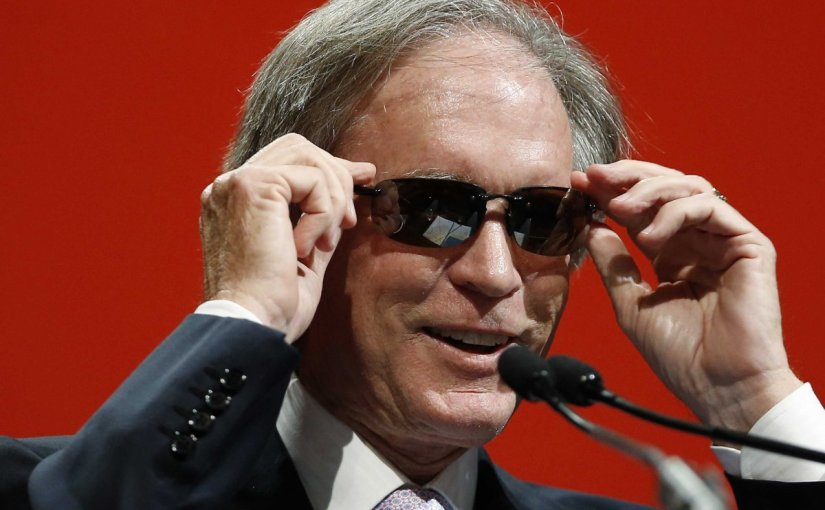
While private equity and hedge funds have built-in “gates” to prevent an overnight exit, mutual funds and ETFs do not. That an ETF can satisfy redemption with underlying bonds or shares, only raises the nightmare possibility of a disillusioned and uninformed public throwing in the towel once again after they receive thousands of individual odd lot pieces under such circumstances. But even in milder “left tail scenarios” it is price that makes the difference to mutual fund and ETF holders alike, and when liquidity is scarce, prices usually go down not up, given a Minsky moment.

→ Janus Capital

Bill Gross Gets Personal: ‘I Just Wanted to Run Money and Be Famous’

But make no mistake: This Bill Gross, the one eying the French crullers, isn’t that Bill Gross, the one who bent markets to his will at Pacific Investment Management Co., who built one of the most enduring track records in bond management history, who moved markets with his pronouncements. That old Gross wanted fame more than power and riches, and he wanted it with a hot eagerness that made enemies. By the time Pimco cast him out, he was considered by colleagues—there’s no way to sugarcoat this—to be a world-class jerk who’d lost his touch.

→ Bloomberg